Government plans to reduce the regulations relating to drones that farmers use on their own properties has drawn a mixed reaction from commercial drone operators.
The Aviation Industry Association (AIANZ), through its various subsidiary organisations, represents those who use drones commercially.
Industry Supports Reform but Warns Against Removing Safety Measures
AIANZ vice president Dr Isaac Henderson says his organisation is not against modernising the rules and making it easier for individual farmers to operate drones on their own properties.
But he says that before “cutting any rules willy nilly”, there needs a careful assessment of what risks this may pose to the farmer and nearby landowners.
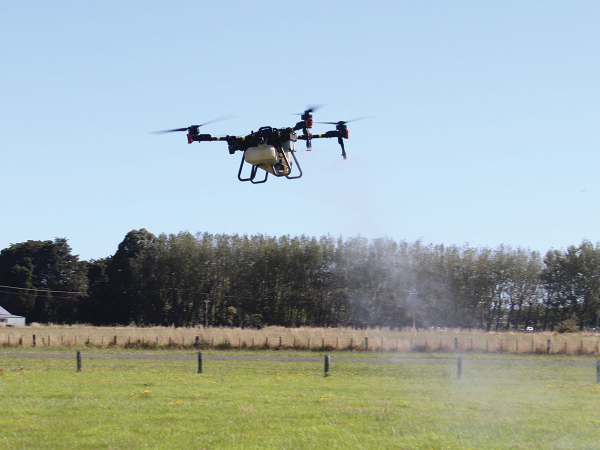
Henderson says the use of small drones for such things as mapping and mustering are genuinely low risk, however, he points out that when it comes to using larger drones for spraying, there needs to be rules to protect the safety of people and rights of neighbours who could be affected by spray drift.
“We are concerned about a narrative that is being circulated that says that using large agricultural spray drones is a ‘low risk’ activity. That is wrong,” he told Rural News.
Large Agricultural Spray Drones Present Different Risks
Henderson says some of the rules relating to a farmer spraying only on their property is overkill, but once they undertake the same work for a third party, such as neighbours, it becomes a different story.
He says, however, even when just spraying on their own property, an individual must have the proper training to fly a large drone and have knowledge of the various regulation that cover the use of sprays.
“For example, if the individual flying the drone wasn’t aware of, say, an inversion layer, the spray could end up 5km down the road on someone’s orchard,” he says.
Commercial Operators Subject to Strict Certification
Henderson says commercial operators of drones that spray agricultural chemicals have to be certified and pass a whole range of tests to show they are competent to carry out their operations.
He says this is similar to pilots of rotary and fixed wing aircraft involved in commercial spraying operations.
The rules are managed by a multiplicity of agencies such as the Civil Aviation Authority (CAA), the Ministry for Transport (MoT), MPI and the Environmental Protection Agency.
Industry Advocates for Drone Licensing System
While the Government has signalled that deregulation is the pathway to make it easier for farmers to use drones more freely on their own properties, the AIANZ says a better option is a licensing and rating system which they have been pressing the CAA and the MoT to do for the last seven years, without success.
Henderson says this would reduce a lot of the unnecessary paperwork and time that farmers wanting to do their own spraying are complaining about, and better define risk and still set consistent standards.
“I am glad the Ministry of Regulation is taking up this work and we as an industry would be keen to positively engage with them. However, I don’t think there will be any quick wins in this,” he says.
The end game he says is having rules and regulations that better reflect the nature of the risk while giving farmers a greater level of freedom, while retaining standards that protect people and property.