Paris Agreement: What Are the Costs and Returns to NZ?
OPINION: We are only weeks from the election, and my vote is looking for a home.




 increase font size
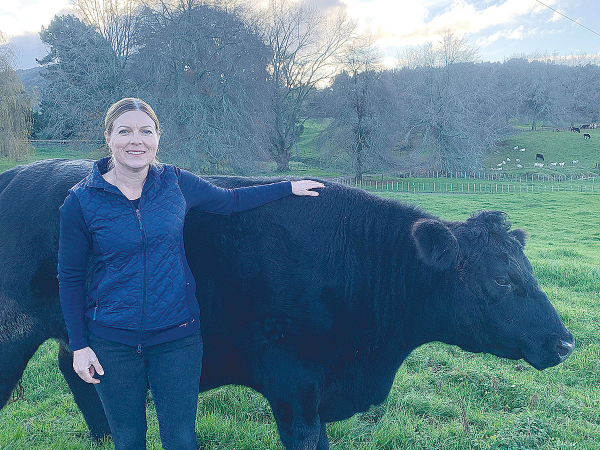 Helen Mandeno, dry stock farmer South Waikato.
OPINION: Soon New Zealand farmers will be asked to know their greenhouse gas (GHG) number. There are a vast number of GHG calculators available, all giving a different answer and none of them allowing for your pasture to be viewed as a CO2 ‘sequesterer’.
Apparently, farmers need to know their GHG number so they can show that they’ve reduced this number, as per regulations about to be imposed on them by the Government, banks, and meat or dairy companies. Make no mistake, the farming tax hasn’t gone away; there are many people set to make a lot of money out of you by asking the GHG question. In true corporate fashion, they will at first call it a premium, then it will slide into a penalty if you don’t play their methane mitigation money game.
Various unnecessary options to reduce your GHG number range from using less fertiliser (already happening), replacing stock with trees (already happening), incorporating low methane genetics (animals that prefer to selectively graze - good luck with that) or using one of the new biotech “tools” that taxpayers have unknowingly contributed towards.
Surely NZ farmers deserve to know what the problem is in the first place before signing up for extra costs and regulations in perpetuity.
This is where it gets interesting.
CO2 makes up 0.04% of the atmosphere. The majority of CO2 in the atmosphere is of natural origin. This natural CO2 is primarily released through processes such as ocean outgassing, soil respiration, and volcanic activity. Human activities contribute only about 4%. NZ contributes 0.17% of all human global emissions.
We are also told by alarmists that methane heats the planet more than CO2 does. It cannot add to warming if levels are stable or decreasing (as ruminant methane is in NZ).
If we are to serve a lifetime sentence, surely we need to define the crime. Professor David Frame has modelled that NZ ruminants may produce (at worst) 4 millionths of a degree C warming per year. This equates to an immeasurable amount. It would take 250,000 years to contribute 1 degree C of warming. How and why would you reduce something that is immeasurable to begin with?
This is why the ‘climate industrial complex’ likes to focus on ‘emissions’ instead of ‘warming’. During the past decade, millions of dollars has been spent researching and funding biotechnologies that can be sold to farmers to reduce their GHG emissions number, even though technically there will be no reduction in global warming temperatures whatsoever.
When the immeasurable amount of warming (4 millionth of a degree C) is highlighted to those people shouting ‘we must reduce emissions at all costs’ (the National Party, AgriZero bureaucrats, levy groups, banks, certain meat companies and dairy co-ops), they are not interested (even though you would think they would have done some due diligence before squandering levy and taxpayer money on misguided pills and potions).
To quote AgriZero upper management, “With regards to the global temperature decrease expected from this bolus, we do not target the actual amount of warming produced by New Zealand ruminants per year.”
Wait a minute? Surely this is another way of saying we are wasting taxpayer and ag sector money just to look like we are “doing our bit” towards the emperor’s new clothes. At a cost touted at $100/cattle beast/year for a needless bolus, anyone would think our sector had time, labour and money to throw away (that’s a billion bucks on boluses per year by the way). To forge ahead with expensive plans to reduce ruminant emissions seems fiscally farcical in a country that has a second-world health care system at best.
You will note that the boffins run for the hills when you ask them what difference this will make to global temperatures and their well-trodden lines of “it’s to protect our global markets” or “we have to play our part” gets rolled out. Telling them to ‘find a country that does it better’ would end that line or argument.
Isn’t it time that our leaders showed some courage and said no to this virtue signalling nonsense? NZ’s contribution to warming is immeasurable and your share of immeasurable is (strangely enough) also immeasurable.
Therefore, when your bank manager, levy body, dairy or meat company demands that you ‘know your number’, ask them to validate what global temperature decrease we can expect from using their myriad of miscalculation matrixes and interfering with our low-input farming systems through.
Helen Mandeno is a dry stock farmer from South Waikato and a member of the Methane Science Accord.
OPINION: We are only weeks from the election, and my vote is looking for a home.

For the first time in a quarter of a century, Federated Farmers has something positive to say about the Labour Party’s climate change policy leading into a general election.
Climate, nature and animal wellbeing make up Fonterra's refreshed sustainability roadmap released last week.
Researchers at Massey University are using a special piece of scientific equipment to improve the measurement of greenhouse gas emissions from pasture soils.
A five-year study has found that the cost of reducing emissions without technology may be significant and unsustainable for Northland dairy farmers.



Vetekina Pau'u is the first Tongan to win the William Gearish Memorial prize and sadly she will also be the last recipient.
Mark Hooper has been appointed the new chair of NZPork, the industry organisation representing New Zealand pig farmers.
As the India-New Zealand free trade agreement enters into force, New Zealand’s apple industry has reaffirmed its commitment to the long-term development of India’s apple sector.
Fonterra shareholders can begin voting on Tuesday 20 October in the 2026 Board of Directors’ election, a Co-operative Council election in one Ward, and seven Annual Meeting resolutions.
National’s pledge to introduce 19 new national standards shows the party is serious about getting Wellington out of farming, Federated Farmers says.



OPINION: The same mainstream media muppets that brought you Jacindamania in 2017 have been flat out pimping for the Opportunities…
OPINION: Your old mate reckons the atrocious way farmers in the UK are treated by their lords and masters in…