
NZ SmartMilk Wins World’s Best Dairy Drink in Barcelona
Combine premium New Zealand products, blend in a family ritual and what do you get? A world-class functional drink.




 increase font size
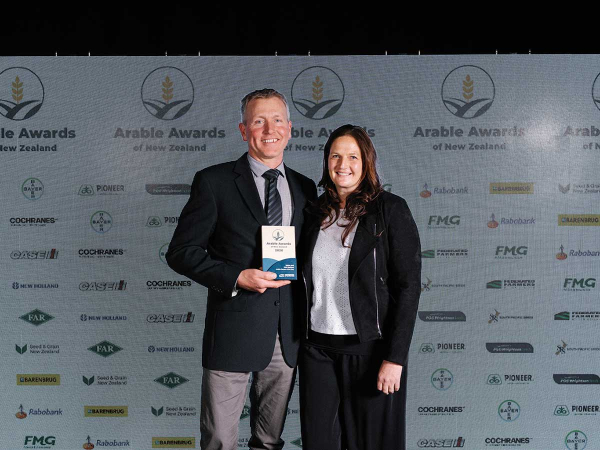 Arable Farmers of the Year and Seed Grower of the Year - John and Mel McCaw.
The arable sector losing good people and land is a major concern for the 2026 Arable Farmers of the Year, Mid Canterbury seed growers John and Mel McCaw.
The couple came away with the premier award at the recent awards dinner in Christchurch, the judges citing their industry leadership as much as their on-farm performance.
As well as producing a diverse range of high-quality seed and cereal crops, they were recognised for their "exceptional attention to detail, innovation, and commitment to advancing the seed industry".
While saying it was important for the industry to stay positive and not talk itself down, John McCaw told Rural News that the arable sector faced real challenges around profitability, with near static prices for an extended period while farm inflation had been running rampant.
"Farmers are having to have a pretty close look at their expenses and they really need to consider the contract terms and pricing before signing up, because some of the contracts that are on offer just simply would not be profitable."
McCaw said there was certainly a lot of land use change underway.
He was aware of six current dairy conversions in the Methven area, and others considering it. And for every dairy farm, there was a support block, he said.
McCaw said farmers putting in more kale for wintering stock, grass for silage, or trading more lambs, were decisions that tended to "fly under the radar" but were very significant and add up very quickly.
The real change on farm would be a shift in emphasis over time, from seed to feed.
"People may, for example, choose not to grow autumn feed wheat, but rather go through a crop of green feed oats for winter feed, and then grow a spring cereal crop instead because the value of that winter feed is now greater than the yield penalty of growing a spring cereal versus an autumn cereal.
"These are the things that are happening now and people are making these decisions now.
"It won't be until the autumn when the seed companies are looking to contract Autumn Zone crops that they find that actually that area is no longer available."
McCaw said that once a dairy shed goes on a farm, there's no going back.
"So, we are certainly losing, not only good land, but very good growers and a lot of skill and expertise that are leaving the industry. And that is a real concern.
"But to counter that, I think there will always be demand for high-quality seed production.
"I personally believe that a very clean well-run arable farm producing high-quality seed has a future.
"We're certainly hoping that that is thee case and we're continuing to invest in our businesses on that basis.
"But there are certainly challenges to work through with the seed companies. And I think, to be honest, it's only really just starting to dawn on the seed companies, just how serious this is."
The family farm 560ha near Methven - the farm John McCaw grew up on, his parents having bought the original property in 1968.
The farm specialises in high-quality small seed production, chiefly ryegrass and cocksfoot and also vegetable seed.
They trade 5000 lambs a year, winter dairy cows and raise young stock for a neighbouring dairy farm, in a multifaceted operation.
The couple also owns McCaw Seeds seed dressing plant in Methven, servicing other growers in the province. John is also th chair of Federated Farmers' heritage seed subsection.
The McCaws also won the Seed Grower of the Year award.
Combine premium New Zealand products, blend in a family ritual and what do you get? A world-class functional drink.
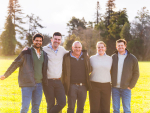
Applications are set to open for the 2027 Zanda McDonald Award, a trans-Tasman award recognised for identifying and fast-tracking talented young leaders in agriculture and agribusiness.
Mid Canterbury Federated Farmers arable chair, Bevan Lill, said Beef + Lamb NZ data indicated that for the last six years, the average arable return on investment was about 0.8% while inflation ran about 4% - so the average arable farm was going backwards at about 3% a year.
Seed and grain companies share the concerns of arable farmers about the viability of their sector, says Seed and Grain New Zealand chief executive Dr Sarah Clark.
A warning for New Zealand seed and grain companies – be prepared for an exodus of farmers from the arable sector.

A New Zealand initiative supporting farmers to restore the health of grazing landscapes has received international backing through the Regenerative Fund for Nature, a global collaborative fund supporting regenerative agriculture and the communities that produce natural fibres for the fashion industry.

Combine premium New Zealand products, blend in a family ritual and what do you get? A world-class functional drink.
Entries are now open across eleven regions for the 2027 New Zealand Dairy Industry Awards (NZDIA).
Safer Farms is urging farmers to make sure everyone working on farm has safe, suitable footwear for the job.
The Government is backing work on a community-led water storage scheme that could irrigate up to 11,000 more hectares of the Poverty Bay flats, Agriculture Minister Todd McClay says.
Agri-tech company Herd-i has become a new all-region sponsor of the New Zealand Dairy Industry Awards (NZDIA), the largest nationwide celebration of excellence in the dairy sector.




OPINION: The same mainstream media muppets that brought you Jacindamania in 2017 have been flat out pimping for the Opportunities…
OPINION: Your old mate reckons the atrocious way farmers in the UK are treated by their lords and masters in…




