OPINION: With diesel pricing climbing once again because of the ongoing geo-political issues, you wonder how farmers, contractors and rural dwellers will rein in consistently high input costs that continue to erode margins.
Far wiser people than this scribe suggest that any major reduction in fuel costs is likely to be some way into the distant future, as damaged or destroyed refineries that have curbed production will take a long time to repair and distribution chains will need to be reestablished.
When the Iranian war disrupted fuel supplies back in March, rural contractors and hauliers introduced a Fuel Adjustment Factor, with the former’s National Association developing an app to make accurate calculations and implement reasonable surcharges.
Looking ahead, it might be the time to take a closer look at this key input cost, remembering that, unlike the car industry, there are no real alternative fuel options.
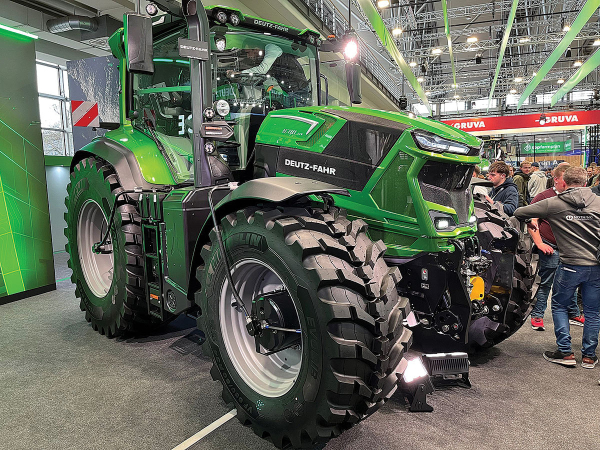
Perhaps traditional machinery buying decisions, often centred around preferred brands, horsepower, transmissions and operator comfort, will have to give way to a new tipping point that will refocus on overall fuel consumption and operational efficiency?
With such high fuel prices, one wonders if the hierarchy between tractor brands might change, forcing those manufacturers to take a far closer look at its overall design and productivity.
At last November’s German Agritechnica event, it was clear to see that most mainstream manufacturers were less focused on new models per se, instead promoting advancements aimed at increasing productivity – likely prompted by many users shouting loudly that tractors are ‘just getting too expensive’.
Diesel prices continue to be a high priority, both on availability and price, with availability being highlighted by President Trump breaking the Russian trade embargo to take substantial volumes of fuel well into the New Year.
Rural fuel consumption and efficiency is not a level playing field around the globe, given that storage capacity and local taxation can have a huge impact on cost.
Likewise, seasonal usage changes demand, and higher costs are more easily absorbed by smaller-scale operations growing high-value crops. On the flip side, broadacre farmers with high horsepower prime movers, who use big volumes of fuel, stand to make substantial cost savings by using more fuel-efficient machines and improving productivity.
Basic mathematics tells us that a tractor operating over a conservative 1000 hours per annum, which achieves a three litre per hour fuel saving over a competitive brand, will save 3000 litres each year. That, at today’s pump price ($3.10/litre on 12/10/26) will deliver a fuel cost saving of $9300.00.
A tractor achieving a 5 litre/hour improvement will save $15,000 in fuel costs. Of course, if current or higher pricing remains the norm for up to three years, as some commentators suggest, those cumulative savings increase to $27,900 and $46,500 respectively.
Looking at these numbers in comparison to a tractor’s purchase price, that ‘favourite’ tractor might command a $20,000 premium over a lesser preferred option.
Either could be more or less fuel efficient, so the “premium” purchase might offer a short payback time, or the “second tier” machine might be a better investment.
Perhaps the time has come for prospective buyers to carry out a little more research on the cost of ownership and fuel efficiency, rather than the often quoted “that’s the brand we always buy!”