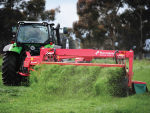
How to Make High-Quality Grass Silage
Grass silage is pickled pasture, preserved through the conversion of its sugars into lactic acid by bacteria.




 increase font size
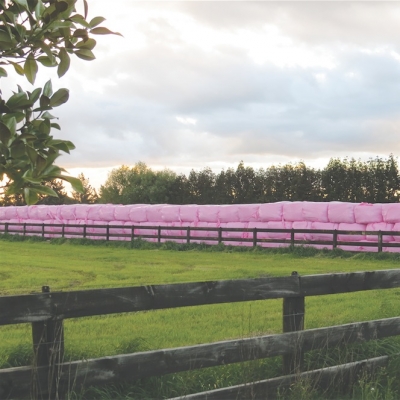 Agpac's pink bales
Crop packaging company Agpac says its use of coloured silage and hay bales to raise awareness of breast cancer in rural communities is catching on in other countries.
The bales (pink for silage, pink and black for hay) are intended to get people talking about women’s health, especially breast cancer prevention.
Agpac general manager Chris Dawson says his company worked with its overseas suppliers to develop the packaging.
The company donates a percentage of sales of the pink products to Sweet Louise, which supports Kiwi women with secondary breast cancer, and their families.
“The limited supply of the pink silage wrap and pink and black netwrap we had this
year sold well,” Dawson says. “Farmers, contractors and rural newspapers have picked up the story. [It’s] been very gratifying. Thanks to this positive response we will expand the programme next year.”
Agpac asked contractors buying the pink wrap to supply it to farms near major roads so the pink bales would stand out.
Te Awamutu contractor Maurice Forkert says the pink was popular with his dairy farmer clients and especially their wives. “It was all sold by word of mouth. One farmer wasn’t so keen at first, but his daughter insisted and he came around.”
Sweet Louise, a charitable trust, offers counselling and emotional support, haircuts, wigs and hats, and helpers who do chores around the home.
Chief executive Fiona Hatton says she is thrilled at Agpac’s help, especially in regions otherwise hard to reach.
An Israeli company Tama Plastic Industry, supplied the pink and black striped netwrap, and Swedish company Trioplast supplied the pink bale wrap.
“Agpac’s Australian parent company Tapex has picked up the idea and is promoting breast cancer awareness in rural communities there,” Dawson says. “Tama is rolling out its pink and black netwrap in Europe and Israel.”
The company says it intends to add a blue bale wrap to raise awareness of men’s health and prostate cancer in support of Prostate Cancer Foundation NZ.
Grass silage is pickled pasture, preserved through the conversion of its sugars into lactic acid by bacteria.
As I write this article, we have just had our first frost in the Waikato, a change in weather signalling that winter is upon us.
Waikato farmer Dave Muggeridge was fed up with water seeping in through his maize silage cover and spoiling feed.
Creating perfect silage is both a science and an art, and it all begins with the right tools, according to machinery maker Claas.
Good silage starts by cutting the crop at the correct growth stage, followed by reducing moisture content, chopping to a consistent length, then stacking in a clamp.


National’s pledge to introduce 19 new national standards shows the party is serious about getting Wellington out of farming, Federated Farmers says.
The National Party’s policies to make it easier to grow fresh vegetables, secure reliable water and energy and simplify farm planning are practical changes that will give growers the confidence to invest, according to Horticulture New Zealand (HortNZ).
Fonterra Co-operative Group chief financial officer Andrew Murray has resigned to take up a role outside the dairy giant.
A major move is about to get underway to improve the quality and viability of dairy beef and cattle in NZ.
Veterinarians say changes to the code of welfare for dairy cattle provides a positive foundation for improved cattle welfare across the country.
Today, 15 October, is the International Day of Rural Women, which recognises rural women’s contribution to farming, communities and the environment.


OPINION: The same mainstream media muppets that brought you Jacindamania in 2017 have been flat out pimping for the Opportunities…
OPINION: Your old mate reckons the atrocious way farmers in the UK are treated by their lords and masters in…




