NZKGI Responds to Migrant Worker Exploitation Reports
Where any worker in the kiwifruit industry is mistreated, we expect the authorities to take action.



 increase font size
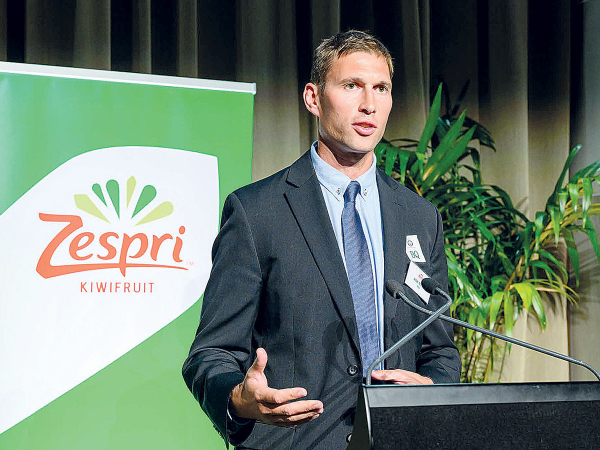 Zespri chief executive Jason Te Brake.
New Zealand's kiwifruit industry has welcomed Government co-investment in a new five-year programme designed to help growers produce higher yields of premium fruit, with less water, fewer nutrients and reduced environmental impact.
New Zealand Kiwifruit Growers Inc. (NZKGI) and Zespri will deliver Optimising Kiwifruit Land Use - More from Less, with the project co-funded through the Government’s Primary Sector Growth Fund, contributing $19.14 million.
The kiwifruit industry and Zespri will contribute a further $28.73 million combined cash and in-kind investment.
The programme will operate across all New Zealand kiwifruit growing regions and varieties to grow more value from existing orchards with on-orchard innovation, advanced decision-support tools, and applied science.
Optimising Kiwifruit Land Use - More from Less has three workstreams:
NZKGI CEO Colin Bond says the programme is an important step forward for grower confidence and industry growth.
“Growers are seeing strong global demand for New Zealand kiwifruit, and meeting that demand relies on having confidence in our ability to produce consistent, high-quality supply," Bond says.
“This programme is about giving growers the tools, science and insights they need to lift productivity, improve returns, and manage risk on orchard.”
Zespri CEO Jason Te Brake says the kiwifruit industry is pleased to work alongside the Government on Optimising Kiwifruit Land Use - More from Less.
"We expect to more than double our exports over the next 10 years through releasing new cultivars, developing more orchards and importantly maximising productivity on existing orchards and doing this in a way which is good for people, communities and the environment," Te Brake says.
“This programme will support growers to improve their orchard performance and production, while strengthening the value of our kiwifruit exports to meet the strong market demand for our premium products," Te Brake says.
"Our industry has a strong history of being forward-looking, innovative and collaborative and co-investment of this kind helps bring innovation to growers much faster than we could on our own.
“We’ve got a really strong opportunity in New Zealand - with land capable of producing some of the best kiwifruit yields in the world. However, we’re also working within some real constraints. There’s only so much suitable land in the right climates, with production sitting alongside increasing environmental expectations and climate variability.
“Kiwifruit has a relatively low environmental impact and we’re committed to always looking at ways we can do better. The opportunity for us is in getting more from the orchards growing now through more precise growing practices, better decision-making tools, and continuing to bring new science into our orchards to improve production as well as delivering new varieties which grow at higher yields in a wider variety of locations.
“Kiwifruit already delivers significant value back to New Zealand’s regions and rural communities each season - $3.6b in direct grower returns last season - and this programme will build on that, supporting further value back to growers, shareholders and the wider economy.”
The programme will be overseen by an independently chaired Project Governance Group, with representation from MPI, NZKGI and Zespri.
Where any worker in the kiwifruit industry is mistreated, we expect the authorities to take action.

Kiwifruit growers are watchful but remain optimistic as concerns around the potential effects of the El Niño weather pattern this season.
More signs of a booming kiwifruit sector.
After delivering a strong financial year, rural trader PGG Wrightson says the coming months will depend on customer confidence and weather.
New Zealand growers have always adapted to changing conditions, but one challenge is steadily gaining ground across the horticulture sector: resistance.


Farmer-owned fertiliser company, Ballance Agri Nutrients is welcoming National’s plan to negotiate security agreements with key supplier countries to protect New Zealand-bound products from export restrictions and greater supply chain certainty.

Carrfields has announced the appointment of Stu Hall to the newly created role of chief operating officer, Carrfields Ltd, reflecting the continued growth of their agribusinesses and the need to ensure the company has the leadership capacity and support in place as it pursues the emerging opportunities ahead.
New Zealand's role is not to compete with Indian growers, according to NZ Apples and Pears.
The potato industry is celebrating the success of two rising stars - James Blair, the 2026 Young Grower of the Year and runner-up and innovation award winner, Amber Davy.
Twenty-eight emerging leaders from across the horticulture sector spent two days last month learning valuable skills and connecting with industry experts.
There are five entrants in this year’s Young Horticulturist of the Year, competing in a series of technical, practical, business and leadership challenges.

OPINION: The same mainstream media muppets that brought you Jacindamania in 2017 have been flat out pimping for the Opportunities…
OPINION: Your old mate reckons the atrocious way farmers in the UK are treated by their lords and masters in…