Lanaco and Blueair Launch World-First NZ Wool Air Filter
New Zealand wool is reaching new heights as air filtration companies move away from synthetic products to biodegradable alternatives.




 increase font size

The 9400 bales on offer in the South Island this week saw a 91% clearance and an overall stronger market, says NZ Wool Services International Ltd's general manager, John Dawson.
The weighted indicator for the main trading currencies was 0.71% lower than the last sales on February 21, adding impetus to local price levels.
Dawson says a small offering of Mid Micron wool 25 to 29 microns were nominally 2% dearer.
Fine Crossbred Fleece 32 to 35 micron were firm to 3% stronger with the Second Shears firm to 1% dearer.
Good style coarse carpet fleece were 1.5 to 2.5% stronger with the poorer styles 2.5 to 4% dearer. Longer coarse shears increased 1.5 to 4% with the shorter types firm to 2.5% dearer.
First Lambs Fleece 31 micron and finer were 1 to 3% dearer with coarser types 3% stronger.
Combing oddments lifted by 3 to 4% with shorter oddments firm to 2% dearer.
Competition was good among China, India and Australasia principals, supported by Middle East, Western Europe and the United Kingdom.
The next sale March 7 comprises about 16,000 bales from the North Island and 8800 bales from the South Island.
New Zealand wool is reaching new heights as air filtration companies move away from synthetic products to biodegradable alternatives.

Will a stronger, more coordinated voice help rebuild confidence and improve returns in the wool sector?
OPINION: Confidence in the wool sector is rebounding as prices hit levels not seen in more than 15 years.
The recently signed free trade agreement with India is an invitation to strengthen relationships between the New Zealand and Indian strong wool industries, says Wool Impact chief executive Andy Caughey.
Strong competition and tightening supply have seen wool reach its highest prices paid at auction since 2011.


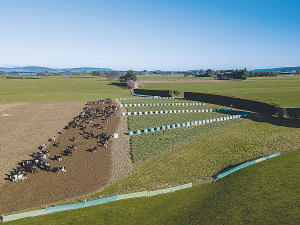
Central Otago District Council (CODC) has voted against a plan to spread treated sewage sludge from Cromwell and Alexandra on farmland near Lauder, a decision Federated Farmers says reflects strong opposition from rural residents.
Pāmu has released its FY26 Integrated Annual Report, reporting a Net Operating Profit of $113 million, more than double the $49 million recorded in FY25.
Meat Industry Association data, released alongside the Red Meat Sector conference in Wellington, shows export value climbing across the US, China, UK and Canada.
Applications are set to open for the 2027 Zanda McDonald Award, a trans-Tasman award recognised for identifying and fast-tracking talented young leaders in agriculture and agribusiness.
The Royal New Zealand College of General Practitioners (the College) and Hauora Taiwhenua Rural Health Network are calling for investment in a proposed new training pathway for rural GPs, warning that many rural practices are struggling to recruit while a large share of the existing workforce nears retirement.
Synlait has swung to second-half profit as operations stabilise, but the dairy processor still posted a $75.4m annual loss.


OPINION: The same mainstream media muppets that brought you Jacindamania in 2017 have been flat out pimping for the Opportunities…
OPINION: Your old mate reckons the atrocious way farmers in the UK are treated by their lords and masters in…