Wool-derived protein may help diabetes management
New research has provided insight into the functional potential of wool-derived protein, with an initial trial revealing it can influence how the body responds to insulin.




 increase font size
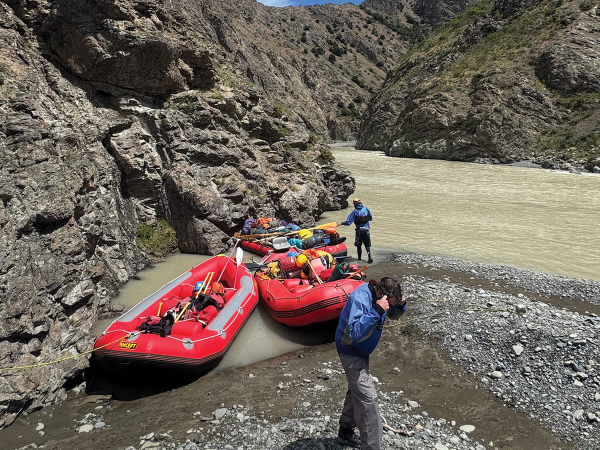 Rafts in the gorge where the team camped.
A group of old Otago uni mates with a love of South Island back-country have gone the lengths of Waiau Toa Clarence from source to sea. Tim Fulton, who joined the group in the final fun to the river mouth, tells their story.
The team have mounted about 30 mostly-South Island adventures over the last 15 years or so. The core group are a collection of about a dozen 60-something-year-old doctors, a dentist, a pharmacist, a landscape designer, a farmer, together with a few other additions and extractions over the years.
Waiau Toa Clarence River has always been a source of fascination for retired doctor Andrew Findlay. Fuelled by that interest, he put together an expedition with a twist, taking on the length of the river in a single trip.
Andrew had rafted part of Waiau Toa with a group of families about three years ago, but this time it was a seven-dayer and the buildup was a bit different.
"I had a bike accident a couple of years ago, basically broke my back, and then I had a fleeting experience with paraplegia. So, I figured that was going to be it for a lot of things, but after the initial surgery things came back surprisingly quickly. I've still got a couple more operations to go but it's been about getting yourself back into your head, back to normal life again."
There were many intrepid moments for the team but their ultimate memory must surely have been a bottle of Waiau Toa Clarence, scooped from a bubbling source near Belvedere Peak, at the head of the catchment.
Supported by Ben Judge's crew at Clarence River Rafting, the team drove down from Blenheim to St Arnaud before setting out for the Clarence's interior.
First steps; a 50km mountain bike section along the Rainbow Station to Hanmer high country road to camp 1, which was situated just short of Lake Tennyson at Sedgemere Flat.
Day 2 was a morning bike followed by a six-hour tramp around the Lake to the Belvedere Peak base camp. Day 3, Eureka! the source was discovered after a long, hard 14-hour return tramp/climb to the peak and retracing back to Lake Tennyson.
The source of Waiau Toa Clarence is just below Belvedere, which has a unique, but little-known geographical feature. It has four watersheds which lead to three South Island coastlines: the Clarence flowing to the Pacific, two joining to form the source of the Wairau River which leads to Cook Strait and the East Sabine, which connects to the headwaters of the Buller and ultimately the Tasman Sea.
"The Māori history is that it was significant to them because they could get to three different coastlines with their waka, the Pacific, the Tasman Sea and then Cook Strait with their waka. They could paddle down there with any produce, food or whatever they could, or even just for transport - they could go across the country. When we went from Lake Tennyson up the valley, you realise that you can see this classical, U-shaped glacial valley. It's quite different to a flooded river valley, which is more a V shape. Suddenly it dawned on me that Lake Tennyson is actually the terminal lake right at the end of what was once a glacier."
The team has a few clues trying to find the source, namely topo maps and their knowledge of South Island high country.
"The topo maps trace out the course of the upper reaches of the river and where, in theory, it should start and eventually where it stops. In real terms however, to find the true and accurate source, you need to read the terrain to where the water actually pops out of the side of the hill. And in this case, it was out under snow."
They took ice axes but didn't really need them as in the middle of the summer, a lt of the snow has melted, "so we just sort of searched through the rocks and scree until eventually the water source disappeared underground".
The team still kept searching even higher up, to find the actual source - and Andrew says it all comes down to listening for water under the rocks.
"You put your ear down, dig down a bit and there it was. So now I've got a scoop of it in a bottle."
Completing the trip in one go from source to sea felt like a special achievement for the while team.
"We like to think that nobody's actually done the whole thing in one go before. Certainly, people have done separate sections and we know people have gone from Tennyson up to Belvedere Peak and back. bUT i DON'T BELIEVE they would have then biked, walked and rafted and then got all the way down to the ocean," says Andrew.
Making Connections
High country adventures connect you to people in a different kind of way, Andrew Findlay says.
"Because we've done quite a number of trips that involve high country stations, you're staying in huts, shearer's quarters and homesteads. A lot of the expeditions have been around the lower half of South Island. Everyone likes to pretend they're sort of the true southern man, don't they? In our jobs we associate with people from all walks of life, but we particularly enjoy meeting people from the agrarian sector. They're good, solid people and meeting them on our expeditions, allows us to form a connection in a different way."
Most of the ideas for these trips start at a dinner party over a couple of beers or wine "and then someone suggests things, and it snowballs from there".
The team have got their drill down pat. "We're ready for the next adventure," Andrew says.
New research has provided insight into the functional potential of wool-derived protein, with an initial trial revealing it can influence how the body responds to insulin.

OPINION: Health New Zealand says the source of the cryptosporidium outbreak in Queenstown was most likely human faecal contamination of the water supply.
Southland farmers aren't surprised by research showing that a new national freshwater policy opposes their perception of a good farmer and good farming practices.
Rural people are underserviced by the current health model, according to Dr Fiona Doolan-Noble from the Department of General Practice and Rural Health at Otago University.
With 62,000 New Zealanders living and working rurally, their communities are the backbone of the economy, but they are poorly supported healthwise.


Federated Farmers says it welcomes Labour's commitment to reviewing the Sharemilking Agreements Act, calling on other major parties to do the same.
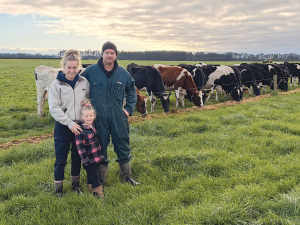
For Canterbury dairy farmers Sian Meijer and Rick Wobben, wearable technology has become one of their most valuable on-farm tools - helping manage 1850 cows across an expansive, high-performing dairy operation while improving efficiency, mating outcomes and day-to-day decision making.
Fonterra has unveiled its annual results for the 2026 financial year, posting $27 billion in revenue and close to $20 billion returned to New Zealand farmer owners and unit holders.
The first major update to the Dairy Cattle Code of Welfare in more than a decade has been released, marking what DairyNZ describes as an important step in ensuring animal welfare standards continue to evolve alongside scientific evidence and on-farm realities.
Ravensdown shareholders have elected Jane Montgomery and Kate Acland to the Ravensdown Board for three-year terms, following a closely contested director election.
Federated Farmers says new legislation replacing the Resource Management Act will cut red tape, unlock investment and help grow New Zealand's export-led economy, after the Planning Bill and Natural Environment Bill passed their third reading in Parliament yesterday.



OPINION: The same mainstream media muppets that brought you Jacindamania in 2017 have been flat out pimping for the Opportunities…
OPINION: Your old mate reckons the atrocious way farmers in the UK are treated by their lords and masters in…