
NZ ETS Settings Hold Steady Amid Shortfall Warning
The Climate Change Commission has recommended maintaining the current New Zealand Emissions Trading System (NZ ETS) settings but warns of a potential unit shortfall as early as 2028.




 increase font size
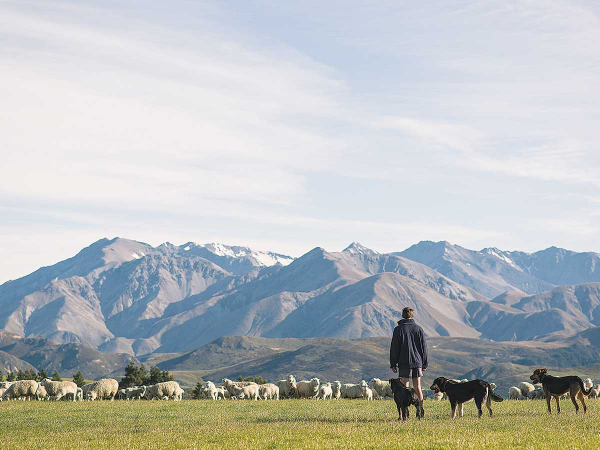
One issue that has been picked out of the Climate Change Commission report is a reference to reducing stock numbers by 15%.
Some environmental activists are claiming that the dairy industry has being given a free pass to pollute. Rodd Carr does not see it that way.
“There has been a bit of focus claiming the commission had set a target for reducing flocks and herds and the numbers of animals. That’s not a target we are setting,” he told Rural News.
“We are saying that with land-use change, the de-intensification as a result of the water regulations, and some of the opportunities to get more production from the residual 85% of flocks means that we will be able to produce as much milk and meat as we produce today but with fewer animals.
“That raises the question that do few fewer animals create more methane so you don’t really get the reduction – the answer this does not appear to be the case.”
Carr says selective breeding of sheep to develop a trait that produces an animal with lower emissions is realistic. He believes that the farmers understand the concept of breeding for different traits and have been very good at it over many years.
Carr also points to how the sheep industry has responded to price pressure over the years. He says farmers have figured out how to manage with relatively limited numbers and have done a stunning job in breeding specific traits into their flocks.
But he notes that research along similar lines in the dairy industry is only just beginning and he wonders why.
“We have to say, how do we accelerate breeding sheep and feed that result in lower methane emissions,” he told Rural News. “That hasn’t been the objective for the last 20 years, but if we make that a key objective for the next 20 years – then I have every reason to believe that we will find better practices and can apply them widely.”
Carr believes that once farmers see and understand these new farm practices they will now, as in the past, adapt quickly to the changes.
“There needs to be investment in education and support to let farmers know and understand what those choices are,” he says.
Carr says the lack of independent advice is an issue for farmers and one he says was raised by farmers in the initial consultation when preparing this draft report. He says farmers expressed concern at the number of consultants and sales reps all offering options, which left them totally confused about what to do.
“In the report, we are advocating for more support farmers but we are a bit vague on what exactly that means because we don’t want to tell farmers what they need,” Carr explained. “We want farmers to say what they need to adopt good practices and get good advice.”
He adds that during consultation phase, the commission would be interested in hearing more on this subject from farmers.
Carr expects there will be some land use change with a small shift to horticulture and forestry – both exotic and native.
However, he warns while forests have a role to play, NZ can’t ‘plant itself out of climate change’.
The big risk of doing nothing
As well as discussing in big detail the ways to achieve the 2050 emissions targets, the report issues a warning about the risk to the primary sector if it does nothing.
It is similar to the narrative associated with the new freshwater regulations. Incidentally, these (the freshwater regulations are also seen as another driver to lowering emissions.
The report warns that NZ may even lose market access to global markets, which are seeking lower emission products.
"We are vulnerable to consumer preference which means if consumers just decide that they don't like your things because they perceive them as in some way tainted, that is a real problem - regardless of whether it's true or not," Carr told Rural News.
"Then there is the risk of regulatory exclusion - where some countries have imposed real economic costs on their own producers to reduce their emissions and are unlikely to allow cheap, nasty imported products to compete with them.
"So, the combination of competitive technology, changing consumer preferences and regulations barriers give you really good reasons about why we need to take this stuff seriously," he says.
Carr also adds that banks and financial institutions are very much tuned into the impacts of climate change and this is reflected in their lending policies. He says that the cost and availability of credit may be linked to one's carbon footprint and farming practices.
Technology and its role
The report places a lot of emphasis on science and technology.
It notes the advances being made in developing methane inhibitors and vaccines, which would help to significantly reduce emissions in the ag sector. But it quickly adds that such technologies are not yet available.
 |
|---|
|
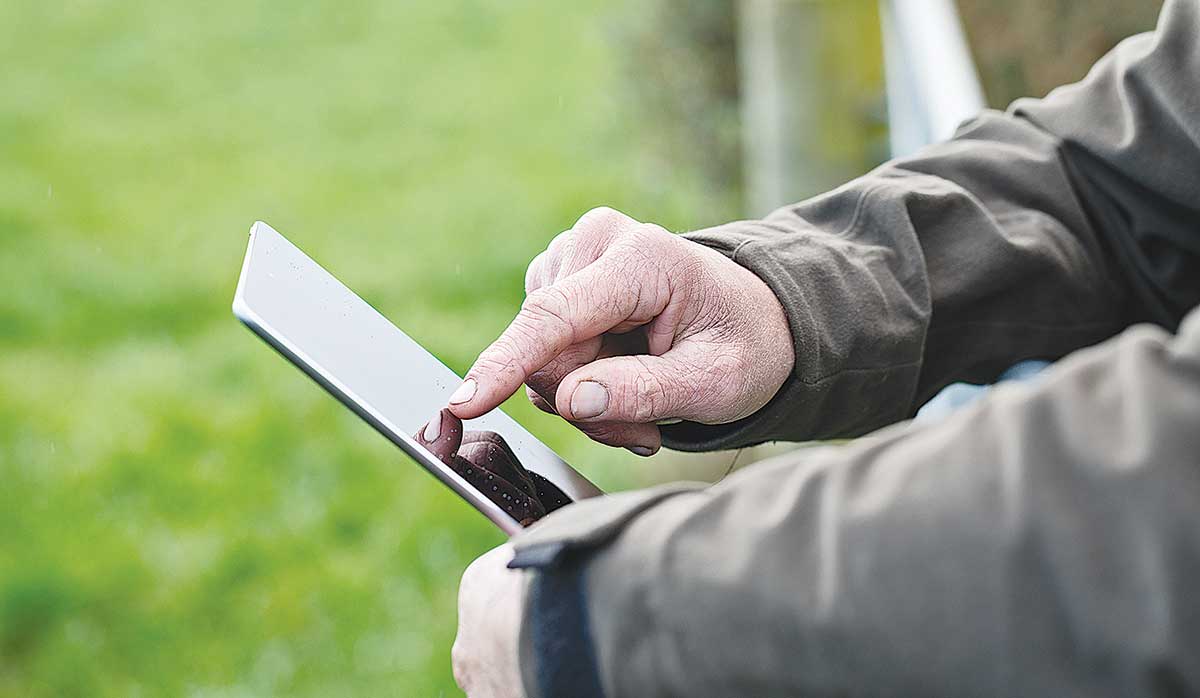
The Climate Change Commission's report places a lot of importance on science and technology. Photo: Paul Sutherland Photography. |
The report says farmers need to take up new technology as it becomes available, but Rod Carr has a caveat on that. “We must ensure that the rural broadband initiative is resourced and prioritised so that farmers have access to data and information to support decision making and the ability to practise precision agriculture,” he told Rural News.
Carr also suggests that priorities for science funding need to be made to ensure climate change related science is undertaken to meet the emissions targets.
“We need to make sure that if we have good science we roll it out,” he explains. “There is temptation for the science community to be looking for the next best thing, whereas we know the real benefits come when the last good thing is adopted widely.
“It’s not only publicising the science; it’s about having people out there with farmers, getting mud on their boots and working out specific solutions for individual farms,” he adds.
The Climate Change Commission has recommended maintaining the current New Zealand Emissions Trading System (NZ ETS) settings but warns of a potential unit shortfall as early as 2028.
The Climate Change Commission’s 2025 emissions reduction monitoring report reveals steady progress on the reduction of New Zealand’s climate pollution.
Former Governor-General Dame Patsy Reddy will be the new chair of the Climate Change Commission.
The dairy industry is well placed to front the cost of new technologies to deal with methane emissions, but the sheep industry isn't.
There is an urgent need for the Government to put a limit on the sale of farms for forestry - particularly for carbon farming.


Farmers are being encouraged to rethink how they manage waste on farm with the launch of ruralwastesorted.co.nz, a new website bringing together practical tips, real farmer experiences and resources.

New Zealand Winegrowers (NZW) is celebrating the India-New Zealand Free Trade Agreement (FTA) coming into force today, bringing New Zealand wine improved access to one of the world’s fastest-growing economies.
New Zealand’s red meat sector has welcomed the India-New Zealand Free Trade Agreement taking effect, which removes India’s 33% tariff on New Zealand sheepmeat.
More than 95 per cent of New Zealand’s forestry and wood exports to India can now enter tariff free as the New Zealand-India Free Trade Agreement comes into force today.
Federated Farmers is backing Feilding High School’s call to keep Agriculture and Horticultural Science as a standalone subject in Year 11.
Food and fibre exports have returned a billion- dollar bonus to the country.


OPINION: The same mainstream media muppets that brought you Jacindamania in 2017 have been flat out pimping for the Opportunities…
OPINION: Your old mate reckons the atrocious way farmers in the UK are treated by their lords and masters in…




