Rabobank Launches HortPathways for Emerging Hort Leaders
Twenty-eight emerging leaders from across the horticulture sector spent two days last month learning valuable skills and connecting with industry experts.




 increase font size
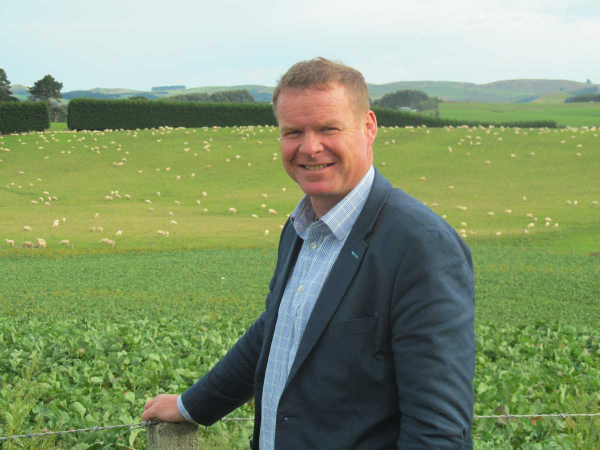 Rabobank New Zealand chief executive Todd Charteris.
COVID-19 is negatively impacting New Zealand’s rural sector confidence.
The declining confidence comes as the country’s primary industries prepare to shoulder some of the heavy lifting for economic and social recovery, claims specialist rural bank Rabobank.
New Zealand chief executive Todd Charteris says the bank’s latest rural confidence survey shines a light on the psyche of farmers at a critical time for the nation.
“The food and agri sectors will be crucial in helping to rebuild the New Zealand economy and Rabobank continues to have a strong positive long-term view of the sector outlook,” he says.
“Having said that, our latest survey shows farmer sentiment has slipped since late 2019.”
After climbing strongly in the December 2019 quarter, net farmer confidence in the broader agricultural economy fell to -44% in the March quarter – down from -12 per cent previously.
The survey found a decrease in the number of farmers expecting agricultural economic conditions to improve in the coming 12 months (down to 12% from 21% last quarter). There were also more farmers expecting conditions to worsen (56% from 33% previously).
The number of farmers expecting the performance of the agricultural economy to stay the same fell to 29% from 44% last quarter. Among farmers with a negative outlook, the majority cited COVID-19 as a key factor for holding this view.
Charteris says during the period the survey was open – between March 3 and 18 – farmer concerns are likely to have been centred largely on the impact COVID-19 was having on Chinese demand for New Zealand agricultural products and the potential for the virus to result in similar demand falls in other global markets.
“Understandably this had a marked impact on farmer confidence – particularly in sheep and beef due to uncertainty over market access.”
Twenty-eight emerging leaders from across the horticulture sector spent two days last month learning valuable skills and connecting with industry experts.

A 'tsunami' of milk from key exporting countries is winding down and this may be good news for New Zealand dairy farmers.
Chinese beef trade quotas and a looming suspension of Brazilian beef imports into the European Union are expected to reshape global beef trade flows over the remainder of 2026, with implications for New Zealand exporters, according to Rabobank's Q3 Global Beef Quarterly report.
New Zealand consumers are paying more for beef mince than ever before, with the average retail price now sitting above $24 per kilogram, according to Rabobank.
West Otago dairy farmer Luke Kane has been awarded the 2026 Rabobank Dr John Morris Business Development Prize.


Federated Farmers has welcomed new rural policies released by ACT, saying they align closely with its own election priorities.

Rural Contractors NZ says proposed changes to land transport rules for agricultural vehicles are a welcome response by the Government to out of date regulations which have seen members hit with huge fines.
Alliance is calling for final applications for its 2027 Graduate Programme, with applications closing on Sunday 25 October.
Decades piloting planes has ensured vet and farmer David Hayes is focused on safety. So, after a serious accident while welding on farm, he is sharing his experience so others can learn from it.
Canterbury milk processor, Synlait Milk has confirmed Leon Fung as its chief executive officer.
OPINION: Making it easier to collect rainwater and use it to grow crops and livestock is a no brainer.





OPINION: The same mainstream media muppets that brought you Jacindamania in 2017 have been flat out pimping for the Opportunities…
OPINION: Your old mate reckons the atrocious way farmers in the UK are treated by their lords and masters in…




