Beef + Lamb NZ's Lambing Kit Checklist for a Tough Season
With lambing underway in many regions, Beef + Lamb New Zealand is encouraging farmers to put together a wellequipped lambing kit to help minimise lamb losses, particularly in bad weather.




 increase font size
 New Zealand's sheep milk industry is set to benefit from new research by AgResearch.
New Zealand's sheep milk industry is set to benefit from new research by AgResearch.
AgResearch scientists presented the initial results from two years of research from the $6 million MBIE-funded programme this week at the second Sheep Milk NZ industry conference in Taupo; 200 people are attending.
The research looked at boosting exports of the emerging dairy sheep industry, ranging from composition of New Zealand sheep milk through to best practice effluent management.
"New Zealand's dairy sheep systems are unique to us, and we have the natural advantages of our year-round pasture-based farming. We need to establish the particular qualities and advantages our systems produce," says research leader and AgResearch senior scientist Dr Linda Samuelsson.
"If we are to make claims about the benefits of New Zealand sheep milk, we need the data to back it up."
Differences established so far include research by Marita Broadhurst analysing 500 milk samples collected at different times of year over the last three years. It shows that on average, New Zealand sheep milks have higher levels of protein and twice the fat of cow's milk, with high levels of calcium, phosphorus and magnesium.
Dr Wayne Young and Samuelsson's work show sheep and cow milk cause different effects on gastrointestinal physiology in rats. "We also observed that rats fed sheep milk required less solid food than rates given raw cow milk to maintain the same level of growth. This supports the view that sheep milk is an excellent source of nutrition," says Young.
Other goals for the research include optimising feed and nutrition systems and developing criteria to ensure environmental sustainability of sheep dairying in New Zealand.
Dr David Stevens presented research looking at liveweight gains of ewe lambs between 12 and 20 weeks on puberty and mammary gland development. "The research was to gain information about the systems we run because we can't look to international literature. We have to do it ourselves," he says.
Dr Sue McCoard presented research showing that early weaning (from four weeks vs standard weaning of six weeks) can increase milk yield without compromising pre-weaning or post-weaning growth rates.
Establishing guidelines to ensure to limit the industry's environmental impact was the focus of work presented by Natalie Watkins and Bob Longhurst who looked at the volumes and nutrients generated in sheep dairy effluent. They presented details of the effluent characteristics and provided best practice management guidelines.
MBIE national manager biological industries Max Kennedy says the research is integrated across on and off farm and brings together a breadth of New Zealand expertise including Callaghan Innovation and University of Otago.
"This is the beginning of the New Zealand dairy sheep story and how New Zealand sheep milk is different to the sheep milk in the rest of the world. This is research to enable us to create that early New Zealand brand story," he says.
With lambing underway in many regions, Beef + Lamb New Zealand is encouraging farmers to put together a wellequipped lambing kit to help minimise lamb losses, particularly in bad weather.
Will a stronger, more coordinated voice help rebuild confidence and improve returns in the wool sector?
Four years since it was first detected in New Zealand, researchers and growers now know much more about management of maize pest fall armyworm (FAW).
Generative AI in the workplace, trials in the field, and industry-relevant research took centre stage at this year’s Grape Days events in Central Otago, Hawke’s Bay and Marlborough.
Last night saw the winners of the 2026 Beef + Lamb New Zealand (B+LNZ) Awards named at a gala dinner at Te Pae Christchurch Convention Centre.


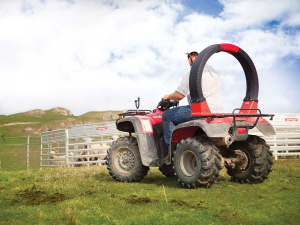
When Northland leather worker Vernon Suckling started making horse saddles 50 years ago, quad bikes and side-by-side vehicles were unheard of.
Alliance Group has confirmed that eligible farmer-shareholders who supply and continue to back the business will receive up to $20 million later this year, following the strategic investment partnership with Dawn Meats.
With a general election under five weeks away, Rural News is asking major political parties about their policies and positions on key issues facing the primary sector. We will run their responses to each question over the next four weeks. The ACT Party and the Greens didn't respond in time.
The red meat sector is in great heart.
Dr Scott Champion, Foundation for Arable Research chief executive, says that everyone in the supply chain had a role to play in driving the sector's long-term success.
Entries opened on Monday, 5 October 2026 for the 2027 New Zealand Dairy Industry Awards (NZDIA), which organisers describe as the nation's biggest celebration of excellence in the dairy sector.




OPINION: The same mainstream media muppets that brought you Jacindamania in 2017 have been flat out pimping for the Opportunities…
OPINION: Your old mate reckons the atrocious way farmers in the UK are treated by their lords and masters in…