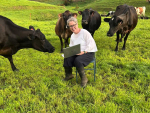
International Day of Rural Women: Two DairyNZ Farmers’ Stories
Today, 15 October, is the International Day of Rural Women, which recognises rural women’s contribution to farming, communities and the environment.




 increase font size
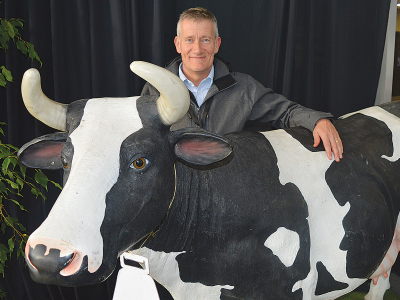 Tony Finch.
Dairy farmers are being urged to tell authorities about “concerning activity” by helicopters and drones.
But farmers should also be aware that drones, helicopters and fixed wing aircraft have legitimate business in rural areas, like checking power lines and spreading fertiliser.
DairyNZ head of South Island Tony Finch says it has had reports of helicopters and drones flying low over Southland farms where they disturb stock.
“This is concerning for farmers and is an animal welfare risk,” Finch told Rural News.
“We have encouraged farmers to report incidences of concerning activity by helicopters and drones to the Civil Aviation Authority (CAA). Activist activity against farming has occurred previously and, while we cannot confirm a link between the two, we want farmers to be aware of the potential for this.”
Meanwhile, Finch says many aircraft operators have legitimate business and should be allowed to operate without interference.
Finch says previous interest in wintering and cows on crops has prompted a response by the agricultural sector.
DairyNZ and Beef + Lamb NZ have been actively sharing information, tips and advice to farmers, to encourage farmers to farm in ways that can reduce the risk of excessive mud in their paddocks, keep their cows dry and well, and protect their soils and waterways.
Not us
Fish & Game New Zealand says it’s aware of speculation that a campaign is underway against winter grazing practices and animal welfare.
But FGNZ chief executive Martin Taylor says it has nothing to do with this campaign to date.
“We are not funding it nor are we aware of any filming being undertaken from aircraft or helicopters.
“We remain concerned about environmental damage if farmers continue to flout winter grazing guidelines.
“Fish & Game calls for regional councils to make DairyNZ’s good management practices compulsory as these guidelines would reduce the environmental degradation currently caused.”
Today, 15 October, is the International Day of Rural Women, which recognises rural women’s contribution to farming, communities and the environment.
The first major update to the Dairy Cattle Code of Welfare in more than a decade has been released, marking what DairyNZ describes as an important step in ensuring animal welfare standards continue to evolve alongside scientific evidence and on-farm realities.
Have a plan in place for your cows and staff.
In Dacre, near Invercargill in New Zealand’s South Island, Bruce Dinnington is running a dairy operation unlike any other.
DairyNZ deputy chair Cameron Henderson has been re-appointed unopposed for another term.



OPINION: Making it easier to collect rainwater and use it to grow crops and livestock is a no brainer.
As part of its Election 2026 coverage, Rural News asked political parties how they would help pull the arable sector out of the doldrums. Here's what they said:
Farmers are being encouraged to rethink how they manage waste on farm with the launch of ruralwastesorted.co.nz, a new website bringing together practical tips, real farmer experiences and resources.
New Zealand Winegrowers (NZW) is celebrating the India-New Zealand Free Trade Agreement (FTA) coming into force today, bringing New Zealand wine improved access to one of the world’s fastest-growing economies.
New Zealand’s red meat sector has welcomed the India-New Zealand Free Trade Agreement taking effect, which removes India’s 33% tariff on New Zealand sheepmeat.
More than 95 per cent of New Zealand’s forestry and wood exports to India can now enter tariff free as the New Zealand-India Free Trade Agreement comes into force today.


OPINION: The same mainstream media muppets that brought you Jacindamania in 2017 have been flat out pimping for the Opportunities…
OPINION: Your old mate reckons the atrocious way farmers in the UK are treated by their lords and masters in…




