NZ Red Meat Sector Disappointed as US Lamb Probe Advances
New Zealand's red meat sector says it is disappointed that the United States' investigation into lamb imports will move to its next phase.




 increase font size
 B+LNZ says the 2019-20 season looks positive.
Beef + Lamb New Zealand’s (B+LNZ) Mid-Season Update 2019-20 has a positive outlook for New Zealand’s sheep and beef exports.
Despite significant disruption from COVID-19 and widespread drought, B+LNZ says the 2019-20 season looks positive.
“While the drought and COVID-19 have both had impacts for farmers and meat processors, the fundamentals are looking likely to remain strong for New Zealand sheepmeat and beef exports this year,” says B+LNZ chief economist Andrew Burtt.
“Red meat is expected to remain a key component of many diets and African Swine Fever (ASF) in China continues to drive a shortage of pork there, which underpins solid demand for beef and sheepmeat imports there.”
B+LNZ’s Mid-Season Update forecasts beef, lamb, and mutton farm-gate prices to maintain their high levels by long-term historical standards, supported by a strong start for the first half of the season and an expected weakening of the New Zealand dollar.
New Zealand’s export receipts for beef and veal, and lamb and mutton (including co-products like offal, meat-and-bone meal and hides and skins) are forecast to total just under $9 billion.
Beef export receipts are expected to pass $4 billion for the first time, lifting 18% to $4.6 billion.
A lift in the average export value for lamb offsets a lower lamb crop in 2019, resulting in a 4% lift in total lamb export receipts to $3.54 billion.
B+LNZ says average weighted farm-gate prices for 2019-20 remain near historical highs despite disruption by COVID-19 and widespread drought.
Prices reached record highs in the first half of the season, providing a strong foundation for a weaker second half as the disruptions of COVID-19 and drought weigh on farm-gate returns.
B+LNZ it is expecting significant short-term volatility in market demand and prices, but demand fundamentals in key markets such as China are likely to remain solid.
New Zealand's red meat sector says it is disappointed that the United States' investigation into lamb imports will move to its next phase.
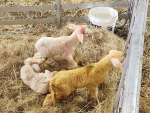
With lambing underway in many regions, Beef + Lamb New Zealand is encouraging farmers to put together a wellequipped lambing kit to help minimise lamb losses, particularly in bad weather.
Chinese beef trade quotas and a looming suspension of Brazilian beef imports into the European Union are expected to reshape global beef trade flows over the remainder of 2026, with implications for New Zealand exporters, according to Rabobank's Q3 Global Beef Quarterly report.
Will a stronger, more coordinated voice help rebuild confidence and improve returns in the wool sector?
Bovine Viral Diarrhoea (BVD) is sometimes viewed as a dairy industry issue, but the reality is that the disease can have serious consequences for beef breeding herds as well.


During the nesting season, from September to December, industrious starlings can quickly build nests in the darker areas behind tractor and vehicle, usually close to hot engines, typically resulting in localised damage or in some cases complete write-offs.
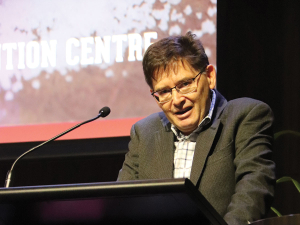
The meat processing industry is much more collegial than it was in the past and is now more focused on common goals.
With the last couple of months having seen some potential tractor purchases put on hold with the impending election and continued input cost rises, year-to-date figures, ending September, has seen deliveries up around 5% over the same period in 2025, with a total of 2026 units.
Beef+Lamb New Zealand is calling for nominations for director roles in the Northern South Island and Northern North Island electoral districts.
Fonterra chief executive, Richard Allen says being resilient has helped the dairy industry overcome extreme volatility in recent years.
The head of the Ministry for Primary Industries (MPI) trade and international relations group says New Zealand is well-positioned to secure trade access and compete internationally as the world becomes more complicated, demanding and uncertain.




OPINION: The same mainstream media muppets that brought you Jacindamania in 2017 have been flat out pimping for the Opportunities…
OPINION: Your old mate reckons the atrocious way farmers in the UK are treated by their lords and masters in…