Short courses for all visa holders
Primary ITO has a wide range of work-based training options to help you grow the skills and knowledge of your staff in 2025.




 increase font size
 The Primary ITO has appointed Karl Noldan as its new ambassador for 2016.
The curator of the main gardens at Wellington’s Botanic Garden has been chosen to help inspire other New Zealanders to follow a horticultural career.
The Primary ITO has appointed Karl Noldan as its new ambassador for 2016 – to showcase the career pathways available within the burgeoning horticultural industry. “It’s really coming back in vogue,” Noldan says.
“It has become quite a trend, especially for people later in their careers, to step away from high-stress jobs and want to work with plants instead.”
Noldan himself has made several career U-turns. After many years of tertiary study, a year off doing labouring jobs then led to “an epiphany” that he wanted to work in the fresh air.
“My favourite subjects at school were graphic design and horticulture, but my family and teachers didn’t see a future for me in this area,” he explains.
“I never knew the horticultural industry could take me where it has and I am keen to ensure that horticulture is regarded as a desirable industry. It is a career path that is extremely diverse and rewarding, filled with passionate people.”
He placed third in the 2015 Young Horticulturalist of the Year Award and won the Primary ITO Career Development Award, earning a $3000 scholarship to assist with further study or attend a conference.
Primary ITO has a wide range of work-based training options to help you grow the skills and knowledge of your staff in 2025.
Now is the best time for training, says the new sector manager for dairy at Primary ITO, Marianne Awburn.
Nine lucky school leavers passionate about farming will join Pamu for a two-year journey into agriculture, living and working at Pamu farm, Aratiatia near Taupo.
Primary ITO will apply to the Ministry of Education for more Trades Academy places with demand from schools now outstripping supply.
New ‘micro-credentials’ in wool harvesting will help meet a critical need to train shearers and wool handlers, claims Primary ITO chief executive Linda Sissons.


South of the central Hawke’s Bay town of Waipukurau is Taniwha Station – a highly successful 550ha bull beef farming operation.
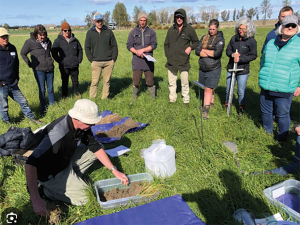
Beef + Lamb NZ funded research has shown that some simple changes to pasture management could help farmers make better use of rainfall and build resilience before dry conditions hit.
OPINION: There could hardly be a more appropriate theme for a conference than the one chosen by the red meat sector - Navigating Volatility.
When Northland leather worker Vernon Suckling started making horse saddles 50 years ago, quad bikes and side-by-side vehicles were unheard of.
Alliance Group has confirmed that eligible farmer-shareholders who supply and continue to back the business will receive up to $20 million later this year, following the strategic investment partnership with Dawn Meats.
With a general election under five weeks away, Rural News is asking major political parties about their policies and positions on key issues facing the primary sector. We will run their responses to each question over the next four weeks. The ACT Party and the Greens didn't respond in time.




OPINION: The same mainstream media muppets that brought you Jacindamania in 2017 have been flat out pimping for the Opportunities…
OPINION: Your old mate reckons the atrocious way farmers in the UK are treated by their lords and masters in…




