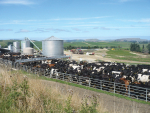
Dairy Sector Drives Strong Rural Property Market Activity in NZ
The latest data from the Real Estate Institute of New Zealand (REINZ) reveals a mixed rural property market due to consistent inflation concerns.




 increase font size

THE MEDIAN FARM price per hectare rose 10% from March to April to $24,574, says the Real Estate Institute of New Zealand.
The number of farm sales, with the total of 498, was up 5.5% for the three months ending April 2014, compared to the same total last year.
Compared to April 2013 the REINZ All Farm Price Index rose by 14.7%. The REINZ All Farm Price Index adjusts for differences in farm size, location and farming type compared to the median price per hectare, which does not adjust for these factors.
Eight regions recorded increases in sales volume for the three months ended April 2014 compared to the same period last year. Bay of Plenty recorded the largest increase in sales (+25 sales), followed by Otago and Northland with nine sales each, and Nelson with eight sales. Compared to the three months ended March 2014, six regions recorded an increase in sales.
REINZ rural spokesman Brian Peacocke says morale has rebounded following drought breaking rainfall in the northern regions. "Conversely, the surplus of rain that has been great for the pastoral sector in the South Island has impacted heavily on some in the arable sector."
Noteworthy points include: -
• A steady market for dairy and grazing properties in Northland
• A shortage of listings for good dairy and dairy support properties throughout the wider Waikato region
• A strong upturn in prices in the Bay of Plenty for good quality, well situated kiwifruit orchards with local buyers to the fore
• Following a healthy period of activity, a distinct winding down of the market in Taranaki as the season draws to a close
• Steady sales volumes for dairy and grazing properties in Manawatu but a quieter market in the south eastern North Island
• Depleted stocks are tied to the seasonal slowdown in Canterbury – still good enquiry for quality dairy farms albeit buyer resistance to higher prices has become evident
• Continuing strong enquiry but a shortage of properties available in Otago
• A busy market across all fronts in Southland with additional interest stimulated by the release of a number of Solid Energy properties within the province
• Grazing properties accounted for the largest number of sales with 37.1% share of all sales over the three months to April, Finishing properties accounted for 21.5%, Dairy properties accounted for 21.1% and horticulture properties accounted for 9.6% of all sales. These four property types accounted for 89.4% of all sales during the three months ended April 2014.
The latest data from the Real Estate Institute of New Zealand (REINZ) reveals a mixed rural property market due to consistent inflation concerns.
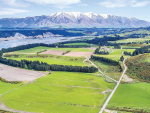
The Real Estate Institute of New Zealand (REINZ) has released its latest rural property report, providing a detailed view of New Zealand’s rural real estate market for the 12 months ending December 2025.
Beef + Lamb New Zealand (B+LNZ) says the Government needs to close loopholes in the guidance around limits on carbon forestry as news of further whole-farm sales emerges.
Buoyed by strong forecasts for milk prices and a renewed demand for dairy assets, the South Island rural real estate market has begun the year with positive momentum, according to Colliers.
Farm sales are on the rise. According to recent data from the Real Estate Institute of New Zealand (REINZ), there was an 18.9% increase in farm sales for the three months ending August 2024 compared to the same period in 2023.



Fonterra Co-operative Group chief financial officer Andrew Murray has resigned to take up a role outside the dairy giant.
A major move is about to get underway to improve the quality and viability of dairy beef and cattle in NZ.
Veterinarians say changes to the code of welfare for dairy cattle provides a positive foundation for improved cattle welfare across the country.
Today, 15 October, is the International Day of Rural Women, which recognises rural women’s contribution to farming, communities and the environment.
Global dairy giant Lactalis has integrated its Australian operations with the Mainland Dairy consumer business it acquired from Fonterra earlier this year.
High country stations, mixed sheep and beef farms, Māori-owned farms, corporates and family operations are among the nine commercial farms taking part in the Livestock Innovation Farming Transformation programme, known as LIFT.

OPINION: The same mainstream media muppets that brought you Jacindamania in 2017 have been flat out pimping for the Opportunities…
OPINION: Your old mate reckons the atrocious way farmers in the UK are treated by their lords and masters in…




