Recovery on the West Coast
Dairy farmers in the Buller region of the South Island are at last making progress getting their properties up and running following the devastating floods that hit them in February.




 increase font size
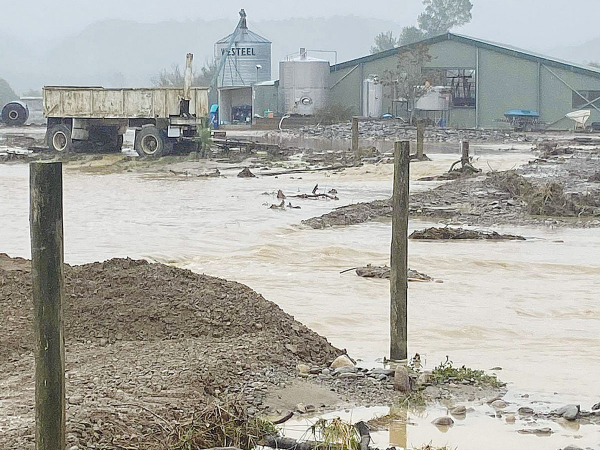 A flood-ravaged cow shed in Inangahua Valley, West Coast.
The Government has activated Enhanced Taskforce Green (ETFG) in response to flooding in the Buller and southern Tasman districts.
“The recent flooding has been a significant and adverse event damaging farms, homes, roads and bridges,” says Minister for Social Development and Employment Carmel Sepuloni.
“Part of the Government’s wider response to the recovery is making funding available so that local councils or other authorised agencies can hire job seekers to help with the clean-up,” says Sepuloni.
She says the funding will help farmers complete clean-up work on their properties, including clearing debris.
“Across the West Coast and southern Tasman districts, damage assessments are being carried out. The Ministry of Social Development will work with agencies to make sure Enhanced Task Force Green assistance is provided as soon as possible to farmers in need of this support.”
On 13 February, the Government contributed $300,000 to support the region to recover from recent weather events.
Agriculture Minister Damien O’Connor classified the severe weather as a medium-scale adverse event for the West Coast and Top of the South, unlocking $200,000 of Government support for farmers and growers.
Emergency Management Minister Kiritapu Allan announced $100,000 for the Mayoral Relief Fund to support Buller District residents, nothing the Government was on standby to provide further relief as needed.
Farmers and growers can self-register for clean-up help by contacting the Flood Recovery Coordinator on 027 394 6149.
Dairy farmers in the Buller region of the South Island are at last making progress getting their properties up and running following the devastating floods that hit them in February.
West Coast farmers are racing against time to repair pastures damaged by the recent floods.
FIFTEEN ENHANCED Taskforce Green members hired to help clean up storm-affected Northland farms, horticultural operations and orchards have ended their three month stint.


Dairy processors are ready to further boost New Zealand’s export earnings but want the incoming government to match their ambition with good policy.

Massey University is best placed to solve the “problems” facing the dairy industry, says vice chancellor, Pierre Venter.
Synlait's longest serving employee – a man who joined the Canterbury-based milk processor even before it began processing milk – is now its newest executive.
A dairy industry leader believes eradicating the common and costly disease, Bovine Viral Diarrhoea (BVD) is within reach.
A farmgate milk price of $10/kgMS this season is firming up as milk powder prices soar and the New Zealand dollar weakens.
Federated Farmers has welcomed new rural policies released by ACT, saying they align closely with its own election priorities.





OPINION: The same mainstream media muppets that brought you Jacindamania in 2017 have been flat out pimping for the Opportunities…
OPINION: Your old mate reckons the atrocious way farmers in the UK are treated by their lords and masters in…




