Federated Farmers Welcomes ACT’s New Farming Policies
Federated Farmers has welcomed new rural policies released by ACT, saying they align closely with its own election priorities.




 increase font size
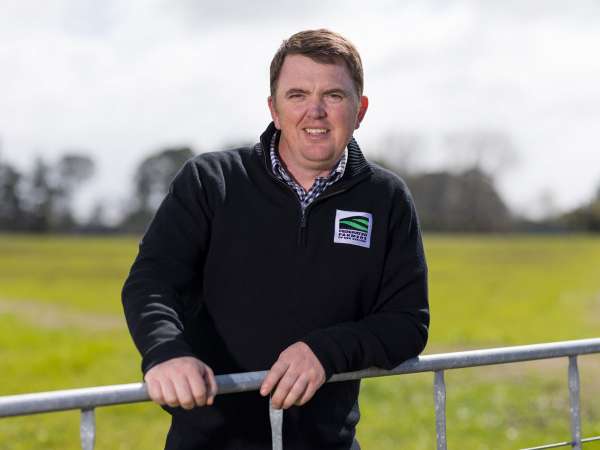 Federated Farmers president Wayne Langford.
Goodbye and good riddance – that’s the reaction from Federated Farmers after the Government announced that it was disbanding industry group, He Waka Eke Noa.
"The previous Government were too focused on pricing farmers, driving blindly towards unachievable, political, unscientific methane reduction targets," Federated Farmers president Wayne Langford says.
"There was a complete disregard for the significant and unjustifiable costs this would place on hardworking farming families and the wider New Zealand economy."
Langford says Federated Farmers would never accept a plan that would see 20% of sheep and beef farms, and 5% of dairy farmers, priced out of existence.
"From day one Federated Farmers made it clear that we had three firm bottom lines when it comes to climate policy that we were unwilling to compromise on," Langford says.
"As soon as it became clear He Waka Eke Noa wasn’t going to be able to meet those bottom lines, that’s when we walked away from the negotiating table."
Agriculture Minister Todd McClay said today that it was clear that Labour’s He Waka Eke Noa process has failed and is no longer tenable.
“The primary sector worked collaboratively for years, however Labour rejected many of its proposals compromising consensus, relationships, and confidence across rural New Zealand. To restore confidence, Cabinet has decided to formally disestablish He Waka Eke Noa from today.
“It’s time for a fresh start on how we engage with farmers and processors to work on biogenic methane.”
The Government plans to engage directly with levy bodies and sector organisations that represent the pastoral sector - DairyNZ, Beef + Lamb New Zealand, Deer Industry New Zealand, Federated Farmers, Dairy Companies Association of New Zealand, and the Meat Industry Association.
Terms of reference for the Pasture Sector Group will be developed and agreed with the group, McClay says.
Langford says the establishment of a new pastoral sector group presents the opportunity for a fresh start for discussions about climate policy and biogenic methane.
"We look forward to discussing this further with the Government as Terms of Reference are developed."
Federated Farmers will continue to advocate strongly on behalf of grassroots farming families and rural communities for climate policy that is fair, scientific, and affordable, he says.
He Waka Eke Noa is a partnership to reduce primary sector emissions. It involves working to equip farmers to measure, manage and reduce on-farm agriculture greenhouse gas emissions and adapt to climate change.
Federated Farmers has welcomed new rural policies released by ACT, saying they align closely with its own election priorities.

A farmgate milk price of $10/kgMS this season is firming up as milk powder prices soar and the New Zealand dollar weakens.
Federated Farmers is backing Feilding High School’s call to keep Agriculture and Horticultural Science as a standalone subject in Year 11.
National’s pledge to introduce 19 new national standards shows the party is serious about getting Wellington out of farming, Federated Farmers says.
Mobile phone coverage and reliability are deteriorating in rural areas, and farming families are bearing the cost, according to a Federated Farmers survey.


A dairy industry leader believes eradicating the common and costly disease, Bovine Viral Diarrhoea (BVD) is within reach.
A farmgate milk price of $10/kgMS this season is firming up as milk powder prices soar and the New Zealand dollar weakens.
Federated Farmers has welcomed new rural policies released by ACT, saying they align closely with its own election priorities.
Rural Contractors NZ says proposed changes to land transport rules for agricultural vehicles are a welcome response by the Government to out of date regulations which have seen members hit with huge fines.
Alliance is calling for final applications for its 2027 Graduate Programme, with applications closing on Sunday 25 October.
Decades piloting planes has ensured vet and farmer David Hayes is focused on safety. So, after a serious accident while welding on farm, he is sharing his experience so others can learn from it.





OPINION: The same mainstream media muppets that brought you Jacindamania in 2017 have been flat out pimping for the Opportunities…
OPINION: Your old mate reckons the atrocious way farmers in the UK are treated by their lords and masters in…




