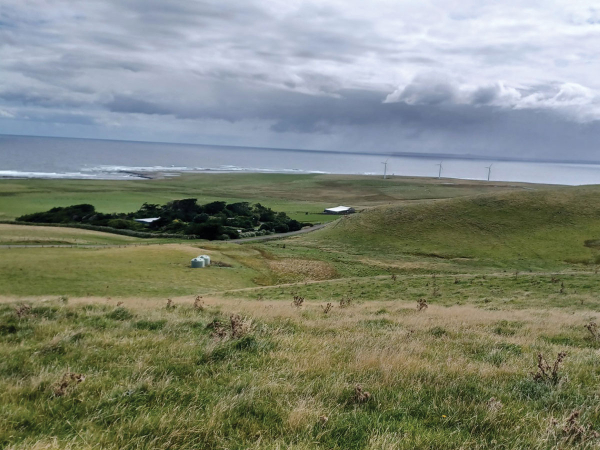
Now with the news that a purpose-built ship is being constructed to replace the present Southern Taire, there is a sense that at last there is a positive future. Editor-at-large Peter Burke reports.
Decades of Farming Under Pressure
Gary Cameron has been farming on the Chathams for 50 years and has personally experienced the many challenges that farmers on this isolated island have to face daily.
He runs 1600 breeding ewes and 100 breeding cows on his 450ha property and is generally regarded as one of the better farmers on the island.
But the biggest single impediment to all farmers, he says, is the lack of a quality, reliable shipping service.
Aging Vessel Creates Ongoing Disruption
Cameron says while a huge effort has been made to keep the 40-year-old Southern Taire going, this is compounded by the fact that there has been no reliable back-up ship.
"On occasions, the Southern Taire has been out of action for four months being repaired and, in some cases, almost capital maintenance has had to be done, and that was a problem for everyone, expecially farmers who couldn't get stock off the islands to market," he told Rural News.
The result has been that farmers have had to euthanise some stock and reduce their stocking rates, all of which has contributed to a downturn in farming on the Chathams.
Livestock Challenges Intensify Pressure
Cameron says it can be slightly easier to get sheep off the island, but cattle can be a different story because of space issues.
He says in general, getting items from the mainland to the Chathams is easier than trying to send anything back to mainland NZ.
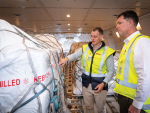
Cameron says this is because livestock are competing with general freight going out and might involve people returning machinery or sending frozen fish to market, creating competition for space on the boat.
"We are essentially a Pacific Island because everything we need or send out relies on a ship and aircraft, and this is a huge challenge at this time," he says.
New Ship Signals Turning Point
In essence, the Chatham Islands' farming has been stymied for years by a poor shipping service, but this is all set to change with the new ship set to come into service at the end of 2027.
This long-awaited move has started to spark some confidence in the farming community, with for example the formation of a Chatham Islands Farmers Association.
Roadmap for Agricultural Transformation
Also, AgFirst has been commissioned to put together a report on the present state of farming there.
The report titled 'Chatham's Agriculture Transformed' provides a series of recommendations on ways to improve farming outcomes and how that benefits not only the wider Chathams economy, but also significantly benefits the wider NZ economy.
Lower Productivity
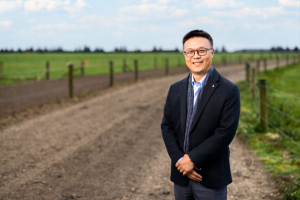
AgFirst's James Parsons, who authored the report, says the Chatham Islands' farming sector is under extreme pressure, resulting in significantly lower productivity compared to mainland NZ farmers.
He notes that, on average, farms on the Chathams produce just 37.3kg of carcass weight per ha from the islands' 18,000ha (eff). This compares with an average of 134kg of cw/ha on similar farm classes on mainland NZ, measured by the B+LNZ Economic Service.
"The major issue to date is farmers have no certainty when they can get stock off the islands and that affects their confidence. Low confidence in any business makes it incredibly hard to plan and also significantly undermines the investment appetite. For farmers on the Chatham Islands, if they lack confidence in the future, why should they invest? The lack of a reliable shipping service is the number one constraint," he says.
Parsons says while the average carcass weight producton per hectare is low, not all farms are performing poorly, with several operating quite respectably. This proves good production levels are possible, reinforcing the opportunity to boost profits for Chatham farmers and boost economic growth.
The Big Prize
Getting the shipping service right is number one, then redeveloping an overarching Chatham Islands farm strategy is next on the agenda, says Parsons.
He says that while isolation is perceived as a disadvantage it has the potential to be a strength. He says being small and isolated means people have to work together and the synergies associated with that can propel them forward.
“If people don’t collaborate, they will be noticed and peer pressure may come into play to get everyone working together. The prize is big. If the Chatham Islands’ farmers could achieve an average farm production of 80kg cw/ha, just 60% of similar mainland farms, this would more than double farm incomes from the islands to a combined $10.37 million per annum. When including the downstream economic activity, that adds an additional $16.2 million to the NZ economy,” he says.
The AgFirst report comes up with a series of recommendations. Including the need for a new ship and a farm strategy, there’s a need to get accurate data on stock numbers farmed on the islands, and get more accurate, up-to-date data from the shipping company, including stock weights shipped to track the islands’ production.
Parsons sees a need for a farm extension programme and recommends a shift to improved rotational grazing methods to increase pasture production, as opposed to the predominant set-stocking practiced.
Increasing the cattle ratio will make rotational grazing easier and help to mitigate the emergence of sheep parasite drench resistance. Exploring the use of virtual fencing is also an option to reduce the reliance on physical fences that degrade with the salt air and are very expensive to build due to high freight costs for materials.
Other recommendations include benchmarking, safeguarding sensitive environmental areas, communicating the opportunity to funders to invest in the islands and finally setting up an awards program to celebrate successful farmers.
“All this is going to require some paradigm shifts and that will take time. What I do know is that a lot of farmers are open to change, but they need to be confident that the change is in the right direction, and maybe a starting point is setting up a demonstration farm on the islands,” he says.
Farmer Gary Cameron says the prospect of a new ship that will serve the islands properly is starting to make people think about what the future might look like. He says what’s happened over the past six years is that everyone has gone inside their gates and into survival mode.
“We are now reactivating group activities such as Federated Farmers and have set up a catchment group supported by MPI and the Enterprise Trust looking at projects, so that when the ship comes on-line, we are ready to go. People are looking more positive and believe there’s a sound future here,” he says.