Importer: Fertiliser Security Policy Must Include All Players
An independent importer says National’s fertiliser security policy will only work if protects all players.




 increase font size
 National’s agriculture spokesman Todd Muller speaking at the Morrinsville farmer meeting.
With the submissions period for proposed water reforms ending last week, the National Party was out and about in the Waikato dairy heartland putting its spin on things.
It ran a meeting in Morrinsville, organised by Waikato MP Tim van der Molen, and introduced Todd Muller, the party’s spokesman for agriculture, biosecurity, food safety and forestry.
Muller claimed the Government is painting agriculture as a sunset industry despite it being New Zealand’s biggest export earner.
On water quality, Muller said National and the rural populace accept some rivers are under stress. But he said research shows 33% of rivers are much improved.
“Labour’s framing of its speeches on water issues leaves a lot to be desired, with talk of a catastrophe coming and the current state of rivers going to hell in a handcart,” said Muller.
He said the Government is using a select group of scientists to deliver a message without consideration of the economic effect and that it fails to engage the whole population of NZ.
“In the recent local government election rounds, Wellington was framing water and climate issues as purely an agricultural problem,” said Muller.
“This is despite the fact that during high rainfall Auckland beaches have to be closed because of sewage contamination, and that the fire at Sky City dumped millions of litres of contaminated water into Auckland harbour.”
Muller discussed how farmers and landowners should frame their responses to the proposed changes.
He said the attendance and sentiment at recent farmer meetings had put immense pressure on the rule makers in Wellington and people should be “bending the ears” of their local MPs.
He reminded the audience that most NZ First MPs are in Parliament because of National voters’ choice over Labour.
“Farmers and landowners need to be more vocal and not just rely on producer organisations such as Federated Farmers, Beef + Lamb or Dairy NZ to take their message to the general public,” he said.
This point was reinforced by local dairy farmer and businesswoman Rebecca Walling.
“I was shocked by Winston Peters suggesting that water issues for farmers were of their own making,” she told the meeting. “We have to get together and engage the general public using all forms of social media available to us.”
Muller said Labour is not on the right side of science, but agreed that there is a need for improved freshwater management.
“But it needs to happen over time, using greater consultation with farmers and landowners to achieve the agreed results. We don’t believe a big stick will solve the problem because farmers need to be able to farm.”
He said the current proposals don’t consider the cost to farming and that adding costs would disadvantage NZ producers against overseas competitors.
The meeting was attended by mostly rural folk -- no one under 40 -- and it was obvious that the age-old topic of urban-rural divergence is still a major issue. Urban dwellers were said to be still unaware of the problems in their own back yard and to have no shared experience of water and climate issues.
An independent importer says National’s fertiliser security policy will only work if protects all players.
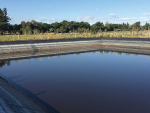
Good effluent management on a dairy farm combines a well-designed system with proper processes to ensure the right amount of effluent gets applied to pasture at the right time.
For years, IrrigationNZ has called for a coordinated national approach to water security, backed by enabling regulation, strategic infrastructure investment and sound technical practice. As the 2026 general election approaches, many of these priorities are now reflected in political commitments and legislative reforms. That represents significant progress, but the real measure of success will be turning policy into practical outcomes, says IrrigationNZ principal technical officer Stephen McNally.
Beef + Lamb New Zealand says the National Party’s agriculture plan provides a strong basis for lifting productivity, supporting rural communities and recognising the sheep and beef sector’s environmental track record.
OPINION: Making it easier to collect rainwater and use it to grow crops and livestock is a no brainer.


During the nesting season, from September to December, industrious starlings can quickly build nests in the darker areas behind tractor and vehicle, usually close to hot engines, typically resulting in localised damage or in some cases complete write-offs.
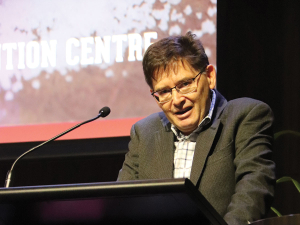
The meat processing industry is much more collegial than it was in the past and is now more focused on common goals.
With the last couple of months having seen some potential tractor purchases put on hold with the impending election and continued input cost rises, year-to-date figures, ending September, has seen deliveries up around 5% over the same period in 2025, with a total of 2026 units.
Beef+Lamb New Zealand is calling for nominations for director roles in the Northern South Island and Northern North Island electoral districts.
Fonterra chief executive, Richard Allen says being resilient has helped the dairy industry overcome extreme volatility in recent years.
The head of the Ministry for Primary Industries (MPI) trade and international relations group says New Zealand is well-positioned to secure trade access and compete internationally as the world becomes more complicated, demanding and uncertain.



OPINION: The same mainstream media muppets that brought you Jacindamania in 2017 have been flat out pimping for the Opportunities…
OPINION: Your old mate reckons the atrocious way farmers in the UK are treated by their lords and masters in…