
Federated Farmers Backs Year 11 Agricultural Science
Federated Farmers is backing Feilding High School’s call to keep Agriculture and Horticultural Science as a standalone subject in Year 11.




 increase font size
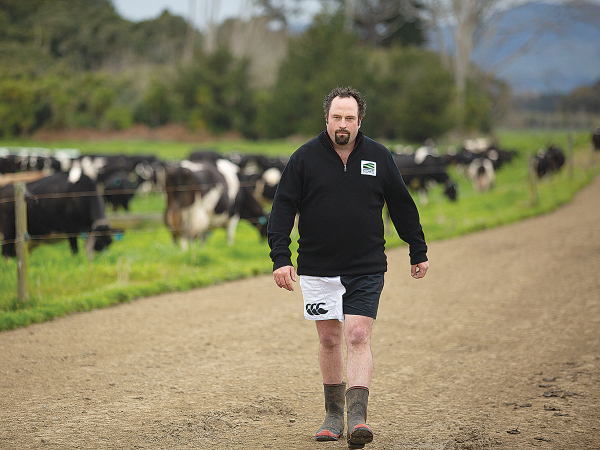 Federated Farmers spokesman Richard McIntyre says the announcement of a rural banking inquiry is the start of the journey.
Farmers are cautiously welcoming the Government’s decision to hold an inquiry into rural banking.
Federated Farmers spokesman Richard McIntyre says while this is great news, “it’s the start of the journey rather than the destination”.
“The terms of reference will be key to ensuring that all the concerns farmers have are thoroughly examined, problems identified and then most importantly solutions found and implemented,” he told Rural News.
He also confirmed that an online petition pushing for a rural banking inquiry, launched at Fieldays last week, will remain active.
McIntyre says the Feds wants to show, through the online petition, how much farmers care about the issue.
“While we feel good about the government announcement, there’s still a long way to go before we reach a game-changing destination,” he says.
Last week, Finance Minister Nicola Willis wrote to the chairs of the finance and expenditure, and primary production select committees, requesting a select committee inquiry into banking competition with a focus on rural banking.
The two select committees will jointly develop terms of reference, join meetings to hear submissions relevant to rural banking, and prepare a report on rural banking to feed into the overall inquiry, according to Willis.
The inquiry has the support of National, ACT, NZ First and Labour. Rural Women New Zealand has also thrown its support behind the probe.
Labour agriculture spokesperson Jo Luxton, a member of the primary production select committee, says submissions to the committee paint a grim picture of the financial strain many farmers are under.
“Our select committee has heard that one in four farmers are now feeling under financial pressure, which is affecting their mental health,” she says.
“I will be advocating for the inquiry to have a strong focus on rural banking, what’s happening in the industry, competition, interest rates and access to finance.”
ACT MP and primary production committee chairperson Mark Cameron says he’s heard from countless farmers about the disparity between rural and urban bank lending practices.
“I have been working on this issue since I became chair last year. In February, the committee opened a briefing into rural bank lending, and we heard numerous concerns from farmers and others in rural communities.
“Based on this feedback, the committee considered this issue was worthy of further scrutiny.
“Banks play an important role in our communities and we must ensure they’re operating in the best interests of all New Zealanders.
“Where issues like overly burdensome regulation that pushes up costs and compliance exist, this is an opportunity to put a target on it. I look forward to progressing this important piece of work to ensure the best outcome for rural New Zealand.”
Rural Women New Zealand chief executive Gabrielle O’Brien says their members tell them that rural communities are experiencing a range of issues with their banks and that banks are not currently meeting their needs.
“The range of issues is broad and includes everything from constrained access to lending and high interest rates to the closure of rural bank branches and ATMs.
“Our members are also concerned there’s an over-reliance by banks on digital services as opposed to personal banking services which is leaving rural communities without adequate support.
“This is especially the case when some rural communities continue to experience poor connectivity,” O’Brien says.
Federated Farmers is backing Feilding High School’s call to keep Agriculture and Horticultural Science as a standalone subject in Year 11.

National’s pledge to introduce 19 new national standards shows the party is serious about getting Wellington out of farming, Federated Farmers says.
Mobile phone coverage and reliability are deteriorating in rural areas, and farming families are bearing the cost, according to a Federated Farmers survey.
A Labour-led Government won’t be bringing back the controversial freshwater rules of 2020.
Central Otago District Council (CODC) has voted against a plan to spread treated sewage sludge from Cromwell and Alexandra on farmland near Lauder, a decision Federated Farmers says reflects strong opposition from rural residents.


Farmers are being encouraged to rethink how they manage waste on farm with the launch of ruralwastesorted.co.nz, a new website bringing together practical tips, real farmer experiences and resources.

New Zealand Winegrowers (NZW) is celebrating the India-New Zealand Free Trade Agreement (FTA) coming into force today, bringing New Zealand wine improved access to one of the world’s fastest-growing economies.
New Zealand’s red meat sector has welcomed the India-New Zealand Free Trade Agreement taking effect, which removes India’s 33% tariff on New Zealand sheepmeat.
More than 95 per cent of New Zealand’s forestry and wood exports to India can now enter tariff free as the New Zealand-India Free Trade Agreement comes into force today.
Federated Farmers is backing Feilding High School’s call to keep Agriculture and Horticultural Science as a standalone subject in Year 11.
Food and fibre exports have returned a billion- dollar bonus to the country.



OPINION: The same mainstream media muppets that brought you Jacindamania in 2017 have been flat out pimping for the Opportunities…
OPINION: Your old mate reckons the atrocious way farmers in the UK are treated by their lords and masters in…




