DairyNZ Strategy Review: Farmer Feedback Closes 15 Nov
Farmers have until the end of this week to help shape DairyNZ’s future focus.




 increase font size
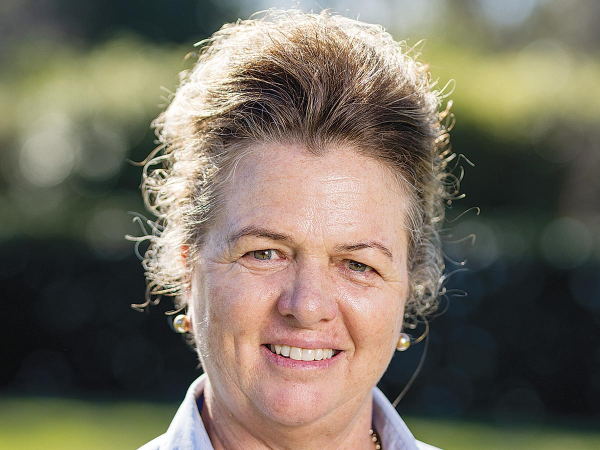 Tracy Brown
OPINION: New Zealand dairy is delivering. In the year to June, dairy exports earned a record $28.8 billion for New Zealand. They were part of a record $65.2 billion earned by our wider food and fibre sector.
Those numbers matter because the benefits of a strong dairy sector extend far beyond the farm gate.
Dairy directly supports more than 51,000 jobs across New Zealand. It supports regional economies through wages, investment and spending, and is a major customer of businesses across transport, manufacturing, technology, professional services and retail.
Every export dollar dairy earns brings income back into New Zealand. That is why keeping dairy strong matters to the whole country.
As we head towards election day, the question should not simply be how we protect that contribution. We should be asking how New Zealand builds on it.
Our farmers are already doing that. They continue to improve productivity, invest in environmental improvements and animal welfare, adopt new technology and adapt their farm systems.
Farmers are ready to keep investing. What they need from the next government is the confidence to do it.
Farming businesses make investment decisions that can last decades, not election cycles. A new dairy shed, environmental improvements, new technology or changes to a farm system can involve significant capital and years of planning.
When the rules repeatedly change, those decisions become harder. That does not mean policy should stand still.
Science improves, technology develops and community expectations change. But good policy should build on what is working, fix what is not, and give businesses enough certainty to plan for the future.
That is the thinking behind DairyNZ’s six priorities for the next government.
We want resource management and freshwater settings that protect the environment while being practical on farm. We need a strong biosecurity system ready for the next incursion. We need skilled people choosing dairy as a career.
We need sustained investment in agricultural science and faster access to technologies that can improve productivity and environmental performance.
We need resilient infrastructure and workable pathways to lower emissions. And we need strong animal welfare standards that are grounded in evidence and can be implemented in practice.
These priorities are critical for dairy to help drive the New Zealand economy, irrespective of the election outcome and which parties New Zealanders elect.
What matters is whether the policies ultimately adopted are evidence-based, practical and durable, giving farmers the confidence to invest.
Farmers understand there need to be rules. The issue is not regulation itself. Problems arise when regulation becomes unnecessarily complex, duplicates systems that are already working, adds cost without improving outcomes, or simply cannot be implemented in real-world farming conditions.
There is a simple test governments can apply: is the outcome clear, is it supported by evidence, can it be implemented in practice, and will it still make sense in five or ten years?
Getting those fundamentals right matters because New Zealand has an enormous opportunity.
We have world-class farmers, sophisticated agricultural science, strong international markets and a reputation for producing high-quality food.
Dairy is already New Zealand’s largest export earner and a major source of jobs, investment and economic activity.
We should be ambitious about what comes next. A productive, competitive and sustainable dairy sector is not simply good for farmers.
When dairy succeeds, New Zealand succeeds.
Farmers have until the end of this week to help shape DairyNZ’s future focus.
The New Zealand dairy sector set a record in the 2025/26 season, producing more than two billion kilograms of milksolids for the first time.
Students will be able to study Agriculture and Horticultural Science from Year 11, creating a clear pathway into Years 12 and 13 and future careers in New Zealand’s primary industries, Education Minister Erica Stanford says.
Today, 15 October, is the International Day of Rural Women, which recognises rural women’s contribution to farming, communities and the environment.
The first major update to the Dairy Cattle Code of Welfare in more than a decade has been released, marking what DairyNZ describes as an important step in ensuring animal welfare standards continue to evolve alongside scientific evidence and on-farm realities.


Fonterra chief executive, Richard Allen says being resilient has helped the dairy industry overcome extreme volatility in recent years.
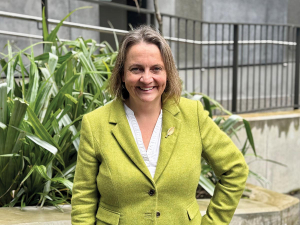
The head of the Ministry for Primary Industries (MPI) trade and international relations group says New Zealand is well-positioned to secure trade access and compete internationally as the world becomes more complicated, demanding and uncertain.
Northland farmer Greg Collins has taken over as chair of the Fonterra Co-operative Council.
The head of global dairy organisation, International Dairy Federation (IDF) is calling for accurate use of ‘dairy' term.
Be alert but not alarmed about El Niño. That’s the message from Professor Danny Donaghy, deputy head of the Massey University’s school of agriculture and the environment.
Farmers opposing rural trader Farmlands’ investment in AgriZeroNZ are warning the co-operative board not to brush away their concerns.

OPINION: It seems Canterbury processor Synlait is still in the doldrums.
OPINION: Get offside with New Zealand First leader Winston Peters at your own peril.