New Rural Recycling Scheme to Replace Voluntary Farm Plastics Programmes by 2027
Environment Minister Nicola Grigg has announced details of a new rural plastics recycling scheme.




 increase font size

A significant increase is needed in responsible investments in agriculture to eradicate hunger and feed a growing world population says the German Minister of Food, Agriculture and Consumer Protection, Ilse Aigner, and the Food and Agriculture Organisation (FAO) Director-General Jose Graziano da Silva.
Investments in agriculture are still too low in those regions where rural poverty and hunger are most severe, Aigner and Graziano da Silva said ahead of the Agriculture Ministers' Berlin Summit 2013.
"We need to concentrate our efforts on the farmers. Farmers are the key players in the rural environment and here lies the greatest potential for generating added value – both in terms of economic development and in guaranteeing food security in these countries," says Aigner.
"The German government spends over 700 million euros each year on food security and rural development in developing countries. One of the goals here is to achieve sustainable yield increases. This is done by promoting locally based training and education, for example, and we have initiated a number of important agricultural training schemes.
"Agricultural investment has long shown itself to be one of the most effective and sustainable means for reducing hunger and poverty. We need to invest more. And, equally as important, we need to invest better," says Graziano da Silva.
"It is up to national governments, assisted by the international community, to create conditions where farmers can invest more and to increase their own investments in ways that generate economic and social benefits, as well as environmentally sustainable results."
At present, about 870 million of the world's poorest people, or one in eight, are suffering from hunger and have inadequate access to food. Most of them live in rural areas in developing countries.
Responsible agricultural investments
Aigner and Graziano da Silva called upon governments to contribute to the development of guidance for responsible agricultural investments, an issue that will be discussed by governments, civil society and private sector representatives at the Committee on World Food Security.
Investments in agriculture should target the poor in the rural areas of those countries, the minister and the FAO head say.
Investments should also help to make the agricultural and food systems less vulnerable, more equitable, less wasteful and more environmentally friendly.
The world's more than one billion farmers should be at the centre of new investment strategies, because they are, by far, the largest investors in agriculture, after public and foreign private investors. Farmers in 76 low- and middle-income countries invest almost 170 billion dollars a year in their farms - about $150 per farmer, according to FAO estimates. That represents three times as much as all other sources of investment combined - including public investment, foreign private sector investment and official development assistance.
Special attention should be paid to smallholder farmers, who need support to overcome barriers that prevent them from producing more food, saving and investing, and coping with new challenges and risks related to climate change.
Aigner and Graziano da Silva underlined that farmers need a supportive environment that makes agriculture attractive for investments. They need good governance, clear and fair incentives, and access to good infrastructure, public services and information in rural areas. National governments should ensure that these conditions are in place.
Good governance of large-scale investments, often by international investors, is necessary to ensure that the rights and livelihoods of local communities are protected and the degradation of natural resources is avoided.
Environment Minister Nicola Grigg has announced details of a new rural plastics recycling scheme.
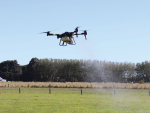
OPINION: David Seymour and James Meager's plan to make it easier for farmers and orchardists to operate drones can best be described a 'courageous' move.
There's been widespread support from the primary sector for the Government's announcement on changes to freshwater farm plans that come under the Natural Environment Bill, which is now set to replace the existing RMA.
The chair of the country's environmental regulator, the Environmental Protection Authority (EPA), says changes are already under way to improve the performance of the agency to better meet the needs of those who interface with them.
Are you ready for El Nino? That’s the question asked by Beef+Lamb NZ’s Ian Tarbotton who leads B+LNZ’s farm extension service.


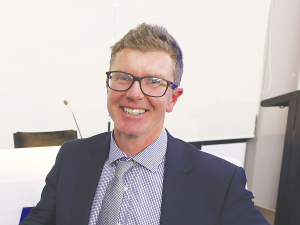
LIC shareholders have elected a new North Island representative to the co-operative's Board, along with five representatives to its Shareholder Reference Group (SRG), following the company's Annual Meeting held in Invercargill.
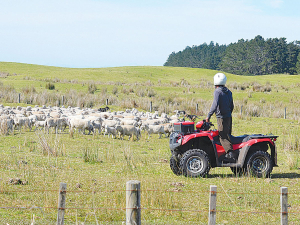
Farmers across parts of Southland and South Otago are continuing to deal with difficult conditions after a prolonged run of wet weather, with pressure building around feed supply, stock management, pasture damage, farm infrastructure and everyday workloads.
Federated Farmers says it welcomes Labour's commitment to reviewing the Sharemilking Agreements Act, calling on other major parties to do the same.
For Canterbury dairy farmers Sian Meijer and Rick Wobben, wearable technology has become one of their most valuable on-farm tools - helping manage 1850 cows across an expansive, high-performing dairy operation while improving efficiency, mating outcomes and day-to-day decision making.
Fonterra has unveiled its annual results for the 2026 financial year, posting $27 billion in revenue and close to $20 billion returned to New Zealand farmer owners and unit holders.
The first major update to the Dairy Cattle Code of Welfare in more than a decade has been released, marking what DairyNZ describes as an important step in ensuring animal welfare standards continue to evolve alongside scientific evidence and on-farm realities.




OPINION: The same mainstream media muppets that brought you Jacindamania in 2017 have been flat out pimping for the Opportunities…
OPINION: Your old mate reckons the atrocious way farmers in the UK are treated by their lords and masters in…