Synlait’s Longest-Serving Employee Joins Executive Team
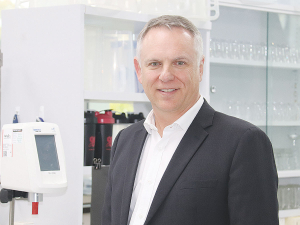
Synlait's longest serving employee – a man who joined the Canterbury-based milk processor even before it began processing milk – is now its newest executive.




 increase font size
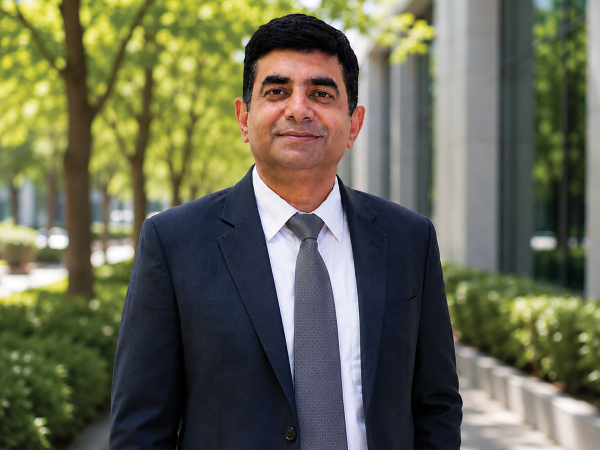 Naval Sabri, ofi’s chief operating officer dairy.
Almond hulls sourced from Australian orchards may have the potential to help New Zealand cows reduce emissions, boost milk yield and lower input costs.
That’s according to initial results from trials done on a few pilot farms near Tokoroa, South Waikato.
While it’s early days, independent milk processor Olam Food Ingredients (ofi) is hopeful that almond hulls and shells repurposed into feed for dairy cows in New Zealand have the potential to help reduce both methane emissions and input costs on farms.
Ofi has been operating a milk plant at Tokoroa since 2023 and pilot supplier farms have been trialling almond hulls and shells for two seasons.
Ofi’s chief operating officer dairy Naval Sabri says they have been working with agencies to analyse methane reduction on these farms.
“The initial results have been very positive,” he told Rural News.
Ofi, one of two operating divisions of Singapore-based conglomerate Olam Group, owns almond orchards and processing plants in Victoria, Australia. In a recent earnings call with analysts, Olam stated that “a significant part of the future is going to be on ofi”.
Australian dairy farmers successfully used almond hulls as a source of fibre in a pasture-based system.
This gives ofi confidence that the model could work in New Zealand. The feed will be supplemented with Agolin Ruminant, which has the potential benefit of reducing methane emissions and increasing the feed conversion rate, which in turn will support milk yields.
The trials are also looking at ways to efficiently and effectively package and transport the feed, reducing input costs.
Sabri points out that it’s a practical example of how they have been able to use an existing ofi business and supply chain.
“And being then able to, in a way, provide support to New Zealand farmers. The almond hulls do replace some feed supplements which have the higher carbon footprint.
“So, they are more sustainable. But they also provide an alternate feed option for a farmer when pasture growth is under pressure.”
He cautions that almond hulls may not be a silver bullet for NZ farmers when it comes to reducing emissions.
“I’ve been asked every time whether it’s scalable, because we still consume a lot of feed.
“So, in terms of scalability, I’ll say that it’s not a universal solution for the entire New Zealand system.
“I keep using this phrase – that it’s just one tool in a toolbox.”
The almond hulls trial and initial results have also been well received by ofi’s global customers, who themselves trying to reduce their carbon footprint.
Sabri says using almond hulls as an alternative feed is a good example of “a practical intervention which solves a few things”.
“It obviously provides an alternate feed to a farmer.”
Palm kernel expeller (PKE) is a big part of the dairy feed regime in New Zealand but is a favourite target of environment lobbyists like Greenpeace.
Sabri says almond hulls provide an alternate feed source for cows.
“It’s more sustainable and initial results from agencies show that they do reduce carbon footprint. This is where I see the real value – our customers also value it.
“Most of our customers, when we share the story with them, they really see value for it. They obviously need proof, which is where we are currently trying to work with our agencies to provide that proof.”
Sabri doesn’t expect all NZ farmers to embrace almond hulls as a feed source for their cows and scalability of almond hulls would depend on farmer uptake.
He accepts there can’t be “a one size fits all approach”.
“Every farmer has a different feed system. Every farmer has a different farm economics.
“Every farmer has a different comfort with changing the feed they use. We are not here to force our farmers to use a feed which we believe is more sustainable or which we believe is good for them.
“We want those decisions to be taken by the farmers themselves.
“They know better than us. They have been running that system, a particular system on their farm. So, the scalability would be a function of how farmers want us to scale, how much they want us to scale.”
A new second dryer has been commissioned by Olam Food International (ofi) at its Tokoroa plant.
The new dryer has doubled milk processing capacity at the site, operating since 2023.
It adds another 23 million kgMS processing capacity per annum, taking the plant capacity to over 45m kgMS.
Ofi’s chief operating officer dairy Naval Sabri says the investment reflects the confidence of the company board in NZ dairy and its farmer suppliers.
The second dryer gives ofi a more flexible ingredient platform.
“The new capability will allow us to also process skim milk powder, cream and more importantly milkprotein concentrate,” Sabri told Dairy News.
“This means we will retain the flexibility to produce whole milk powder and have the capability to produce other products.”
Sabri says ofi’s strategic direction is clear: they want to create more value from the milk stream by participating in high value ingredients and nutrition applications.
“But in the same balance, we still want to maintain flexibility to respond to market conditions.”
The new dryer means ofi is looking for more raw milk.
“Because when you’re putting up a new asset, you always want to be mindful that you don’t overstress the asset in the first season itself.’
Ofi’s organic growth of milk supply remains on track, and the company is also on the hunt for new suppliers.
“We are confident that within the next season, we will be able to attract enough milk through our farmers and with new farmers to be able to fill the capacity.
“And we are very happy that we are able to support that organic growth.”
At the same time, Sabri agrees that they won’t be able to fill the milk supply gap from within their current supply base.
“We are working to attract new farmers in our cohort.
“And we have got very good positive response from them. Which is basically giving us the confidence that we will be able to secure enough milk for this asset.”
Synlait's longest serving employee – a man who joined the Canterbury-based milk processor even before it began processing milk – is now its newest executive.
I am often asked by industry people, what are the options for removing a grapevine without producing a phytosanitary problem? Can it be done sustainably? What will it cost me?
Returning to the family dairy farm after playing 20 years of professional rugby around the world is no easy task.
Pāmu has released its FY26 Integrated Annual Report, reporting a Net Operating Profit of $113 million, more than double the $49 million recorded in FY25.
In Dacre, near Invercargill in New Zealand’s South Island, Bruce Dinnington is running a dairy operation unlike any other.


Dairy processors are ready to further boost New Zealand’s export earnings but want the incoming government to match their ambition with good policy.
Massey University is best placed to solve the “problems” facing the dairy industry, says vice chancellor, Pierre Venter.
Synlait's longest serving employee – a man who joined the Canterbury-based milk processor even before it began processing milk – is now its newest executive.
A dairy industry leader believes eradicating the common and costly disease, Bovine Viral Diarrhoea (BVD) is within reach.
A farmgate milk price of $10/kgMS this season is firming up as milk powder prices soar and the New Zealand dollar weakens.
Federated Farmers has welcomed new rural policies released by ACT, saying they align closely with its own election priorities.

OPINION: The same mainstream media muppets that brought you Jacindamania in 2017 have been flat out pimping for the Opportunities…
OPINION: Your old mate reckons the atrocious way farmers in the UK are treated by their lords and masters in…




