The Eliminating Facial Eczema Impacts programme recently hosted a webinar about the progress the sheep poo study has made in helping understand facial eczema (FE).
The Poo‑Dunnit of FE webinar was well attended, with farmers and rural professionals tuning in to hear what the latest season of sampling is showing.
Webinar Shares Latest Findings
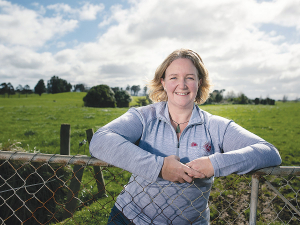
The webinar was presented by Sonya Shaw, B+LNZ’s senior advisor for facial eczema research and a former vet, and Dr Cara Brosnahan, principal scientist animal health research, who co-lead the sheep poo and nested studies.
Together, they shared what the data is showing and what it means on farm.
Facial Eczema Spores More Widespread
Shaw began by reminding farmers how much FE has shifted over time. Spores now appear well beyond the traditional hotspots, and each season behaves differently. As she explained, “Spores are widespread… right from Northland all the way down to Southland, and there is a lot of variability between farms and regions.” That variation is exactly why nearly 300 farmers have been collecting samples every two weeks.
From their efforts, several clear patterns have emerged:
- Most spores sit in the bottom 5cm of the pasture, so short covers increase the chance of animals grazing into the risky layer.
- Most spores occur below 200 metres altitude, though they can still appear higher up.
- Two fungal species look identical under a microscope, but only one produces the toxin that damages the liver. Farmers still need to assume all spores are toxic, but this discovery will help refine risk assessment in the future.
How Faecal Testing Is Improving Risk Detection
Brosnahan then stepped through what the nested study is showing. By combining faecal samples, pasture samples, blood tests and liveweights, the team can see how spore ingestion links to liver damage and growth.
Brosnahan explained that faecal spore counts are especially useful because they show what animals are eating right now. “Faecal spore counts help confirm what the animal is actually ingesting… they are giving you the current risk,” she said.
Hidden Liver Damage and Production Loss
Blood testing also confirmed how common liver damage is for hidden (subclinical) FE. Many animals show liver damage without visible signs, and Brosnahan noted that “Subclinical FE reduced growth without obvious clinical signs… and those animals may have up to 25 percent lost production over their lifetime.”
The Q&A highlighted the practical challenges farmers face each season. Many wanted clarity on when to act.
Simple Advice
Beef + Lamb NZ’s advice to farmers is simple.
Once regional pasture counts rise above 20,000 spores per gram, it’s time to start checking your own farm and planning ahead.
Farmers involved in the study have already used the information to make earlier decisions about zinc protection, adjust grazing, and understand their own farm’s pattern rather than relying on regional averages.
Some farms peak earlier, some later, and some show risk even when neighbours don’t. The new territorial authority maps and individual farm graphs have helped farmers see exactly when their own danger period begins.
The final season of sampling runs until May. Once all the data is combined - including weather, pasture, altitude and animal health information - it will feed into a predictive model designed to give farmers earlier and more accurate warnings in future seasons. Thanks to the farmers who have stuck with the sampling every fortnight, the clues behind FE are clearer than ever.
Article- Beef + Lamb NZ