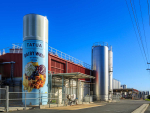
Ah Tatua, You've Done It Again!
Waikato milk processor Tatua has again declared a record milk payout to farmer shareholders, leaving other processors in the dust.




 increase font size
 Jarden senior analyst Adrian Allbon says while it is a strong result from Synlait, some key risks remain.
Milk processor Synlait is on the comeback trail after 18 months of turmoil.
The listed milk company - 39% owned by China-based Bright Dairy - last week reported a net profit of $27.9 million for six months ending January 31, 2022. This was a whopping 338% more than the same period last year, which admittedly was a disastrous result for the company.
Revenue rose 19% to a record $790m, net debt was slashed by 19% to $390m and inventories 29% down on the same period last year.
Synlait farmers are forecast to receive a record milk price of $9.60/kgMS this season.
The milk processor's ingredients business was the star performer: sales revenue reached $423m compared to $275m the previous year However, nutritional business was impacted by key customer a2 Milk's rebalancing of inventory levels.
Synlait is a different business to what it was 18 months ago with a new chairman, new chief executive and 15% reduction in the workforce.
Jarden senior analyst Adrian Allbon decribes it as a "strong execution result" from Synlait.
Allbon points to the flagged selldown of excess inventories generating strong cashflows and debt reduction as the highlights.
He told Rural News it was also pleasing to see improved ingredients performance, which has been partly offset by ongoing issues in the diversification streams of consumer foods and beverages.
But Allbon says some key risks remain for Synlait, like key customer and shareholder a2 Milk's demand recovery, commodity price volatility, execution of diversification and further debt reduction.
Synlait chairman John Penno claims 'significant steps' were taken to reset and rebuild the company.
"While we cannot relax just yet, our plan to return Synlait to robust profitability is on track," he says.
Penno, who co-founded the business in 2010, says the company's cost structure review and the organisational reset is complete.
"Most cost saving benefits were realised in operations and are reflected in improved gross profitability," he says. "We are on track to achieve the $7 million in savings the organisational reset promised, with $5.2 million realised in half year 2022."
The business reset has been hard on Synlait employees.
“We are very aware of how challenging and stressful this process was on our staff, particularly those whose roles were disestablished,” Penno concedes. “Our decisions were not made lightly, and I thank the entire team for their professionalism, understanding and commitment to Synlait throughout the process.”
Penno believes the 19% reduction in debt is the half year’s biggest achievement.
“This will provide shareholders with comfort that our recovery plan is on-track.”
He says work will continue in the second half of the year with an ongoing focus on rebalancing inventory levels through improved sales performance, while working to minimise the impact of shipping delays that have been facing all exporting companies.
“We will also continue focusing on our operational costs and capital expenditure.”
New chief executive Grant Watson says the result validates that momentum is building.
“We are six months into a two year recovery plan. Our team is driving the plan forward with pace.
He thanked Synlait’s staff and its farmer suppliers for their efforts.
At A Glance
Revenue – up 19% to $790 million
Net profit – up 338% to $27.9m
Adjusted net profit – up 128% to $14.5m
Capital expenditure – down 37% to $46m
Net debt – down 19% to $391m
Waikato milk processor Tatua has again declared a record milk payout to farmer shareholders, leaving other processors in the dust.

Synlait has swung to second-half profit as operations stabilise, but the dairy processor still posted a $75.4m annual loss.
OPINION: It seems Canterbury processor Synlait is still in the doldrums.
Speculation of a possible joint move by Fonterra and a2 Milk to buy Synlait raises a much bigger strategic question, says agribusiness expert Dr Nic Lees.
A revolving door of chief executives at milk processor Synlait is a warning sign, says Lincon University senior lecturer in agribusiness Nic Lees.


National’s pledge to introduce 19 new national standards shows the party is serious about getting Wellington out of farming, Federated Farmers says.
The National Party’s policies to make it easier to grow fresh vegetables, secure reliable water and energy and simplify farm planning are practical changes that will give growers the confidence to invest, according to Horticulture New Zealand (HortNZ).
Fonterra Co-operative Group chief financial officer Andrew Murray has resigned to take up a role outside the dairy giant.
A major move is about to get underway to improve the quality and viability of dairy beef and cattle in NZ.
Veterinarians say changes to the code of welfare for dairy cattle provides a positive foundation for improved cattle welfare across the country.
Today, 15 October, is the International Day of Rural Women, which recognises rural women’s contribution to farming, communities and the environment.




OPINION: The same mainstream media muppets that brought you Jacindamania in 2017 have been flat out pimping for the Opportunities…
OPINION: Your old mate reckons the atrocious way farmers in the UK are treated by their lords and masters in…




