Young Farmers Step Closer to Ownership Through Pāmu Livestock Model
State farmer Pāmu says a programme it's running to help skilled operators into farm ownership is paying dividends.




 increase font size
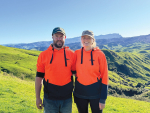
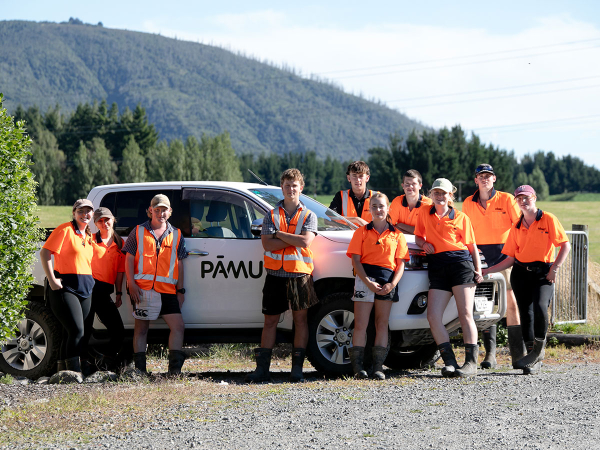 From left to right: Tori Cheetham, Sienna Barltrop, Aidan King, Ryan Sayers, Case Hasler, Grace Dolton, Reuben Joyce, Libby Meredith, Alex Iremonger, Caitlin Flack
Pāmu has welcomed ten new apprentices into its 2026 intake, marking the second year of a scheme designed to equip the next generation of farmers with the skills, knowledge, and experience needed for a thriving career in agriculture.
The arrival of the new cohort comes as Pāmu confirms the success of its 2025 pilot year, with 100% of the inaugural class successfully completing their foundation year and transitioning into full-time roles on Pāmu farms across the country.
Pāmu CEO Mark Leslie says the retention of the 2025 class validates the business’s investment in the future.
“Seeing our entire inaugural class successfully transition into roles on Pāmu farms is proof that this model works,” says Leslie.
“They have grown immensely over the past twelve months, not just as farmers, but as young professionals. Their success has paved the way for the 2026 cohort, who we are excited to see develop over the coming year.”
The ten new apprentices—many of whom finished secondary school only weeks ago—are now settling into life at Aratiatia Farm. Here, they will balance full-time farm work with formal qualifications in dairy and livestock. Over the next three years, apprentices will rotate through diverse farming environments, gaining the technical proficiency required to work in modern, farming operations while earning Level 3 and 4 Primary ITO qualifications.
Pāmu Apprenticeship Scheme Manager Gary Brady notes that the programme prioritises personal growth alongside the "how-to" of farming. Pastoral care is central to the scheme; apprentices live together on farm, managing budgets, cooking, and sharing household responsibilities to build independence. Regular wellbeing check-ins, personality profiling, and open communication ensure mental health is supported, while involvement in Open Farm days strengthens their connection to the sector.
“Our objective is to prepare these young people for long-term employment in the industry,” Brady says.
“This involves respecting the land, understanding new technology, and developing the character to lead in their future roles.”
This year’s group brings together a diverse range of backgrounds from across the North and South Islands:
After a year of foundational training, apprentices will select a specialty in either dairy or livestock for their second and third years to align with their career objectives.
State farmer Pāmu says a programme it's running to help skilled operators into farm ownership is paying dividends.
State farmer Pāmu (Landcorp) has announced it will pay a $10 million special dividend to the Crown off the back of a strong outlook for the business and a capital repayment of $9.5 million following Fonterra's consumer business sale.
William John Poole, a third year Agribusiness student at Massey University, has been awarded the Dr Warren Parker and Pāmu Scholarship.
State farmer Pāmu (Landcorp) has announced Dave Nuku is its new Associate Director, joining the board as an observer from 1 March 2026.
State farmer Landcorp, trading as Pamu, is a forecasting a full-year net profit of around $100 million.

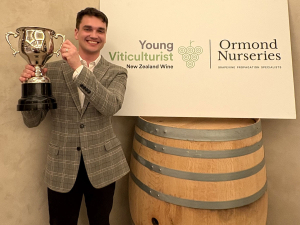
Joshua Irving has been named the 2026 Ormond Nurseries North Canterbury Young Viticulturist of the Year.

Vets say they support the responsible use of virtual fencing and virtual herding technology for cattle and wants to work with farmers, manufacturers and government to help shape standards for future use backed by ongoing research to strengthen animal welfare outcomes.
National and world records tumbled as top Kiwi axeman claimed two Stihl Timbersports world titles at the same event in Budapest, Hungary over the first weekend in June.
A safety push across New Zealand has revealed significant gaps in hazardous substances management, farm vehicles, tractors, quad bikes and side-by-sides.
New Zealand farmers have earned a global edge by consistently yet cautiously taking advantage of emerging agri-technology.
New season data from LIC shows a strong reproductive performance for the 2025-26 season, with a lift in key metrics compared to last season.




OPINION: Central Hawke's Bay farmer Mark Warren recently told the Hawke's Bay Times it's time for a conversation about allowing…
OPINION: A nation that relies as heavily as NZ does on functional global shipping lanes will have to do its…