Arla Foods delivers $15b revenue as Co-op turns 25
European dairy giant Arla Foods celebrated its 25th anniversary as a cross-border, farmer-owned co-operative with a solid half-year result.




 increase font size
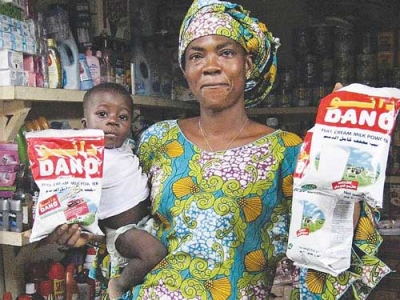 Arla’s powdered milk are sold in Africa under Arla Dano brand.
European Dairy co-op Arla recently signed two new joint ventures in Africa as part of its expansion plan on the continent.
Two strong local partners, Tolaram in Nigeria and Attieh Group in Senegal, will provide the distribution backbone that will help Arla grow and develop its business in West Africa, the co-op says.
The move is part of Arla’s strategy to develop new markets outside the EU to make more money from its farmer-owners’ milk.
Arla’s ambition in sub-Saharan Africa is to grow its annual revenue from $158 million to $800m in 2020.
“This is to be achieved initially through sales of powdered milk and liquid milk, which is in high demand among the rapidly growing middle class in and around the big cities, and eventually also butter and cheese,” it says.
Steen Hadsbjerg, head of the business region in sub-Saharan Africa, says wealthier families are increasingly demanding safe and affordable nutrition. He says West Africa faces a milk deficit, which Arla will fill with milk powder and other dairy products.
“We are here to build a long-term business, and that requires strong local partners. We [will have] two experienced partners in Senegal and Nigeria,” says Hadsbjerg.
Arla’s powdered milk products in Africa are sold under the Arla Dano brand.
“In Nigeria Arla now has annual revenue of $140m but so far it has been based on various distribution agreements. Now, by placing all its business in the new joint venture company with Tolaram Group, Arla expects to grow its revenue by 2020.
“Nigeria is one of the biggest markets for dairy products in Africa,” says Hadsbjerg.
“For Arla to succeed in Africa we must succeed in Nigeria. The population is growing at 2-3% per year, and people are young, ambitious and increasingly well educated.
“This makes Nigeria a perfect market for Arla’s Africa strategy, and we expect the new joint venture to start selling in September.”
The venture in Nigeria will be called TG Arla Dairy Products LFTZ Entreprise, owned 50% by Arla Foods and 50% by Tolaram Group. The company will handle packaging, marketing, sales and distribution of Arla products in Nigeria. Mads Burmester has been appointed managing director.
Starting up in Senegal
Arla does not now sell any product in Senegal, but by forming a joint venture company with the Attieh Group, the co-op expects to build annual revenue of $56m by 2020.
The new joint venture company in Senegal is called Arla Senegal S.A. and is owned 75% by Arla Foods and 25% by Attieh Group.
The joint venture will handle packaging, marketing, sales and distribution of Arla products in Senegal, and is expected to be operational before the end of this year.
European dairy giant Arla Foods celebrated its 25th anniversary as a cross-border, farmer-owned co-operative with a solid half-year result.
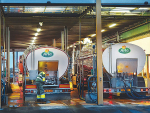
The creation of Europe's largest dairy co-operative should be complete by early 2026.
OPINION: One of the world’s largest dairy co-operatives has come under fire for embracing a new methane-reducing additive fed to cows. The claims, made on social media, says the use of a feed additive by Arla Foods farmers could ‘contaminate’ milk and allegedly cause cancer.
European dairy co-operative Arla Foods is forecasting a total revenue of nearly $25 billion this year.
Danish dairy co-operative Arla Foods is accelerating sustainability efforts on farm to help customers achieve their reduction targets for scope 3 emissions targets.

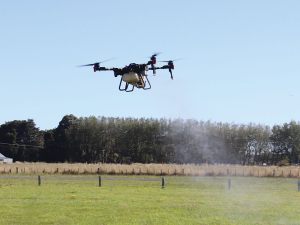
OPINION: David Seymour and James Meager's plan to make it easier for farmers and orchardists to operate drones can best be described a 'courageous' move.

New Zealand wool is reaching new heights as air filtration companies move away from synthetic products to biodegradable alternatives.
Opuha Dam's ability to protect South Canterbury communities from major flooding has taken a significant step forward, with Opuha Water Limited (OWL) successfully commissioning a new outlet valve capable of releasing record volumes of water from the dam ahead of a weather event.
There's been widespread support from the primary sector for the Government's announcement on changes to freshwater farm plans that come under the Natural Environment Bill, which is now set to replace the existing RMA.
A partnership between state-owned enterprise Pāmu (Landcorp Farming Limited) and charity Meet the Need is putting more than quality New Zealand beef into food bank parcels this year.
The Opportunity Party has faced criticism during the election campaign that its policies are too urban-focused and offer little for rural communities.



OPINION: After hogging the media limelight for telling a NZ Chinese MP to "go back home", Winston Peters has decided…
OPINION: With fuel prices soaring, one would have expected most farmers to be reclaiming excise duty on petrol.