
Four Candidates Confirmed for Fonterra Board Election
Four candidates have been confirmed for two director positions on Fonterra’s board.




 increase font size
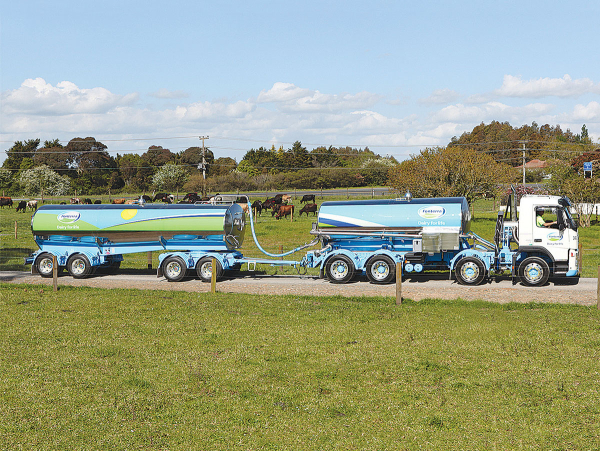 Fonterra knows supporting on-farm cash flow is important to farmers, especially during a time of increasing costs.
Fonterra released its interim results last month, showing a continuation of the strong earnings performance delivered by the co-op through the 2023 financial year. Here’s what Fonterra chair Peter McBride and chief executive Miles Hurrell said about the results…
The underlying performance of our business is in good shape. This result has been driven by improved earnings in our Consumer and Foodservice channels, helping to offset lower returns in our Ingredients channel relative to last year, which benefited from historically high price relativities during FY23.
Our strong earnings put us in a position to pay an interim dividend of 15 cents per share to farmer shareholders and unit holders, up 50% from FY23. We are also pleased to be forecasting an improved 2023/24 Farmgate Milk Price after volatility earlier in the season.
Our midpoint lifted by 30 cents in February to $7.80/kgMS following strengthening demand from the Middle East and Southeast Asia.
As we are now well progressed through the 2023/24 season, we have the confidence to narrow the forecast range to $7.50 – $8.10/kgMS.
Our focus is always on utilising our co-op’s strengths and scale, including our diversification across products, markets and categories, to maximise overall returns to our owners.
This year, we have been able to utilise our strong balance sheet to get more of the Farmgate Milk Price payment to farmers earlier in the season through implementation of our new Advance Rate guideline. We know supporting onfarm cash flow is important to farmers, especially during a time of increasing costs.
On-farm cash flow was further supported by the payment of the $804 million capital return in August, equivalent to 50 cents per share and unit. This followed the divestment of Soprole and delivered on a commitment made by the co-op to return capital to shareholders and unit holders by FY24.
We note the share price impact following the capital return. Over time we expect the share price will reflect the co-op’s financial performance.
Ultimately, farmers will determine the value of the shares, given farmers can only buy from and sell to each other.
The co-op has given considerable focus to managing owners’ capital, lowering our debt position and shoring up our balance sheet over the last few years.
We are pleased to be in a position where this work is allowing us to provide some financial stability to farmers, as well as allowing us to invest in the upgrades required to sustain and decarbonise our manufacturing assets.
This stability is one of our strengths, with feedback from farmers wanting to join Fonterra showing us that many are seeking the security of a stable co-op.
Our new capital structure has now been in place for one year with some farmers citing the new flexible shareholding options as another reason for their interest in joining or remaining with us. The combination of our strong performance, financial stability and flexible shareholding options mean we now have a waitlist of farmers in some regions who want to be part of the co-op. At the core of our principles is the promise to farmers that their milk will be collected every day and the highest possible return will be sought for that milk.
Right now, we are operating in a period of heightened geopolitical tensions, which is resulting in disruptions to global supply chains and presents the potential for further volatility in global demand.
Farmers can be confident that the co-op is well positioned to navigate through these dynamics thanks to our stable financial position, scale and diversification across markets and categories, and strong partnerships, such as with global logistics provider, Kotahi.
In terms of the remainder of FY24, we have a positive outlook for dairy demand, which gives us confidence to maintain our forecast earnings guidance for the year of 50-65c/share.
Four candidates have been confirmed for two director positions on Fonterra’s board.
A record farmgate milk price and strong global demand is laying the foundation for continued growth of organic dairy farming in New Zealand.
Waikato milk processor Tatua has again declared a record milk payout to farmer shareholders, leaving other processors in the dust.
Fonterra has unveiled its annual results for the 2026 financial year, posting $27 billion in revenue and close to $20 billion returned to New Zealand farmer owners and unit holders.
Fonterra Co-operative Group has confirmed the independently assessed candidates standing for election to its board in 2026.


A major move is about to get underway to improve the quality and viability of dairy beef and cattle in NZ.
Veterinarians say changes to the code of welfare for dairy cattle provides a positive foundation for improved cattle welfare across the country.
Today, 15 October, is the International Day of Rural Women, which recognises rural women’s contribution to farming, communities and the environment.
Global dairy giant Lactalis has integrated its Australian operations with the Mainland Dairy consumer business it acquired from Fonterra earlier this year.
After almost two decades of sharemilking, saving and building equity, Aaron and Marcia Flay this year realised their long-held dream of settling on their first dairy farm.
Good medium to long term prospects for NZ beef, especially in the US, has heighted the focus on various initiatives to capitalise on this situation.

OPINION: It seems Canterbury processor Synlait is still in the doldrums.
OPINION: Get offside with New Zealand First leader Winston Peters at your own peril.




