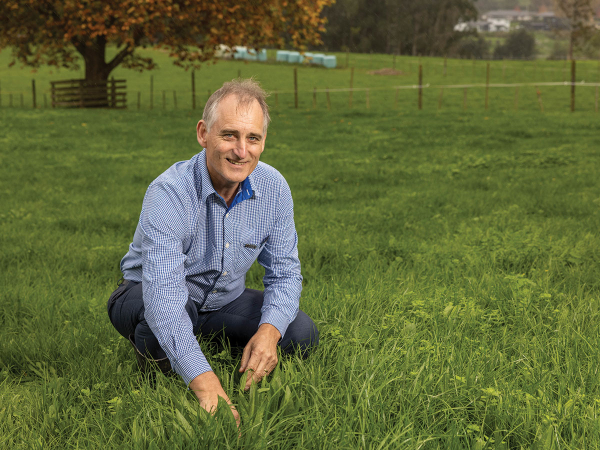
OPINION: As an on-farm judge for the Ballance Farm Environment Awards for many years, I’ve witnessed first-hand how dramatically New Zealand agriculture and horticulture has transformed over the past three decades.
While farmers and growers have always inherently had an intergenerational view of their land, some sustainable farm practices that were once considered a little bit fringe have become part of mainstream farming and simply what’s done.
As we enter into another round of applications for next year’s Ballance Farm Environment Awards, here are some key trends I’ve observed around the wider shift toward a more holistic environmental guardianship approach to farming and growing. Transforming marginal land to support whole farm system ecology.
Looking back, decades ago the effective area of a farm referred almost entirely to the grazable or plantable land of a farm, with other zones often deemed as unproductive or even wasteland.
Today, farmers and growers recognise that these areas like riparian strips, wetlands and native bush remnants have a big role to play in the overall ecology of a farm and the work environment for family and staff.
These areas support biodiversity, reduce emissions, stabilise soils and contribute to water purification. Every year I see how well entrants demonstrate that even marginal land can add huge value to a farm system. A common observation is the improved aesthetics and work environment these wetland or riparian areas provide.
Biodiversity and eDNA monitoring as a new frontier.
Farmers are also beginning to look beyond riparian plantings; they’re now monitoring what lives in the water itself. The introduction of eDNA testing to assess aquatic biodiversity is a growing trend, and early adopters use it to track things like fish and invertebrate presence as well as help guide restoration decisions. The species they discover living in waterways on farms and orchards can be very surprising.
Health and safety In the past we’d walk onto a farm and see riders on quad bikes only occasionally wearing helmets. Now wearing helmets is standard practice and many farms have transitioned entirely to enclosed side-byside vehicles to improve safety. This, alongside a focus on mental health and staff wellbeing, shows the culture shift reflecting a wider commitment to health and safety.
Precision farming shifts from whole farm to paddock level
Thirty years ago, fertiliser and irrigation management was managed at the whole farm level. In the early 2000s this progressed to block level planning and nutrient budgets. Now, early adopters are applying variable rate technology within paddocks, adjusting inputs based on soil type or moisture. This type of precision fosters efficiency and reduces waste, supporting better productivity and a lower environmental footprint.
Harnessing technology to support better environmental outcomes
Growers like Healthy and Fresh in Karaka, which won the Auckland Regional Supreme Award at the 2025 Ballance Farm Environment Awards this year are using hydroponic systems to dramatically reduce water and nutrient usage. While 2024 Otago regional award winner Forest Lodge Cherry Orchard runs its entire operation entirely on solar energy, from tractors to frost fans.
These examples show what can be done to drive both sustainable and profitable ways of operating.
Warwick Catto is a board member of the New Zealand Farm Environment Trust and has been an on-farm judge of the Ballance Farm Environment Awards for more than 15 years. Warwick is also the Science Strategy Manager at Ballance Agri-Nutrients. Entries are now open for the 2026 Ballance Farm Environment Awards, for more information, visit bfea.org.nz Entries close 31 October 2025.