Ford Vehicles Now Compatible With HVO Renewable Diesel
Continued fluctuations in fuel costs are putting pressure on many businesses, driving a significant spike in interest for electrified options like hybrids and alternative power sources.




 increase font size
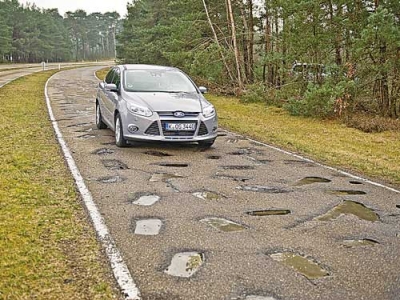 The 1.5km test track replicates 100 potholes and surfaces from 50 countries.
We all know it’s easy to make money selling cars: get a clever geek to design something using CAD, build it, sell lots, bank the money and live the life of Riley with a bevy of dusky maidens, or toy-boys, in the Cayman Islands. Yeah right!
In reality the lifespan of a car is seven-eleven years, so on the day you drive that new model out of a dealer’s showroom some clever geek is working on a new model that will take four-six years to develop.
As well as creating a new look, incorporating the latest engines and transmissions and paying homage to the newest audio visual technologies, designers are having to pay special attention to handling and comfort as customers become increasingly more critical of these areas.
Once a design has been engineered, pre-production vehicles are handed to test engineers for final refinement, and testing. The Ford test facility at Lommel in Belgium is a good example.
Here a 1.5km test track replicates 100 different potholes and surfaces from 50 countries – speed bumps that can wreck suspensions if taken too quickly, cobblestones from Paris streets, typical Asian monsoon-swept roads with deep ruts, un-made roads that wreck wheel rims and burst tyres….
The diary of a test driver at this facility must include regular visits to an osteopath during the development of a new vehicle. They typically cover 5000 laps of the 1.5km test track during a development cycle, and encounter potholes up to 14cm deep, and at speeds of up to 70km/h. In six months of testing at the Lommel facility they can replicate 10 years of hard driving, or abuse, while using $1.4 million dollars of hi-tech equipment to record their findings.
So next time you hit a pothole on the Desert Road and shake your bones, give a thought for the man from Ford who has probably driven through a replica of the same hole 5000 times – and does it for a living. – Mark Daniel
Continued fluctuations in fuel costs are putting pressure on many businesses, driving a significant spike in interest for electrified options like hybrids and alternative power sources.
With Ford holding the reins of the ute market since about 2014, it was always going to be a case of when – not if – Toyota NZ would deliver a model to compete.
The latest addition to the long running Ford Ranger line-up, is the return of the FX4.
The Ford Ranger Raptor is not the truck you buy for heavy work; payload and towing capacity are significantly less than a standard Ranger or any other working-clothes ute. But that's not the point.
The modern trend to fewer cubic centimetres and more gear ratios continues as car manufacturers chase better fuel economy and lower emissions.



Almond hulls sourced from Australian orchards may have the potential to help New Zealand cows reduce emissions, boost milk yield and lower input costs.

Striking a balance between meeting the needs of industry to speed up approval time for products but on the other hand ensuring that risks are properly assessed.
Surprised, humbled and quite thrilled. That’s the reaction of James Allen, one of the founding partners and now chief executive of AgFirst, on being made a life member of the Institute of Rural Professionals.
It was billed as a chance for all the political parties to woo the rural vote, but question marks hang over just how effective this was.
Minister of Conservation Hon Tama Potaka has appointed Susan O'Regan as Chair of the Queen Elizabeth II National Trust (QEII) for a three-year term.
Red meat farmers are welcoming Labour’s plan to review the Emissions Trading Scheme and not to campaign on pricing agricultural emissions.



OPINION: It seems Canterbury processor Synlait is still in the doldrums.
OPINION: Get offside with New Zealand First leader Winston Peters at your own peril.