
Boosting Crop Production by Spreading Effluent
Tararua district farmer Jamie Harris milks around 400 cows using a split calving system on his farm, Crossdale Dairies.




 increase font size
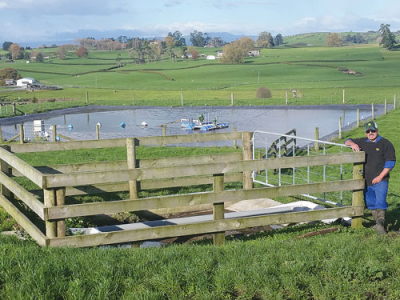 Geoff Irwin beside the hydrant line with the pond in the background
A staged approach to a comprehensive effluent system delivers on all counts, says a Kereone farmer.
“Staging various aspects is easier on your budget, especially in tough times, and doing the right thing at the right time ensures compliance,” Geoff Irwin says.
Irwin called in Hi-Tech Enviro Solutions in 2012 to solve a storage issue on his 270 cow farm.
“I didn’t have enough storage and wanted to resolve this before it became a compliance issue. I also wanted to limit the amount of rainwater entering the system and wanted to add a stone-trap which, with the additional storage, would make the overall system more flexible.
“At the time I was just wanting to store effluent from the dairy shed but I was planning to grow the herd to about 320 cows and build a couple of herd homes, so I wanted a system which would future-proof the farm.
“The result was a 2000m3 lined pond for the effluent from the dairy, and allowing pond water to be used to dilute the effluent from the herd homes (built in 2016) before it was pumped onto pasture.
“The pond has a five-drum pontoon with floating pipe system which connects the pontoon to the shore, limiting access onto the pontoon and allowing me to move it around the pond for optimum pumping and agitation.
“The new storage system worked well but getting effluent out onto pasture was still a manual job which involved dragging lines from paddock to paddock.
“I also had an issue getting effluent to the back of the farm so in 2016 Hi-Tech designed and installed a 1.6km hydrant line which enabled fertiliser to be easily and quickly spread across the entire farm. Trenching in the permanent hydrant line was a huge saving in time and labour.”
Irwin’s effluent system includes the five-drum pontoon with floating delivery, a vertical stirrer, 11kW Doda pump and a Cobra travelling rain gun.
“The Cobra achieves low application depths and rates but also spreads over large distances. It doesn’t have long boom arms so it’s easy to move around and set up.
“The entire system is cost effective, easy to manage and works well for us. Having a lined storage pond gives storage for when conditions aren’t suitable for applying effluent to pasture, and allows us to have more control and apply the effluent at the optimum time to maximise pasture growth and nutrient utilisation.”
Tararua district farmer Jamie Harris milks around 400 cows using a split calving system on his farm, Crossdale Dairies.
Water management is an integral component of sustainable farming practices, according to Watermetrics.
Two farmers and two farming companies were recently convicted and fined a total of $108,000 for environmental offending.
A Taupiri farming company has been convicted and fined $52,500 in the Hamilton District Court for the unlawful discharge of dairy effluent into the environment.
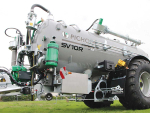
Founded in Germany as recently as 1977, today, the Fliegl Group employs more than 1100 workers, offering an expansive range of transport solutions, from their base in Bavaria.


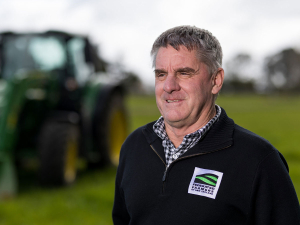
National’s pledge to introduce 19 new national standards shows the party is serious about getting Wellington out of farming, Federated Farmers says.
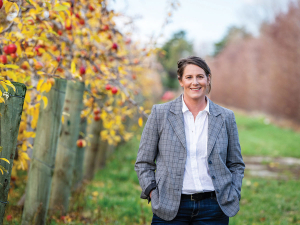
The National Party’s policies to make it easier to grow fresh vegetables, secure reliable water and energy and simplify farm planning are practical changes that will give growers the confidence to invest, according to Horticulture New Zealand (HortNZ).
Fonterra Co-operative Group chief financial officer Andrew Murray has resigned to take up a role outside the dairy giant.
A major move is about to get underway to improve the quality and viability of dairy beef and cattle in NZ.
Veterinarians say changes to the code of welfare for dairy cattle provides a positive foundation for improved cattle welfare across the country.
Today, 15 October, is the International Day of Rural Women, which recognises rural women’s contribution to farming, communities and the environment.


OPINION: It seems Canterbury processor Synlait is still in the doldrums.
OPINION: Get offside with New Zealand First leader Winston Peters at your own peril.




