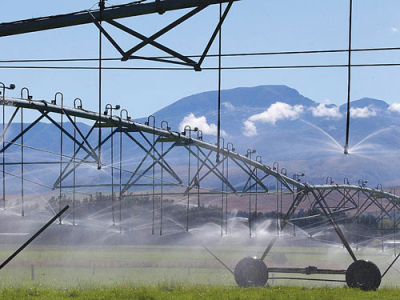
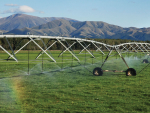
Smart irrigation is a practical way for irrigators to implement and demonstrate good management practice, says Irrigation NZ.
Well managed irrigation is part of the commitment by IrrigationNZ and its members to the good farming practice action plan for water quality adopted in June 2018.
Smart irrigation allows irrigators to maintain financial viability while meeting community expectations on sustainable water management.
Requirements of smart irrigation are that the irrigation system is efficient, irrigation is scheduled, operators are trained and auditable records are kept.
Any new development, upgrade or redevelopment must be consistent with the Irrigation Design and Installation Codes of Practice and Standards. Using an accredited irrigation design company is the best way to achieve this.
Any new development, upgrade or redevelopment must be commissioned to show it has achieved its design performance parameters.
All irrigation systems must have an annual performance assessment (a bucket test) to demonstrate they are performing efficiently.
Draft Good Management Practice guides for spray and border dyke irrigation: INZ has developed some draft guides to good management practice irrigation.
When scheduling irrigation, water use must be compliant with a farm’s consent conditions -- a legal requirement.
There are a two ways to schedule irrigation: soil moisture monitoring and soil-water budgets.
Training is key for everyone involved in irrigation and must include health and safety considerations.
INZ runs practical irrigation manager and irrigation development training days and workshops that enable irrigators to upskill and be safe.
INZ has developed resources for irrigators including guides, templates and checklists, available free to all INZ members, or provided free as part of training.
Records are key to smart irrigation. Without evidence you cannot be accountable; records also provide a useful tool for analysis of performance and continual improvement.