
Boosting Crop Production by Spreading Effluent
Tararua district farmer Jamie Harris milks around 400 cows using a split calving system on his farm, Crossdale Dairies.




 increase font size

AS THE long, hot days of summer roll through, it's even more important to keep checking the levels in effluent ponds, says DairyNZ. Let them get too full and when the weather turns and the autumn rains set in, overfull effluent ponds can cause all sorts of problems.
DairyNZ has launched a campaign to assist dairy to irrigate from their effluent ponds to keep them as low as possible this summer.
"We want to help remind people to irrigate when conditions allow from midsummer through to early autumn so when the wet weather starts there is as much free storage as possible in the pond," says Theresa Wilson DairyNZ's development project manager for effluent.
"A full pond means you have no storage. We know there are increasing numbers and complexity of issues in managing dairy farms. This campaign aims to ensure effluent ponds have their appropriate priority in the process, somewhere near fuel and crew issues."
To help spread the message, DairyNZ's campaign is using cartoons, a magnetic pond level indicator, t-shirts and – the highlight of the promotion – a 'prize pond' photo competition. Dairy farmers can send in their pictures to show how low their pond can go (see dairynz.co.nz/prizepond) and if you have the best looking pond you'll win a barbecue hosted by former All Black prop, TV sport commentator, radio personality and farmer Richard Loe.
DairyNZ is investigating regular weather reports to assist dairy farmers to bear their ponds in mind when they check the weather for other aspects of their farms.
"Having farmers compare their ponds helps us promote good practice for managing effluent ponds," says Wilson.
"Some farmers also say it can be a psychological issue that full ponds look better than empty ones, so in a light-hearted way we want to show off and celebrate good-looking, empty storage ponds."
It might have light-hearted elements, but the campaign has its serious side. Farmers have made good progress meeting effluent management requirements over the past few seasons. Nationally the rate of serious non-compliance fell to 11% last season on the back of clearer information to farmers and improved infrastructure on farms. Wilson says DairyNZ is supporting farmers to bring this rate down further.
"We know in previous years a few people have been caught out because their ponds were full. They've either had a pond overflowing, or they've irrigated in wet weather because their pond couldn't hold any more effluent. We want to help our farmers by getting ponds ready to take on effluent in spring so they don't add to the non-compliance statistics," she says.
"It also makes good sense to get the valuable nutrients in effluent into the ground now to assist grass and crop growth when growing conditions are good."
Managing effluent storage is only one side of the equation. A pond needs to be well constructed and of an appropriate size to cope with the farm system. Last October DairyNZ and the Institution of Professional Engineers New Zealand (IPENZ) released an effluent pond construction guide (see dairynz.co.nz).
Wilson says even the best effluent ponds won't cope if they are full and sustained wet weather hits. "If your pond is at a high level now, irrigate to lower it as soon as you can; it won't be long before winter is upon us."
DairyNZ also has effluent systems advisors available to help with questions on effluent management, as well as extensive resources all available at www.dairynz/effluent
Tararua district farmer Jamie Harris milks around 400 cows using a split calving system on his farm, Crossdale Dairies.
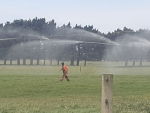
Water management is an integral component of sustainable farming practices, according to Watermetrics.
Two farmers and two farming companies were recently convicted and fined a total of $108,000 for environmental offending.
A Taupiri farming company has been convicted and fined $52,500 in the Hamilton District Court for the unlawful discharge of dairy effluent into the environment.
Founded in Germany as recently as 1977, today, the Fliegl Group employs more than 1100 workers, offering an expansive range of transport solutions, from their base in Bavaria.


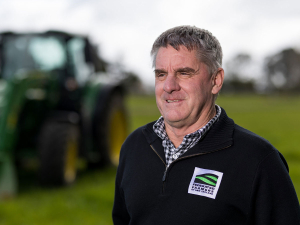
National’s pledge to introduce 19 new national standards shows the party is serious about getting Wellington out of farming, Federated Farmers says.
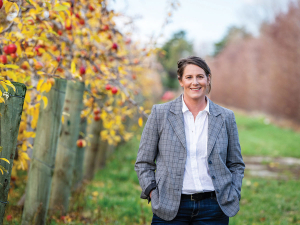
The National Party’s policies to make it easier to grow fresh vegetables, secure reliable water and energy and simplify farm planning are practical changes that will give growers the confidence to invest, according to Horticulture New Zealand (HortNZ).
Fonterra Co-operative Group chief financial officer Andrew Murray has resigned to take up a role outside the dairy giant.
A major move is about to get underway to improve the quality and viability of dairy beef and cattle in NZ.
Veterinarians say changes to the code of welfare for dairy cattle provides a positive foundation for improved cattle welfare across the country.
Today, 15 October, is the International Day of Rural Women, which recognises rural women’s contribution to farming, communities and the environment.



OPINION: It seems Canterbury processor Synlait is still in the doldrums.
OPINION: Get offside with New Zealand First leader Winston Peters at your own peril.




