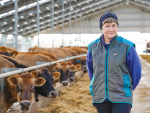
Breeding the Ultimate Robot-Ready Jersey Herd
In the beautiful, scenic expanse of Invercargill, Joanne (Jo) Crack of Southern Star Farms is redefining what it means to run a modern, self-sufficient dairy operation.




 increase font size
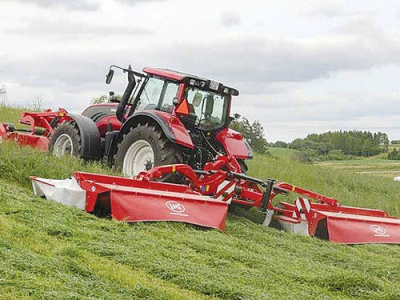 AGCO says it expects to buy the forage division of the Lely Group.
In one of the farm machinery industry’s worst-kept secrets, global manufacturer AGCO says it expects to buy the forage division of the Lely Group.
Subject to regulatory approval, the deal will be completed by the end of the fourth quarter in 2017.
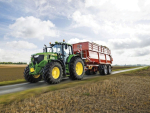
This will allow AGCO to strengthen its product offering, particularly in balers and loader wagons, and allow Lely to concentrate on the dairy automation sector, a growth area of its business in the last few years.
Commenting on the sale, Lely chief executive Alexander van der Lely says the company “intends to focus as a leader in dairy robot technology, and on data and sensor systems used on dairy farms”.
“Over the past 15 years these areas have been a major source of growth for this company, and they offer us great potential.”
Production of dairy equipment will continue at the Maassluis, Netherlands HQ and at plants in Pella, US and Leer, Germany.
Production of grassland machinery such as mowers, rakes and tedders, now made at Maassluis, will be moved to other AGCO plants, with production ceasing by March 2018.
The Wolfenbuttel and Waldstetten factories in Germany, where balers and loader wagons are produced, respectively, will be acquired by AGCO.
Lely staff numbers are likely to drop by up to 200; some say 100 people will depart the Lely HQ.
AGCO New Zealand manager Peter Scott says “the acquisition broadens our product offering and gives our dealers and their customers more choice, while also offering the parts and service support they have come to expect for AGCO brands”.
Work will now start to integrate the Lely products into the AGCO line-up and decide whether there is room for both those and the Fella brands.
In the beautiful, scenic expanse of Invercargill, Joanne (Jo) Crack of Southern Star Farms is redefining what it means to run a modern, self-sufficient dairy operation.
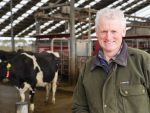
In Dacre, near Invercargill in New Zealand’s South Island, Bruce Dinnington is running a dairy operation unlike any other.
Updates to the latest models of AGCO Group’s Fendt Ideal headers for 2027 sees a greater separation area and a new straw and chaff spreader kit.
AGCO’s Valtra brand has announced a production milestone at its Suolahti, Finland, factory with the completion of the 1000th AGCO continuously variable transmission (CVT).
Long-term exhibitor at Fieldays, AGCO and its Massey Ferguson brand, have several new products on display.


Good medium to long term prospects for NZ beef, especially in the US, has heighted the focus on various initiatives to capitalise on this situation.
High country stations, mixed sheep and beef farms, Māori-owned farms, corporates and family operations are among the nine commercial farms taking part in the Livestock Innovation Farming Transformation programme, known as LIFT.
OPINION: New health and safety guidance unveiled by the Government recently provides farmers greater certainty about what is expected of them when managing risks on farm.
The National Animal Welfare Advisory Committee (NAWAC) is seeking public feedback on proposed changes to the Code of Welfare for Rodeos.
A New Zealand initiative supporting farmers to restore the health of grazing landscapes has received international backing through the Regenerative Fund for Nature, a global collaborative fund supporting regenerative agriculture and the communities that produce natural fibres for the fashion industry.
Combine premium New Zealand products, blend in a family ritual and what do you get? A world-class functional drink.
OPINION: It seems Canterbury processor Synlait is still in the doldrums.
OPINION: Get offside with New Zealand First leader Winston Peters at your own peril.