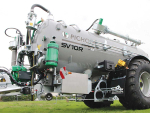
Pichon Adds SV10R and SV14 to SV Slurry Tanker Range
French manufacturer Pichon has expanded its SV slurry tanker range with the launch of two new models.




 increase font size
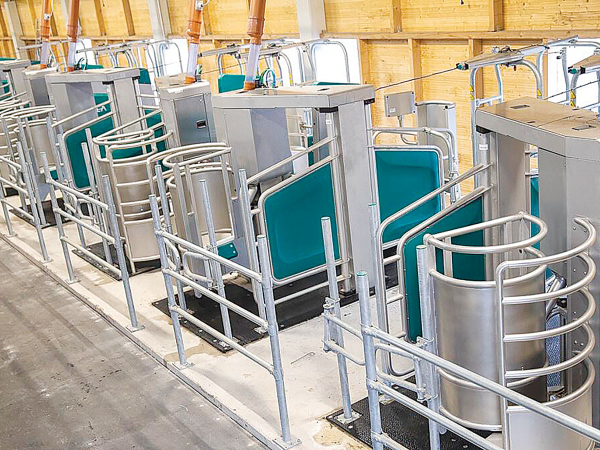 Designed specifically for Kiwi conditions, the DairyRobot system supports both batch and voluntary milking systems.
New Zealand farmers get their first opportunity to experience the future of pasture-based dairy automation in action this week at the National Fieldays.
GEA Farm Technologies’ DairyRobot milking system combines highperformance automation with traditional dairy farming practices and makes its debut at the Fieldays.
A demonstration unit has been specially shipped to New Zealand for the event, alongside a virtual reality experience that allows farmers to explore the system in both voluntary and batch milking environments.
Craig Lowry, head of sales & service, GEA Farm Technologies NZ says DairyRobot is now available in New Zealand and combines high-performance automation with traditional dairy farming practices.
Designed specifically for Kiwi conditions, the system supports both batch and voluntary milking systems. Offering flexibility, efficiency, and control. With a compact footprint, it can be retrofitted into existing infrastructure with minimal disruption, he says.
“You really need to see it to fully understand the difference this system could make to your milking routine. It is fast, efficient and clean, creating a more sustainable milking system for your farm,” says Lowry.
The DairyRobot also provides easy access behind the cow at any time, allowing farmers to manually cup, check, treat or dry off cows.
At the core of the DairyRobot is GEA’s In- Liner Everything technology, which completes every step of the milking process, including stimulation, cleaning, milking, teat spraying, and rinsing, all in one seamless cup attachment.
The system also offers individual quarter milking, somatic cell count management, and realtime data collection, giving farmers better visibility and control over herd health and productivity.
Australian dairy farmer Michael Krichauff, who milks 210 cows at Three Bridges Robotic Dairy in South Australia, has been using GEA’s R9500 voluntary system with three robot boxes.
“We really liked the idea of a pit and the ability to manually put cups on a cow. We can go in behind the cow safely, press a button, and manually put the cups on if we have to,” says Krichauff.
“Aside from some pipework and a little concreting, we managed to use all our existing facilities. A highlight with GEA was the option of multi-sized cows in the one box – we’ve got three different sizes we can use.
“The ability to manage cell count with individual quarter management is far better than anything I’ve seen elsewhere. And GEA was the only provider that offered a good herd testing system. We just plug it in, press ‘herd test,’ go home for the night, and the next day all the samples are ready to go.”
French manufacturer Pichon has expanded its SV slurry tanker range with the launch of two new models.
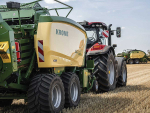
Recently revealed, Krone’s new Series Six, BiG Pack Plus and Pro balers are designed to use standardised components, interfaces, and control concepts, including pick-up, knotter systems and user interfaces.
Consuming around six years and more than 35,000 hours of physical and digital testing, the new sixth-generation Valtra T Series is being described as the most significant new release in the company’s history.
Strautmann has introduced a new Hay Edition auger for its Verti-Mix feed mixer wagons, aimed at operators using rations with larger proportions of hay or other long-fibre materials.
Twin rotor swathers have become the ‘go-to’ for forming swaths to feed hungry harvesters and balers, however, the design layout often means that crop located between the two rotors is not picked up, turned over or incorporated into the swath formed for subsequent harvesting.


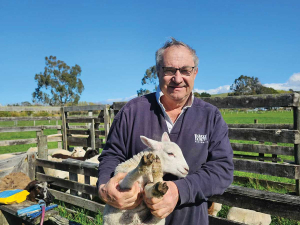
Decades piloting planes has ensured vet and farmer David Hayes is focused on safety. So, after a serious accident while welding on farm, he is sharing his experience so others can learn from it.
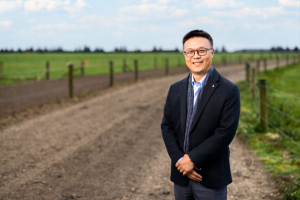
Canterbury milk processor, Synlait Milk has confirmed Leon Fung as its chief executive officer.
OPINION: Making it easier to collect rainwater and use it to grow crops and livestock is a no brainer.
As part of its Election 2026 coverage, Rural News asked political parties how they would help pull the arable sector out of the doldrums. Here's what they said:
Farmers are being encouraged to rethink how they manage waste on farm with the launch of ruralwastesorted.co.nz, a new website bringing together practical tips, real farmer experiences and resources.
New Zealand Winegrowers (NZW) is celebrating the India-New Zealand Free Trade Agreement (FTA) coming into force today, bringing New Zealand wine improved access to one of the world’s fastest-growing economies.

OPINION: It seems Canterbury processor Synlait is still in the doldrums.
OPINION: Get offside with New Zealand First leader Winston Peters at your own peril.




