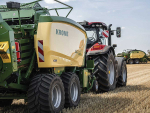
Through its investment arm, CNH Ventures, CNH is supporting the development of the first viable compostable net wrap for bales in agriculture.
The investment in the Canadian start-up Nature’s Net Wrap aims to accelerate their mission to eliminate waste from the process of collecting and storing baled crops.
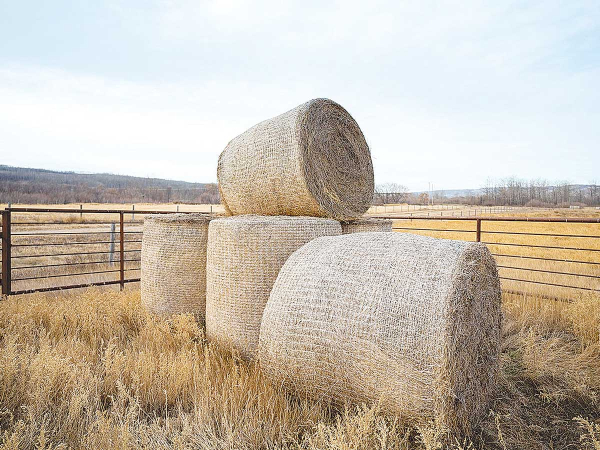
During harvesting operations based around large round bales, once a bale is formed it is generally held with a coating of net wrap and an outer layer of stretched plastic, which at the point of use is removed and eventually ends up getting burnt or placed in landfills. Farmers and contractors are limited in the reuse or recycling of plastic wraps or nets, negatively impacting their environmental footprint.
Shifting to compostable net wraps has the potential to significantly benefit farmers and the environment. It will help reduce landfill use, haulage and disposal costs, eliminate soil contamination, improve animal safety, and reduce the risk of water contamination, likely resulting in a reduction of around 2.5 million tons of plastic waste each year.
With high growth in this market is propelled by the general demand for chemical, and plastic-free solutions, the innovation uses biopolymer material made from renewable resources. It is said to hold up structurally and can naturally break down in the soil or be composted. CNH’s investment is supporting the testing and validation of the solution, with one of the company’s New Holland balers being used to produce all the bales in the testing phase. An initial product launch is expected later in the year.