
Hot milk demand likely to hurt Fonterra in Australia
Competition for raw milk in Australia has reached an all-time high this year, leading to big processors such as Fonterra losing farmer suppliers, says dairy analyst Steve Spencer, Freshagenda.




 increase font size
 Jo Bills, director of Freshagenda.
In late April Freshagenda’s directors were fortunate to attend the ADPI/ABI (American Dairy Products Institute/American Butter Institute) Conference in Chicago.
This major conference draws around 1000 delegates and is dubbed as the place “where the dairy industry does business” – networking and deals dominate proceedings.
Conference sessions aren’t a high priority for many attendees – but a keynote session featuring some of the US dairy industry’s most senior and respected leaders drew a large crowd.
For us it provided some insights into the changing mindset of the US dairy sector towards the world market outside their borders and their transition to being “internationalist”.
The conference panel discussion on global trade featured leaders of three exporting cooperatives, a US-based international trader and a highly respected consultant in risk management and procurement.
Jim Wegner, the outgoing president and chief executive of the Northwest Dairy Association (Darigold), effectively set out the likely future reality for the industry based on extrapolating trends in production and domestic consumption.
In 2014 exports accounted for 15% of US milk production, but projecting forward, Wegner’s analysis suggests exports will represent 23.5% of output by 2020 – a greater share than domestic fluid milk consumption which is expected to continue to decline.
Exporting will not be an optional extra for the US industry – it will be at the very core of the business.
In meeting that challenge, the discussion went to tackling some of the realities of being more international.
A lot of this centred on quality issues and farmer support arrangements which significantly hamper the industry in its export efforts.
Standards of identity for butter and SMP that are different from international norms, a pricing system that makes it difficult for exporters to commit to forward export orders, when the cost of their major input – milk - is based on domestic market trends, is constantly shifting, and subject to administrative rules that are out of step with the current and evolving situation.
Changing these settings will take enormous political will in a climate where the machinery of US government is highly dysfunctional.
It’s not all about obstacles; Mike McCully from the McCully Group highlighted the advantage the US has in an increasingly volatile trading environment in having a strong market culture that embraces risk management tools such as futures, options, swaps and forward contracts.
Some of the real gems came from Jay Waldvogel, who for a time saw action as chief operating officer at Fonterra, but is now a senior vice-president in Dairy Farmers of America.
He talked about the length and complexity of supply chains that meant that export returns will not grow in a straight line, external factors, ”the unpredictable” will have ongoing impact.
He talked about fundamentals around increasing demand based on long term demographic and economic trends that do not go away when prices cycle downwards.
It seems the US industry suffers the same emotional rollercoaster our own industry goes through when it seems the promise falls short of the reality and markets don’t continually climb.
The panel’s discussion on sustainability would also be familiar to many in our own industry – that the word means different things to different people; how it can and will be used as a non-tariff barrier; and that many farmers see moves toward increased sustainability as adding costs.
Waldvogel said consumers everywhere are concerned about sustainability - “not just the nut jobs” but also that the US is a “well-behaved” industry that can use sustainability as a competitive advantage if the industry can think about it positively.
Perhaps the most interesting insights, given where our own industry discussion has been in recent weeks, were shared in response to a question on the use of the productivity tool rbST, and GMOs.
It was acknowledged that major competitors – New Zealand and the EU – do not use either, and that customers have varying degrees of sensitivity.
However, there was a clear push by a number of US industry leaders to position these technologies as supportive of sustainability, and that fragmenting the supply chain through segregation is not that big a deal given that “milk is not milk” anymore.
That’s OK – it’s an opportunity to differentiate and create value.
Again Waldvogel’s view was that safe, efficiently-produced and affordable milk to feed everyone is important – “we can’t feed everyone on organics”.
The US dairy sector is going through a significant transition from exporter to a truly international industry.
It is clear though that US involvement in global dairy trade will continue to grow.
• Jo Bills is a director of Freshagenda, a Melbourne-based consulting and analysis firm that provides food value chain insights and solutions to a wide range of clients from farm to retail.
Competition for raw milk in Australia has reached an all-time high this year, leading to big processors such as Fonterra losing farmer suppliers, says dairy analyst Steve Spencer, Freshagenda.

Plenty's been said about the first 100 days of the Trump presidency – more about unfulfilled campaign promises than tangible action – but in recent weeks the dairy industry has been drawn into some of the posturing.
The events of the past few months have shown up a gaping hole in the information reaching Australian dairy farmers.
We might harp on about the increasing volatility and interconnectedness of commodity trends and forces.


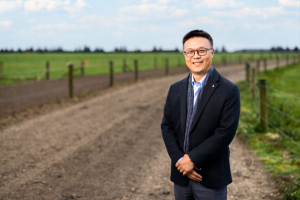
Canterbury milk processor, Synlait Milk has confirmed Leon Fung as its chief executive officer.
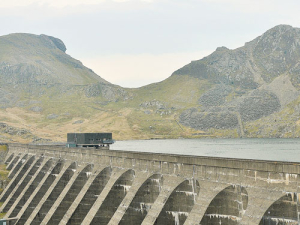
OPINION: Making it easier to collect rainwater and use it to grow crops and livestock is a no brainer.
As part of its Election 2026 coverage, Rural News asked political parties how they would help pull the arable sector out of the doldrums. Here's what they said:
Farmers are being encouraged to rethink how they manage waste on farm with the launch of ruralwastesorted.co.nz, a new website bringing together practical tips, real farmer experiences and resources.
New Zealand Winegrowers (NZW) is celebrating the India-New Zealand Free Trade Agreement (FTA) coming into force today, bringing New Zealand wine improved access to one of the world’s fastest-growing economies.
New Zealand’s red meat sector has welcomed the India-New Zealand Free Trade Agreement taking effect, which removes India’s 33% tariff on New Zealand sheepmeat.


OPINION: It seems Canterbury processor Synlait is still in the doldrums.
OPINION: Get offside with New Zealand First leader Winston Peters at your own peril.




