Wednesday, 01 November 2023 09:55

Top young farmer lands brand ambassador role

Written by  Staff Reporters
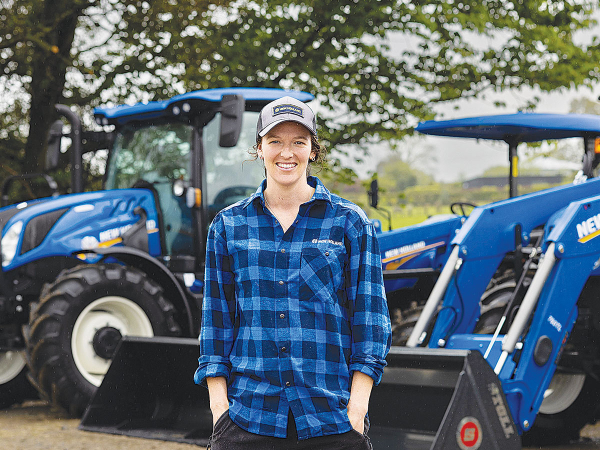
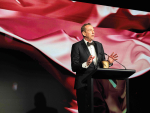
FMG Young Farmer of the Year Emma Poole is the first brand ambassador for New Holland Agriculture. FMG Young Farmer of the Year Emma Poole is the first brand ambassador for New Holland Agriculture.

Waikato dairy farmer and FMG Young Farmer of the Year Emma Poole is the brand ambassador for New Holland Agriculture in New Zealand.

New Holland is a sponsor of the FMG Young Farmer of the Year competition, and Poole, the first woman to take the title in its 55-year history, said taking on such a high-profile role with the company was an easy decision to make.

"As a farming business we always look to support companies and businesses that invest back into our rural regions, so saying yes to an ambassadorial role with New Holland made sense as they have been supporting something close to my heart for a very long time," Poole says.

"Investing in our younger generations through Young Farmers highlights to me that their core values are aligned with everything that's important to us in rural communities."

Poole and husband Chris run a dairy farming operation at the base of Mt Pirongia in the Waikato region, and use a New Holland T5.105 across their properties, where the utility tractor is in use every day, assisting with the likes of feeding the couple's 1,100 cows, loading trailers, maintaining fences and unloading trucks.

In the next few months, she will also take delivery of a new addition to their machinery fleet, a New Holland tractor that was part of her prize for taking out Young Farmer of the Year. Emma had the choice of the tractor or an overseas trip, and once again the decision was an easy one.

"A friend said to me, 'surely you'll take the trip because tractors come and go', but I said, 'it's quite the opposite, trips come and go but the tractor will be here to stay," she laughed.

The Pooles will also have the opportunity to review a range of New Holland machinery and equipment, "putting them through their paces and offering our insights on the likes of the useability in everyday farming life."

"Emma is a relatable and strong role model who is passionate about what she does. She represents the diversity of a rewarding ag career and furthermore, she represents our future generation of industry leaders - which is why we continue to invest in the NZ Young Farmers program," says Murray Grant, CNH Industrial commercial business manager - New Zealand.

"She's familiar with our machinery and appreciates the benefits it brings to the family's business, and we know farmers like to hear from other farmers about what's working for their operations. Being a woman in the industry, too, is a different perspective to the traditional male voice associated with agriculture, which we think will resonate beyong a farming audience, and help spread the farming message to the wider community."

Poole says since claiming the title, she'd enjoyed increased industry advocacy opportunities and multiple speaking engagements that brought her into contact with farmers, and in particular other women in the industry who saw her win as a positive reflection of the significant role women have long played in the country's ag sector.


More like this

New Holland unveils “Il Trattore” concept at Agritechnica

Creating a great deal of enthusiasm at Agritechnica, the T5.120 ‘Il Trattore’ styling concept tractor was celebrating the legacy of research and development, engineering, and design expertise, with the concept bearing a striking green and red colouring and styling inspired by the original first Fiat tractor, the Fiat 702 and the ‘Made in Italy’ logo.

A reliable, no-fuss workhorse

Showcased with a T7.245 at the recent National Fieldays, New Holland has expanded its T7 tractor range offering in New Zealand with the launch of a new Tier 3 long-wheelbase configuration, aimed at users looking for a reliable, no-fuss workhorse.

Featured

Agri Experts Give Their Views on 2050

Despite near universal optimism in the rural sector, a panel of New Zealand’s leading food and agri minds caution that the sector must be intentional about its future path.

The panel say this is needed if the sector is to successfully

navigate the social, economic, environmental and technological forces impacting its operating environment.

Their views form part of the latest version of Rabobank’s annual white paper ‘Succession 2050 – gearing up for New Zealand’s food and agri future’.

Experts Identify Key Global Challenges

The white paper focuses on the topic of succession at an industry level.

In addition to Rabobank’s own insights, the paper brings together a selection of 14 leading New Zealand and international food and agri experts – including trade negotiators, economists, systems analysts, scientists and technologists along with sectoral experts in sustainability, the future of fibre and Māori enterprise – to share their perspectives on what the New Zealand food and agri sector could look like in 2050 and what needs to change to achieve that vision.

Launching the new paper at the Primary Industries New Zealand Summit in Auckland today, Rabobank New Zealand CEO Todd Charteris said the experts who contributed to the white paper had identified plenty of reasons for New Zealand to be confident about its food and agri future.

“To name just a few, we’re a major food producer in a food-hungry world that’s on track to need 56% more food by 2050,” he said.

“Our food and fibre exports are also growing strongly and are forecast to hit $64.3 billion for the year to June 2026, while our government has signalled its plans to help double overall New Zealand exports by 2034.”

While there were many reasons for optimism, Charteris said, the expert contributors had also noted a host of changes taking place across the global food and agri operating environment that would need to be navigated for the industry to achieve ongoing success in the decades ahead.

“A number of key changes shaping the future of the sector came through in the perspectives of the expert contributors,” he said.

“There are the well-canvased issues of increasing global food insecurity, the challenging trade environment driven by geopolitical tensions, and the need to produce food within planetary limits."

'Identity Eating' Emerges as a Key Consumer Trend

“However, the experts also raised emerging trends, including what we’ve called ‘Identity eating’ – which is the growing way of signalling who you are as a person through what you eat – and is leading to higher demand for ethical and health-conscious foods.

“Another key trend identified out to 2050 was ‘Exponential everything’, which covers the transformation of the sector through science and technology.”

Rather than let these changes wash over it like a tsunami, Mr Charteris said, the broadly held view among the expert contributors was that New Zealand’s agriculture sector would need to lean in and proactively shape the changes occurring around it.

“We heard this message in many different ways; whether it was influencing global trade policy, embracing technology, capitalising on sustainability, training up for the future, defending our advantage in dairy or kiwifruit, growing Māori enterprise or more deliberately utilising all the wealth in our big blue backyard,” he said.

Building a 2050 growth engine for food and agri

Charteris said the white paper contributors had identified 23 changes they would like to see in New Zealand between now and 2050 that will help set up the sector for success.

“Essentially, they boil down into five buckets with four to five ‘work ons’ in each bucket,” he said.

“At the centre, we need a change model that starts from the customer perspective and works outward from that, feeding into more purposeful decisions about land use and production systems.

“Then once we are clear on what customers are asking for and where we want to play, we need to stack talent and technology.

“Between these items we have the elements of a 2050 growth engine.”

What’s exciting, Charteris said, is that New Zealand has the geography, the capacity, the ideas, and the time, to make something outstanding of its future.

“My wish is that our experts’ thinking will inspire others to join me in pushing for a more deliberative strategic future for New Zealand,” he said.

Government Mulling Plan Change 1 Intervention

The Government is looking at intervening on behalf of Waikato farmers who face new regulations around agricultural land use while Resource Management Act (RMA) reforms are underway.

National

Machinery & Products

» Latest Print Issues Online

Milking It

Too Lenient

OPINION: Reckless action by Greenpeace in 2024 forced Fonterra to shut down a drying plant for four hours, costing the co-op…

Fossil Fuel Crusade

OPINION: The global crusade against fossil fuel is gaining momentum in some regions.

» Connect with Dairy News

» eNewsletter

Subscribe to our weekly newsletter