
Tongan Student Wins Final William Gearish Award
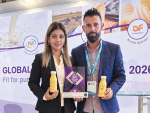
Vetekina Pau'u is the first Tongan to win the William Gearish Memorial prize and sadly she will also be the last recipient.




 increase font size
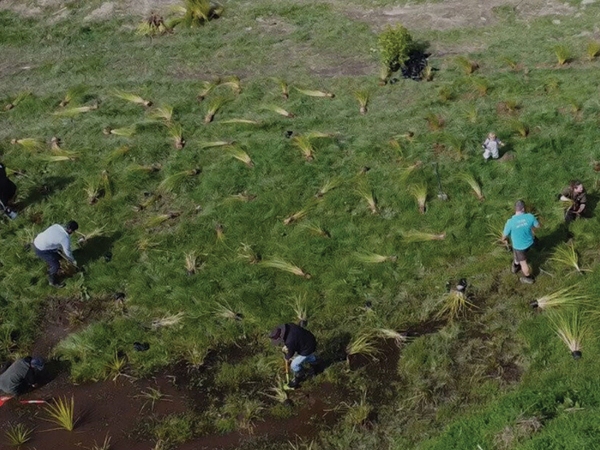 All farmers in a catchment have a part to play.
The most successful catchment groups in NZ are those that have 'a source to sea' approach.
That's the view of the Government's chief science advisor Dr John Roche who was a keynote speaker at Massey University's Farmed Landscapes Research Centres (FLRC) conference.
The theme of the conference was catchments and saw a range of scientists and rural professionals present papers on a wide variety of topics relating to the management of catchments. These included detainment bunds, woodchip bioreactors and the use of grass species to reduce nitrogen leaching.
But the topic of particular interest to farmers was hearing about the successes of farmer-led catchment groups around the country.
Roche says these are critical because they are run by farmers and farmers learn best from farmers. He says the results from such groups, which are suppported by the Ministry for Primary Industries (MPI) and the Ministry for the Environment (MfE), are fantastic.
"One of the key things we need to do with catchments is to collectivise our efforts so that the actions taken meet the needs of all the farmers in the catchment. The key is ensuring that these groups are farmer led and that they are a part of the solution and we have brilliant examples of how farmers drive solutions," he says.
Roche says all farmers in a catchment have a part to play, whether they are high up in the hills at the source of streams or down on the lower reaches. He says you have different types of farms and multiple land uses and the needs of all must be taken into account.
"If you look at the big catchment collectives around the country, be they in Southland or the Rangitikei, they are all focused on taking measurements right up the catchments from source to sea," he says.
Roche says while sheep have a lower impact than beef cattle, and they less than dairy cows, there's a need for all disciplines of farming to collaborate to get the best outcome for their catchment. He says the catchment groups are an integral part of the rural communtiy and there are great examples in the Rangitikei district where farmer-led groups are identifying priority water bodies and putting mitigations in place.
A key point raised at the FLRC conference was the importance of farmers and scientists working together. Since the disestablishment of MAF and the demise of farm advisors who had direct access to scientists, the gap between the two widened. Now MPI with its On Farm Support Team and Massey with its frequent field days is helping to close this gap.
Roche says NZ farmers and scientists have a proud tradition of working together and farmers seeking out the right expert to deal with a problem or future opportunity.
"But I still see the need to encourage more of that and get our science graduates and scientists to actively engage with the end user of the science," he says.
Vetekina Pau'u is the first Tongan to win the William Gearish Memorial prize and sadly she will also be the last recipient.
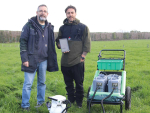
Researchers at Massey University are using a special piece of scientific equipment to improve the measurement of greenhouse gas emissions from pasture soils.
Interest in agritech and production animal systems has prompted Massey University's School of Agriculture and the Environment to new majors to its popular animal science degree.
Testing confirms H5 bird flu in a single northern giant petrel, found dead on a remote Cape Palliser beach in the Wairarapa, says Dr Mary van Andel, the Ministry for Primary Industries' (MPI) Chief Veterinary Officer.
The industry is crying out for graduates with agricultural related degrees.


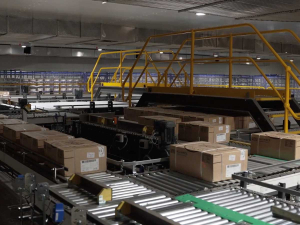
Alliance is calling for final applications for its 2027 Graduate Programme, with applications closing on Sunday 25 October.
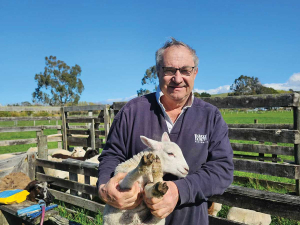
Decades piloting planes has ensured vet and farmer David Hayes is focused on safety. So, after a serious accident while welding on farm, he is sharing his experience so others can learn from it.
Canterbury milk processor, Synlait Milk has confirmed Leon Fung as its chief executive officer.
OPINION: Making it easier to collect rainwater and use it to grow crops and livestock is a no brainer.
As part of its Election 2026 coverage, Rural News asked political parties how they would help pull the arable sector out of the doldrums. Here's what they said:
Farmers are being encouraged to rethink how they manage waste on farm with the launch of ruralwastesorted.co.nz, a new website bringing together practical tips, real farmer experiences and resources.
OPINION: It seems Canterbury processor Synlait is still in the doldrums.
OPINION: Get offside with New Zealand First leader Winston Peters at your own peril.




