
Kiwifruit Growers Prepare for El Niño, Stay Optimistic
Kiwifruit growers are watchful but remain optimistic as concerns around the potential effects of the El Niño weather pattern this season.




 increase font size
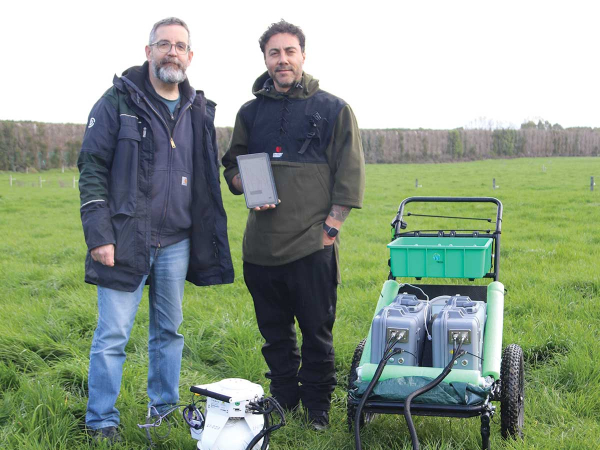 Dr Andrew Cartmill (left) and Eduardo Sandoval-Cruz, the senior technical officer involved in the project.
Researchers at Massey University are using a special piece of scientific equipment to improve the measurement of greenhouse gas emissions from pasture soils.
The major advantage of the LI-COR infrared gas analyser is its portability which allows GHG measurements to be collected rapidly under field conditions.
Improving the way these emissions are measured will help researchers, farmers and policy makers better understand how different pasture systems, soils, and management practices influence emissions under real farming conditions. Better measurements provide stronger scientific evidence to support future farm management, environmental policy and the development of practical mitigation strategies.
Dr Andrew Cartmill, a senior lecturer in grassland science at Massey University, says much of the research into agricultural GHG emissions has focused on animal nutrition and livestock systems. But he says direct measurement of greenhouse gas emissions from soils is much more challenging and therefore less common.
While portable greenhouse gas analysers are quite common in crop, soil and environmental research, their application in grazed pasture systems is more challenging. This is because of the spatial and temporal variability created by grazing animals, pasture management and changing environmental conditions, he says.
"One important component that's often overlooked is the soil. Soil's represent one of the world's largest terrestrial carbon stores and play a critical role in the cycling of greenhouse gases. If we don't include soil measurements, we're only seeing part of the overall picture.
"We want to make sure we're capturing as complete a picture as possible of where gas emissions are coming from," he says.
Because its portable, the infrared gas analyser can be taken directly into the field to measure greenhouse gas emissions from pasture soils. A chamber is placed over the soil surface, allowing the analyser to measure changes in carbon dioxide, methane and nitrous oxide concentrations within the chamber over a short period. These measurements provide near real-time estimates of greenhouse gas emissions from the soil under different environmental conditions and management practices. This allows researchers to compare how soils, pasture systems and management practices influence greenhouse gas emissions under real farming conditions.
Cartmill says that a day before measurements are taken, a series of collars are strategically placed in the paddock to ensure the measurements provide the most representative assessment possible of GHG emissions from that area. Each measurement takes between one and two minutes to complete.
"The analyser provides a snapshot of the emissions at a particular place and time.
"Those measurements are influenced by several factors.
"For example, urine patches can be major sources of nitrous oxide, so whether or not a measurement includes one can significantly influence the results. Soil moisture, temperature and other environmental conditions also affect greenhouse gas emissions," he says.
Cartmill says each research site differs in soil properties, pasture composition and management, all of which influence greenhouse gas emissions. He says the more measurements that are collected, the better researchers can understand this variability and develop a more representative picture of GHG emissions across a paddock, farm or farming system.
Eduardo Sandoval-Cruz, the senior technical officer involved in the project, says his role is to make sure reliable and consistent measurements are collected in the field.
"What I particularly value about the LI-COR system is that it allows us to take many measurements across a paddock quickly, helping us capture the natural variability that exists under real farming conditions. Good data starts with good field measurements," he says.
The LI-COR infrared gas analyser is currently being used in a range of agricultural research projects on Massey University's research farms. With additional funding, there is potential for this technology to be used more broadly across commercial agriculture, industry-led research and environmental monitoring.
Cartmill says the analyser is a significant improvement on a similar equipment he worked with in the United States several years ago. Its portability and ability to provide near real-time greenhouse gas measurements make it a valuable tool for agricultural research.
"As we are a bioeconomy, having high-quality greenhouse gas data is a major benefit. Better information provides the evidence needed to help farmers, researchers and policy makers make more informed decisions about environmental management and the future of NZ's agricultural systems," he says.
Cartmill says as NZ continues to reduce agricultural greenhouse gas emissions, accurate field measurements will become increasingly important for evaluating management practices and ensuring decisions are based on robust scientific evidence.
Kiwifruit growers are watchful but remain optimistic as concerns around the potential effects of the El Niño weather pattern this season.
Farms across the upper North Island are trialling different pasture mixes as part of a research programme that aims to build greater resilience into farming systems.
Climate, nature and animal wellbeing make up Fonterra's refreshed sustainability roadmap released last week.
New Zealand's Emissions Trading Scheme (NZ ETS) encourages afforestation while not achieving climate goals, says a new report released by the Parliamentary Commissioner for the Environment, Simon Upton.
Interest in agritech and production animal systems has prompted Massey University's School of Agriculture and the Environment to new majors to its popular animal science degree.


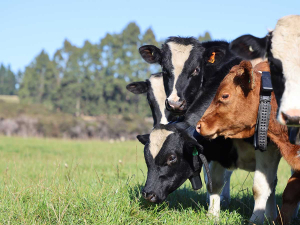
High country stations, mixed sheep and beef farms, Māori-owned farms, corporates and family operations are among the nine commercial farms taking part in the Livestock Innovation Farming Transformation programme, known as LIFT.
OPINION: New health and safety guidance unveiled by the Government recently provides farmers greater certainty about what is expected of them when managing risks on farm.
The National Animal Welfare Advisory Committee (NAWAC) is seeking public feedback on proposed changes to the Code of Welfare for Rodeos.
A New Zealand initiative supporting farmers to restore the health of grazing landscapes has received international backing through the Regenerative Fund for Nature, a global collaborative fund supporting regenerative agriculture and the communities that produce natural fibres for the fashion industry.
Combine premium New Zealand products, blend in a family ritual and what do you get? A world-class functional drink.
Entries are now open across eleven regions for the 2027 New Zealand Dairy Industry Awards (NZDIA).



OPINION: The same mainstream media muppets that brought you Jacindamania in 2017 have been flat out pimping for the Opportunities…
OPINION: Your old mate reckons the atrocious way farmers in the UK are treated by their lords and masters in…




