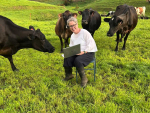
International Day of Rural Women: Two DairyNZ Farmers’ Stories
Today, 15 October, is the International Day of Rural Women, which recognises rural women’s contribution to farming, communities and the environment.




 increase font size
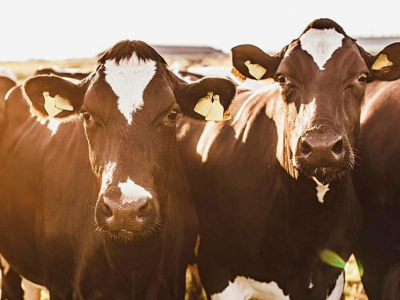 New Zealand is the first country to attempt to eradicate M. bovis.
A national plan to eradicate Mycoplasma bovis and support farmers during the process has been released.
The plan, backed by Ministry for Primary Industries, DairyNZ and Beef + Lamb New Zealand was unveiled at a farmer meeting in Hamilton on Friday.
The plan sets out three clear goals: to eradicate Mycoplasma bovis from New Zealand; to reduce the impact of the disease and the eradication programme for everyone affected; and to leave New Zealand’s biosecurity system stronger.
M. bovis programme director Geoff Gwyn said that the National Plan is an important step in making sure that eradication is successful, and that farmers are properly supported the whole way.
“The eradication effort is on track, but there is still a lot of hard work to get done. There will be more farms put under movement restrictions, and more farms that need to be depopulated,” says Gwyn.
“Finding out that your farm might be, or is, affected must be incredibly hard news to receive, and we know that the process to get clear of M. bovis causes hardship for farmers and their families, and interruption to their business.
“We want to provide as much support and assistance as we can, as well as working to continually improve the processes that farmers have to get through to get clear of M. bovis.
No country has attempted to eradicate M. bovis before.
Gywn says there is a lot to learn and develop.
“The farmer and public meetings we’re holding over the next month are an important way for us to hear from farmers about what is working and areas that can be improved.”
DairyNZ’s chief executive Dr Tim Mackle says M. bovis has created challenges for many farmers, both dairy and beef – not only those affected by the disease, but for all farmers that have increased their biosecurity measures on farm.
“The alternative – to let this disease spread throughout the dairy and beef stock – would have been a serious challenge to the way we farm, and the ongoing costs would have been significantly higher” says Mackle.
“We believe maintaining a collaborative approach to eradication is the best option for all farmers. By sitting at the table, we can ensure that dairy farmers are getting value for money from the eradication programme, costs are scrutinised, performance is monitored, and that dairy farmer’s views are represented to government.”
Beef + Lamb New Zealand chief executive Sam McIvor says although we are fortunate that M. bovis has had a less direct impact on beef farmers, the risks to friends and neighbours with dairy farms means Mycoplasma bovis is a challenge that we can’t ignore.
“We will continue to sit at the table with government and DairyNZ to ensure this eradication programme has the greatest chance of success, and that farmers are represented every step of the way.”
Today, 15 October, is the International Day of Rural Women, which recognises rural women’s contribution to farming, communities and the environment.
The first major update to the Dairy Cattle Code of Welfare in more than a decade has been released, marking what DairyNZ describes as an important step in ensuring animal welfare standards continue to evolve alongside scientific evidence and on-farm realities.
Have a plan in place for your cows and staff.
DairyNZ deputy chair Cameron Henderson has been re-appointed unopposed for another term.
OPINION: The stats speak for themselves.


Federated Farmers has welcomed new rural policies released by ACT, saying they align closely with its own election priorities.

Rural Contractors NZ says proposed changes to land transport rules for agricultural vehicles are a welcome response by the Government to out of date regulations which have seen members hit with huge fines.
Alliance is calling for final applications for its 2027 Graduate Programme, with applications closing on Sunday 25 October.
Decades piloting planes has ensured vet and farmer David Hayes is focused on safety. So, after a serious accident while welding on farm, he is sharing his experience so others can learn from it.
Canterbury milk processor, Synlait Milk has confirmed Leon Fung as its chief executive officer.
OPINION: Making it easier to collect rainwater and use it to grow crops and livestock is a no brainer.


OPINION: It seems Canterbury processor Synlait is still in the doldrums.
OPINION: Get offside with New Zealand First leader Winston Peters at your own peril.




