
NZVA urges animal owners to help fight antibiotic resistance through preventative care
Animal owners can help protect life-saving antibiotics from resistant bacteria by keeping their animals healthy, says the New Zealand Veterinary Association.




 increase font size
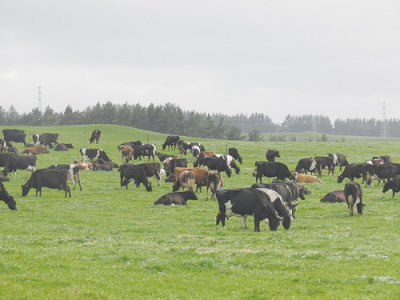 Antibiotic use in NZ dairy cows is much lower than that in the US, Canada or the Netherlands.
New Zealand appears to have very low use of antimicrobials in dairy cattle by international standards, a study has shown.
The calculated average daily usage (ADUR) is about 1.7 cow days of antibody usage per year from a study of 78 farms. This compares to ADUR of 5.4 for the US and 5.3 ADUR from records in Canada and the Netherlands.
The study was reported to the recent NZ Veterinary Association conference by Scott McDougall, Khaled Gohary, Andrew Bates and Chris Compton. Cognosco, AnexaFVC, Temuka and the Epicentre at the Institute of Veterinary, Animal and Biomedical Sciences, Massey University were also involved in the study.
“We have calculated the average daily use of antimicrobials (number of daily doses of antibiotics per cow per year) for 78 herds, split equally between the North and South Island,” the report says.
“There was a tendency for North Island herds to have a higher antibiotic use than the South Island herds, for reasons that are not clear. There was no association between size of the herd and antibiotic use.”
The range of usage amongst herds was relatively narrow with between one and four ADUR. However, some herds were outside the 95% confidence interval for the population and hence are outliers in terms of antibiotic use, the report says. It is not clear at this stage whether these outliers are due to a higher-than-average disease incidence in the herd, requiring greater antibiotic use, or related to sensitivity of diagnosis and hence the risk of overtreatment.
The second year of this study will examine recorded onfarm usage patterns and potentially identify where over/under diagnosis and usage is occurring.
The use of critically important (Class A) antimicrobials was relatively low, with about a fifth of the farms not using them at all and the remaining farms using, on average, 0.05 daily doses per cow per year.
There are some potential limitations of the current data and analytical approach. It is assumed that all antibiotics sold from the veterinary businesses in the calendar year 2015 were actually used within this timeframe.
Another assumption is that the antibiotics were used on-label.
Again further analysis will allow assessment of compliance with on-label recommended doses across these herds, the study says.
Data from this study was derived from clients of two veterinary businesses over one calendar year. The variation in ADUR between subsequent years was relatively small in one study but the variation amongst veterinary businesses in prescribing and diagnostic approaches is not known. Hence further data is required to gain representative national data relating to farm level antimicrobial usage.
By way of introduction the study says antimicrobial resistance (AMR) is an increasing problem in both human and veterinary medicine. Recently, guidelines to reduce the risk of emergence of antimicrobial resistance have been released by the British government, the Centre for Disease Control in the US, and the US Department of Agriculture, amongst others.
These strategies all broadly include components of measurement of drug usage, surveillance for antimicrobial resistance, prudent usage and an emphasis on alternatives to antimicrobial (AM) usage.
Estimates of AM usage are important to monitor usage of specific drug classes, assess AM sensitivity data, manage potential risks for AMR, monitor drug usage across time and regions, and to use as a proxy for disease incidence.
The herds in the NZ study were drawn at random from client lists of two veterinary practices in the North and South Islands (AnexaFVC and Vetlife, respectively).
The herd owners provided written permission to access all records related to the farm, including electronic records (for example those held in Minda, LIC, Hamilton), on-farm records (for example dairy diaries, yellow books) and drug sales from the clinic.
To reduce potential errors associated with drug sales, herds that were part of business structures that had multiple farms under the one management and
under the one veterinary account were not enrolled.
Herds were visited on a six monthly basis and all hard copy records were photocopied and entered into a database. Additionally, cow demographic data were obtained from electronic sources (LIC, Hamilton) including age, breed, calving date, any disease and treatment records.
All drug sales for enrolled farms were extracted from the accounting packages of the veterinary businesses. Sales data for purchases of products containing antibiotics and administrable by injectable, intramammary, intrauterine or oral routes was retrieved from accounting software. The time period of interest was January 1 to December 31, 2015.
A total of 78 herds, managing 63,500 lactating cows, had sufficient data to calculate the ADUR – 39 in each of the North and South islands. The median ADUR was 1.59 daily doses per cow per year.
The predominant use of antimicrobials was mastitis-related, either dry cow therapy (DCT) or for treatment of clinical or subclinical mastitis during lactation.
Animal owners can help protect life-saving antibiotics from resistant bacteria by keeping their animals healthy, says the New Zealand Veterinary Association.
Total sales of veterinary and horticultural antibiotics in New Zealand have decreased for a fifth year in a row, dropping by 23% in 2022.
Total sales of veterinary and horticultural antibiotics in New Zealand have decreased for a fifth year in a row, dropping by 23% in 2022.
Bacteria developing resistance is a potential risk any time we use antibiotics, so we need to focus on preventing and controlling infections to reduce the need.
A biological product called Amplimune is helping with the worldwide fight against antibiotic resistance in livestock.



Federated Farmers has welcomed new rural policies released by ACT, saying they align closely with its own election priorities.

Rural Contractors NZ says proposed changes to land transport rules for agricultural vehicles are a welcome response by the Government to out of date regulations which have seen members hit with huge fines.
Alliance is calling for final applications for its 2027 Graduate Programme, with applications closing on Sunday 25 October.
Decades piloting planes has ensured vet and farmer David Hayes is focused on safety. So, after a serious accident while welding on farm, he is sharing his experience so others can learn from it.
Canterbury milk processor, Synlait Milk has confirmed Leon Fung as its chief executive officer.
OPINION: Making it easier to collect rainwater and use it to grow crops and livestock is a no brainer.




OPINION: It seems Canterbury processor Synlait is still in the doldrums.
OPINION: Get offside with New Zealand First leader Winston Peters at your own peril.




