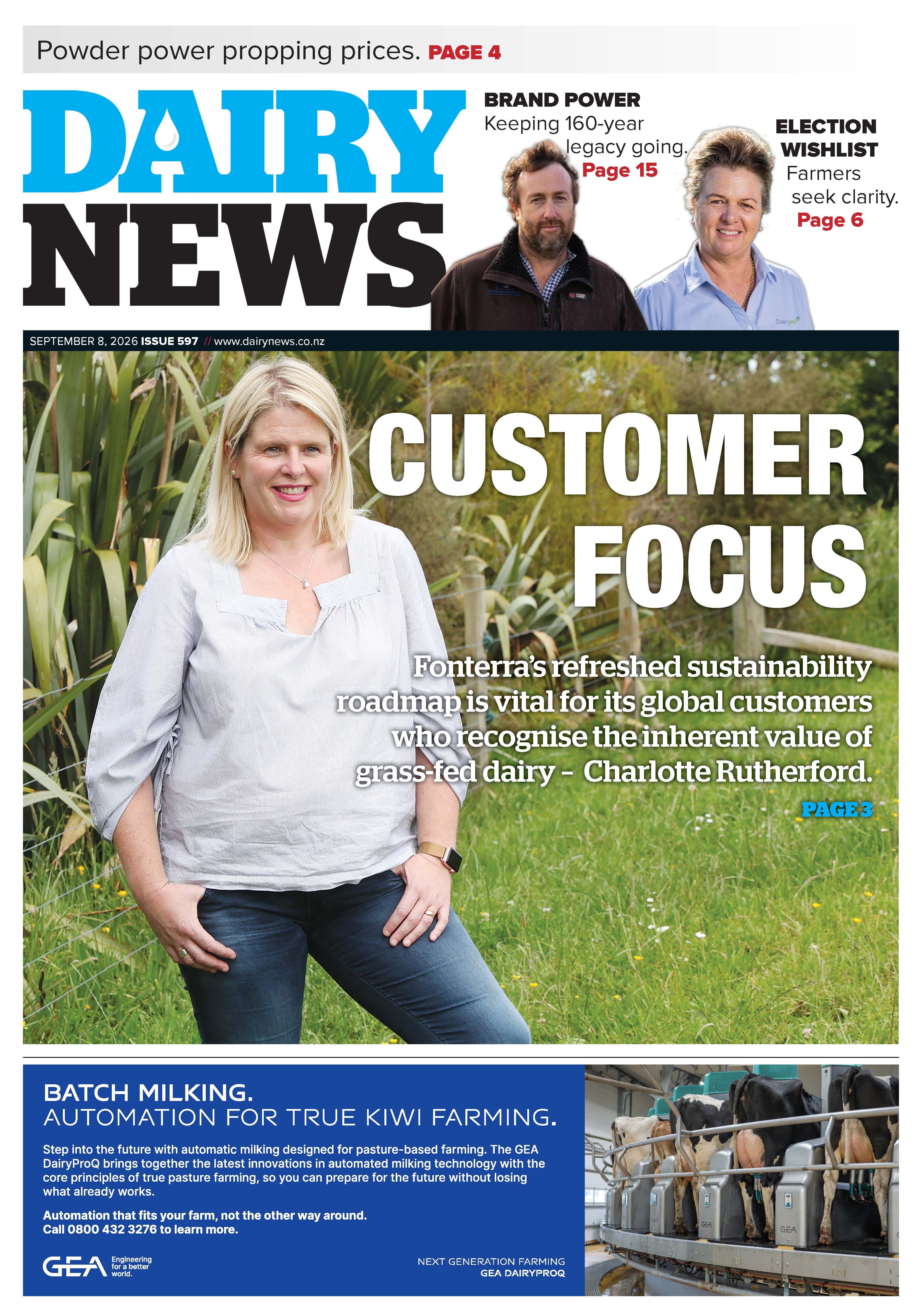
Ah Tatua, You've Done It Again!
Waikato milk processor Tatua has again declared a record milk payout to farmer shareholders, leaving other processors in the dust.




 increase font size
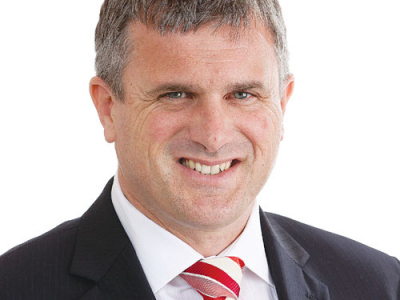 Synlait founder and chief executive John Penno intends to step down in the next 12 months
Synlait founder and chief executive John Penno intends to step down from his position in the next 12 months, as part of an orderly transition to position the Canterbury milk processor for its next phase of growth.
Penno has been the chief executive and managing director of Synlait Milk for 12 years, and a founder of Synlait five years before that. The Synlait board is embarking on an international search for the right person to lead the business into the future, and Penno will remain in the position until a successor is appointed.
Penno will continue to serve as a director on Synlait’s board.
Graeme Milne, Synlait chairman says Penno has been an exceptional leader for Synlait, “but there was always going to be a time when he would move on to fresh challenges”.
“I am glad John’s decision has come at a time where we can provide a well-managed leadership transition. The company is in very healthy shape with a strong balance sheet and a clear future growth plan,” says Milne.
“The new CEO will be taking on a company in strong shape, and with a clear vision and growth strategy.”
Synlait has grown from a start-up in the early 2000s to a highly profitable company listed on the NZX and ASX, with a team of 600 staff, a blue chip set of customers focused in the infant formula category, and committed farmer suppliers. It is currently earning annual revenue of $759 million and has a market capitalisation of over $1.3 billion.”
“From this platform, the company is looking for a CEO with the skills and experiences to take Synlait up another level,” says Milne.
“We have already signalled to shareholders our intention to continue to develop our infant formula business, and enter new categories where there are significant opportunities.”
“We have expressed our desire for John to continue in a governance role on the Synlait Milk board of directors,” says Milne.
Penno says after 17 years of “living and breathing this company, it is time to move on, but I share the board’s intention for me to continue as a director of Synlait Milk”.
“There will be very clear processes to ensure the incoming CEO has the freedom and scope to make her or his mark on Synlait’s future, and I’m looking forward to taking a supporting role.”
“Once the new CEO is in place, I am looking forward to getting back to my entrepreneurial roots and will be looking for opportunities to get involved with start-ups and young companies, which is where my wife, Maury, and I want to continue to make a contribution.”
Waikato milk processor Tatua has again declared a record milk payout to farmer shareholders, leaving other processors in the dust.
Synlait has swung to second-half profit as operations stabilise, but the dairy processor still posted a $75.4m annual loss.
OPINION: It seems Canterbury processor Synlait is still in the doldrums.
Speculation of a possible joint move by Fonterra and a2 Milk to buy Synlait raises a much bigger strategic question, says agribusiness expert Dr Nic Lees.
A revolving door of chief executives at milk processor Synlait is a warning sign, says Lincon University senior lecturer in agribusiness Nic Lees.


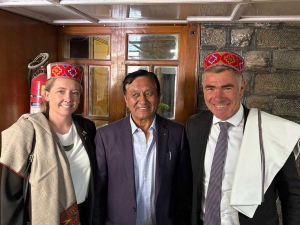
New Zealand's role is not to compete with Indian growers, according to NZ Apples and Pears.
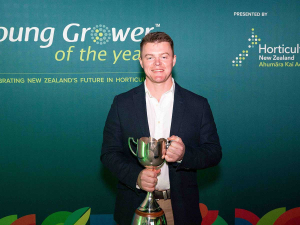
The potato industry is celebrating the success of two rising stars - James Blair, the 2026 Young Grower of the Year and runner-up and innovation award winner, Amber Davy.
Twenty-eight emerging leaders from across the horticulture sector spent two days last month learning valuable skills and connecting with industry experts.
There are five entrants in this year’s Young Horticulturist of the Year, competing in a series of technical, practical, business and leadership challenges.
A seasoned horticulturist has been appointed to deliver the Apple Action Plan, a key initiative of the India-New Zealand Free Trade Agreement.
South of the central Hawke’s Bay town of Waipukurau is Taniwha Station – a highly successful 550ha bull beef farming operation.


OPINION: It seems Canterbury processor Synlait is still in the doldrums.
OPINION: Get offside with New Zealand First leader Winston Peters at your own peril.