Fonterra Elections 2026: Voting Opens Tuesday 20 October
Fonterra shareholders can begin voting on Tuesday 20 October in the 2026 Board of Directors’ election, a Co-operative Council election in one Ward, and seven Annual Meeting resolutions.




 increase font size
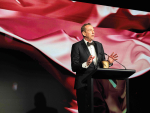
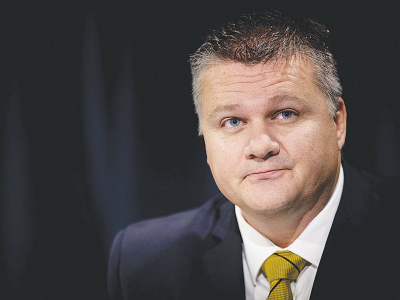 Miles Hurrell.
Fonterra says the 2050 methane target should be based on “official scientific advice”.
It also suggests the target should be set at the lower end of the proposed range and regularly reviewed against the science and options available to farmers.
The Climate Change Response Amendment Bill proposes that gross emissions of biogenic methane be cut within a range 24% to 47% below 2017 levels by 2050.
Fonterra and the Fonterra Shareholders’ Council last week released their submissions to the Bill.
The co-op says it intends doing its bit in New Zealand’s transition to a low carbon future and will work with the Government, researchers and the wider agriculture industry to get farmers practical help to meet new targets.
Fonterra chief executive Miles Hurrell says Kiwi farmers are already among the world’s most emission efficient producers of milk, but nearly half of NZ’s greenhouse gases come from the wider agriculture sector.
“Our actions today will keep NZ at the forefront of sustainable food production. We know this means some of the ways we farm will need to change.
“Fonterra farmers are adaptable and resourceful people. Once set a clear science based target, they will want to get on with the job and the co-op will support them.
“It’s not going to be easy. It will require farmers, industry, the Government and researchers to all pitch in and jointly develop innovative yet practical solutions for NZ’s emissions reduction challenges.
“The increased investment in R&D signalled by the Government and industry is the key to bringing new innovations to life.”
The co-op agrees with DairyNZ that the 2030 methane target, though ambitious, could be reached with new ideas and tools put in farmers’ hands.
The 2050 target should be based on official scientific advice, the co-op says.
“Climate change is a challenge for every NZer. Collectively we must examine our use of fossil fuels in transport and manufacturing, and find a way to manage and mitigate animal emissions.
“Agriculture depends upon a stable global climate, so there’s no shortage of motivation for us. Fonterra has a strong appetite to do its bit alongside the rest of NZ to reduce climate pollution,” says Hurrell.
The co-op also acknowledges the Government for supporting the agriculture sector’s proposal to set up an emissions pricing system by 2025, funded through levy organisations like DairyNZ.
Fonterra Shareholders’ Council chairman Duncan Coull says farmers are naturally apprehensive but are up for the challenge. They “have a proud history of being at the forefront of innovation and won’t shy away from this”.
“Business as usual is not compatible with NZ’s commitments under the Paris Agreement and dairy farmers need to contribute their share to the efforts of the wider economy,” Coull says.
“This is the beginning of a process. NZ has a scientifically advanced agricultural economy and the world will be watching us. But regulations must be fair and drafted with care not to jeopardise our comparative advantage in global export markets.
“I’m a firm believer that science and technology will provide solutions over time. So it is imperative that regulation doesn’t get too far ahead of the scientific solutions.”
Coull called for a joint industry effort to look after farmers’ interests. And he cautioned against industry politics getting in the way.
“I urge all farmers to engage with the industry... to tackle this issue head on to capture more opportunities as the lowest emitting, most sustainable producers of nutrition in the world.”
Fonterra shareholders can begin voting on Tuesday 20 October in the 2026 Board of Directors’ election, a Co-operative Council election in one Ward, and seven Annual Meeting resolutions.

Fonterra Co-operative Group chief financial officer Andrew Murray has resigned to take up a role outside the dairy giant.
Four candidates have been confirmed for two director positions on Fonterra’s board.
A record farmgate milk price and strong global demand is laying the foundation for continued growth of organic dairy farming in New Zealand.
Waikato milk processor Tatua has again declared a record milk payout to farmer shareholders, leaving other processors in the dust.


Alliance is calling for final applications for its 2027 Graduate Programme, with applications closing on Sunday 25 October.
Decades piloting planes has ensured vet and farmer David Hayes is focused on safety. So, after a serious accident while welding on farm, he is sharing his experience so others can learn from it.
Canterbury milk processor, Synlait Milk has confirmed Leon Fung as its chief executive officer.
OPINION: Making it easier to collect rainwater and use it to grow crops and livestock is a no brainer.
As part of its Election 2026 coverage, Rural News asked political parties how they would help pull the arable sector out of the doldrums. Here's what they said:
Farmers are being encouraged to rethink how they manage waste on farm with the launch of ruralwastesorted.co.nz, a new website bringing together practical tips, real farmer experiences and resources.

OPINION: It seems Canterbury processor Synlait is still in the doldrums.
OPINION: Get offside with New Zealand First leader Winston Peters at your own peril.




