
Fonterra CFO Andrew Murray Resigns
Fonterra Co-operative Group chief financial officer Andrew Murray has resigned to take up a role outside the dairy giant.




 increase font size
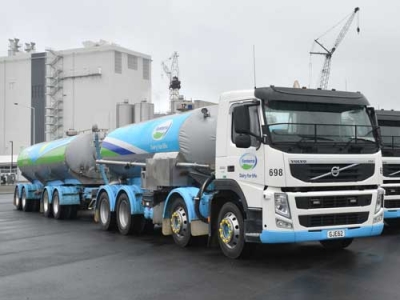
Fonterra's Australian suppliers are being paid more than a dollar extra than the co-op owners for every kgMS supplied to the co-op this season.
The co-op yesterday announced an opening average farmgate milk price of A$5.60/kgMS (NZ$6.30) for its Australian suppliers, who don't own shares in the co-op. in May Fonterra announced an opening forecast price of $5.25/kgMS for its New Zealand farmer shareholders.
It is also forecasting an average closing farmgate milk price range of A$5.80 – A$6.00 kg/MS for Australian suppliers in the 2015-16 season.
Fonterra says the price is on the basis of an anticipated recovery in global prices in the first half of 2016 and the continued softening of the Australian dollar.
"Our opening price and forecast closing range are more cautious than recent seasons. This reflects the challenging global market and our commitment to ensuring the price we offer is both competitive and deliverable."
Australia's dairy industry is highly competitive; Fonterra fights with the largest Australian dairy co-op Murray Goulburn and foreign-owned processors like Lion and Saputo for milk.
Unlike New Zealand, where Fonterra dominates the market, in Australia MG is the price setter.
Murray Goulburn this week announced an opening forecast price of A$5.60/kgMS and available weighted average Southern Milk Region farmgate milk price (FMP) of $6.05/kgMS.
If MG suppliers receive total farmgate returns in excess of $6.00 /kgMS this year, it will a record third consecutive year the payout's touched A$6/kgMS.
However, MG says the forecast full year FMP remains subject to changes in external factors such as global dairy commodity prices and prevailing exchange rates. It assumes an average Australian dollar of US76cents during the FY16 financial year and certain assumptions regarding commodity prices and other risk factors.
Fonterra Co-operative Group chief financial officer Andrew Murray has resigned to take up a role outside the dairy giant.

Four candidates have been confirmed for two director positions on Fonterra’s board.
A record farmgate milk price and strong global demand is laying the foundation for continued growth of organic dairy farming in New Zealand.
Waikato milk processor Tatua has again declared a record milk payout to farmer shareholders, leaving other processors in the dust.
Synlait has swung to second-half profit as operations stabilise, but the dairy processor still posted a $75.4m annual loss.



National’s pledge to introduce 19 new national standards shows the party is serious about getting Wellington out of farming, Federated Farmers says.
The National Party’s policies to make it easier to grow fresh vegetables, secure reliable water and energy and simplify farm planning are practical changes that will give growers the confidence to invest, according to Horticulture New Zealand (HortNZ).
Fonterra Co-operative Group chief financial officer Andrew Murray has resigned to take up a role outside the dairy giant.
A major move is about to get underway to improve the quality and viability of dairy beef and cattle in NZ.
Veterinarians say changes to the code of welfare for dairy cattle provides a positive foundation for improved cattle welfare across the country.
Today, 15 October, is the International Day of Rural Women, which recognises rural women’s contribution to farming, communities and the environment.




OPINION: It seems Canterbury processor Synlait is still in the doldrums.
OPINION: Get offside with New Zealand First leader Winston Peters at your own peril.




