Dairy Sector Drives Strong Rural Property Market Activity in NZ
The latest data from the Real Estate Institute of New Zealand (REINZ) reveals a mixed rural property market due to consistent inflation concerns.




 increase font size
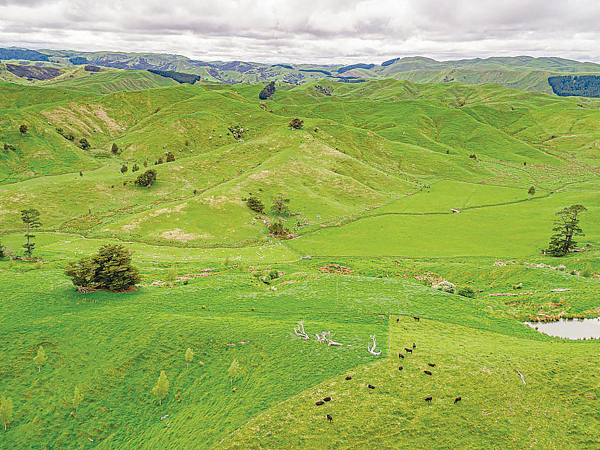 Real Estate Institute of New Zealand (REINZ) says it was mostly farmers snapping up finishing properties around the country.
Data released by the Real Estate Institute of New Zealand (REINZ) shows an increase in farm sales for the three months ended July 2021 on the same period in 2020.
This comes despite an easing in the volume of sales.
Brian Peacocke, rural spokesman for REINZ, says the sales volumes reflect an easing in most categories, while still remaining stronger than the equivalent periods for 2019 and 2020.
“The exception to the easing trend which is expected during the winter period, is the category of finishing properties sales which continue to hold at current strong levels, this being a continuing feature in the current marketplace,” he says.
In the finishing category, 117 farms were sold for the three month period ended July 2021, at a median sale price per hectare of $33,345. Peacocke told Dairy News that it was farmers who were buying these farms in most instances.
“There will be occasionally people stepping up from a lifestyle block but mostly people would be looking for finishing blocks to add to an existing property base or a retirement block to move on to from a bigger property,” Peacocke says.
The median finishing farm size for the three months ended July 2021 was 42 hectares.
Overall, there were 359 farm sales in the three months ended July 2021, compared with 400 farm sales for the three months ended June 2021, and 333 farm sales for the three months ended July 2020.
In the year to July this year 1,720 farms were sold, 42.5% more than were sold in the year to July 2020, with 146.7% more Dairy farms, 17.9% more Dairy Support, 27.8% more Grazing Farms, 58.4% more Finishing Farms and 38.1% less Arable farms sold over the same period.
The median price per hectare for all farms sold in the three months to July 2021 was $27,015 compared to $24,050 recorded for the three months ended July 2020, up 12.3%.
The median price per hectare decreased 0.6% compared to June 2021.
The REINZ All Farm Price Index increased 10.4% in the three months to July 2021 compared to the three months to June 2021.
Compared to the three months ending July 2020, the REINZ All Farm Price Index increased 16.9%.
Seven regions recorded an increase in the number of farm sales for the three months ended July 2021 compared to the three months ended July 2020, with the most notable being Otago (+14 sales) and Northland and Nelson/Marlborough (+12 sales).
Manawatu-Wanganui (-14 sales) and Wellington (-8 sales) recorded the biggest decreases in sales.
“While issues such as the Covid-19 pandemic and the recent Olympics have dominated the media in recent weeks, the rural community has continued steadily with the demands of feeding animals during wildly variable weather conditions, which is situation normal for the July period,” says Peacocke.
“Calving in the national dairy herd is well advanced, as is the case for lambing in the national flock, apart from southern high country, so to date, flooding has been more of an issue rather than heavy dumps of snow.
“On the livestock front, reasonable feed reserves have resulted in extra-ordinarily high prices being paid for last season’s lambs to be finished for the late winter/early spring market; the beef schedule is moving upwards on an incremental basis with a promise of more to come, and the dairy industry pensively observes the recent pattern of volatility in the global dairy trade auction system with questions regarding the impact on the payout for the current season."
The latest data from the Real Estate Institute of New Zealand (REINZ) reveals a mixed rural property market due to consistent inflation concerns.
Farm sales are on the rise. According to recent data from the Real Estate Institute of New Zealand (REINZ), there was an 18.9% increase in farm sales for the three months ending August 2024 compared to the same period in 2023.
It could be that buyers are hunting out the right farm to purchase as farm sales drop for the three months ended December 2023. That’s according to the Real Estate Institute of New Zealand (REINZ).
Recently released data from the Real Estate Institute of New Zealand (REINZ) shows there were 77 fewer farm sales for the three months ended November 2023 than for the three months ended November 2022.
Recent data from the Real Estate Institute of New Zealand (REINZ) shows October was another month in which there were fewer farm sales than at the same time in 2022.


National’s pledge to introduce 19 new national standards shows the party is serious about getting Wellington out of farming, Federated Farmers says.
The National Party’s policies to make it easier to grow fresh vegetables, secure reliable water and energy and simplify farm planning are practical changes that will give growers the confidence to invest, according to Horticulture New Zealand (HortNZ).
Fonterra Co-operative Group chief financial officer Andrew Murray has resigned to take up a role outside the dairy giant.
A major move is about to get underway to improve the quality and viability of dairy beef and cattle in NZ.
Veterinarians say changes to the code of welfare for dairy cattle provides a positive foundation for improved cattle welfare across the country.
Today, 15 October, is the International Day of Rural Women, which recognises rural women’s contribution to farming, communities and the environment.



OPINION: It seems Canterbury processor Synlait is still in the doldrums.
OPINION: Get offside with New Zealand First leader Winston Peters at your own peril.




