
ANZ Warns of Milk Price Risks as New Dairy Season Begins
The new dairy season is kicking off with plenty of risks to the forecast farmgate price, both upside and downside, says ANZ agricultural economist Matt Dilly.




 increase font size
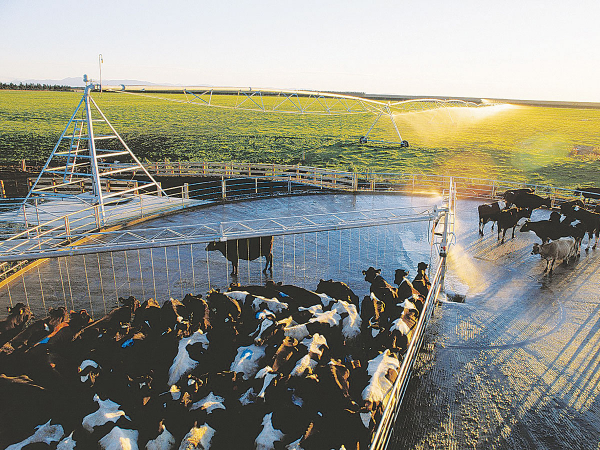 Lower milk production in New Zealand and steady global demand are helping keep dairy prices buoyant.
A new record milk price for this season has been forecast as dairy products fetch higher on the back of strong demand and softening supply.
ASB has responded to last week's Global Dairy Trade (GDT) price rise by bumping up its forecast milk price for 2021-22 season by 55c to $8.75/kgMS.
If this forecast comes to pass, it will smash the record milk price of $8.40/kgMS set eight seasons ago.
ASB economist Nat Keall says GDT events over the first half of spring have shown no sign of demand softening.
And with supply continuing to look tight, ASB is comfortable making a sizeable upward revision, he adds.
He says Fonterra should also be around 80%+ hedged by this point in the season.
This means the co-operative could wind up with an effective exchange rate just north of the US$0.69 mark - a favourable exchange rate considering where NZ commodity prices are.
Keall cautions that there's still a lot of uncertainty - commodity markets have been particularly volatile over 2021 thus far.
"Still, the trends over the beginning of spring suggest that the possibility a record farmgate milk price for the season is very much alive," he says.
Last week's GDT results saw price increase across all six products.
Benchmark whole milk powder (WMP) prices lifted by 1.5% cementing global dairy prices at very healthy levels. WMP prices have lifted a combined 6.7% over September and October, and now sit 25% above year ago levels. Taking a longer-term perspective, prices are around 20% above their five-year average.
But Keall points out that it's not the headline moves that are key.
"The real story is that forward contracts point to prices maintaining momentum well into the latter half of the season.
"The GDT contract curve developed a sharpish downward slope over the winter, but spring developments have seen the curve flatten over the past few quarters with prices stabilising in a healthy US$3,700-3,900/MT range.
"There will be further movement into summer, but the implication is that buyers expect supply to remain tight moving into the latter half of the season.
"On that note, it looks increasingly likely production will undershoot the expectations most of us held earlier in the year."
Milk production in key dairy producing markets, including New Zealand, is down.
With steady demand, this is putting upward pressure on prices.
Westpac senior agri economist Nathan Penny expects ongoing weakness in global dairy production to continue to underpin global dairy prices.
New Zealand dairy production over August was down 4.2% compared to August 2020.
"In addition, anecdotes suggest that this production weakness has continued through September and into October," he says.
Westpac is forecasting a milk price of $8.50/kgMS.
"All up, the solid result and outlook reinforces our 2021-22 farmgate milk price forecast," he says.
The new dairy season is kicking off with plenty of risks to the forecast farmgate price, both upside and downside, says ANZ agricultural economist Matt Dilly.
As expected, Fonterra has lifted its 2025-26 forecast farmgate milk price mid-point to $9.50/kgMS.
OPINION: The year has started positively for New Zealand dairy farmers and things are likely to get better.
Entries have opened for two awards in the New Zealand Dairy Industry Awards (NZDIA) programme, aimed at helping young farmers progress to farm ownership.
Dairy farmers are still in a good place despite volatile global milk prices.


Alliance is calling for final applications for its 2027 Graduate Programme, with applications closing on Sunday 25 October.
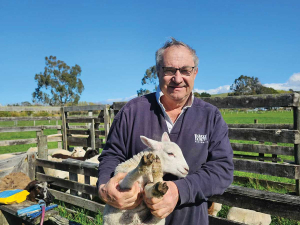
Decades piloting planes has ensured vet and farmer David Hayes is focused on safety. So, after a serious accident while welding on farm, he is sharing his experience so others can learn from it.
Canterbury milk processor, Synlait Milk has confirmed Leon Fung as its chief executive officer.
OPINION: Making it easier to collect rainwater and use it to grow crops and livestock is a no brainer.
As part of its Election 2026 coverage, Rural News asked political parties how they would help pull the arable sector out of the doldrums. Here's what they said:
Farmers are being encouraged to rethink how they manage waste on farm with the launch of ruralwastesorted.co.nz, a new website bringing together practical tips, real farmer experiences and resources.


OPINION: It seems Canterbury processor Synlait is still in the doldrums.
OPINION: Get offside with New Zealand First leader Winston Peters at your own peril.




