Early Weaning Lambs: What the Massey Trials Found
Farmers with high-quality feed available in late spring could consider weaning at least a proportion of their lamb crop early to benefit both lambs and ewes.




 increase font size
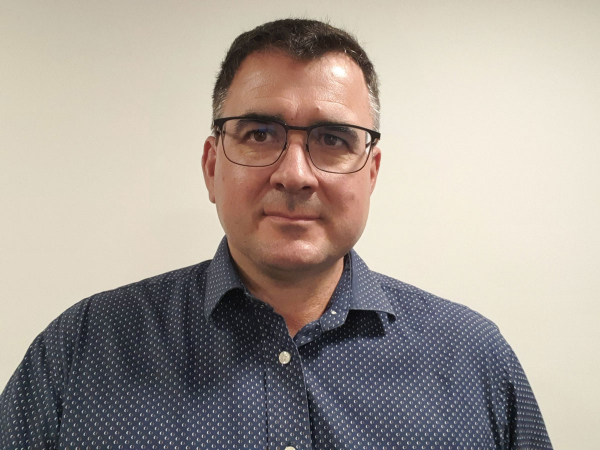 NZAEL manager Andrew Fear.
New Zealand Animal Evaluation Ltd (NZAEL) says changes to fertility estimated breeding value (EBV) will provide more accurate information to dairy farmers and artificial breeding companies ahead of the next mating season.
The fertility trait change separates gestation length from fertility and creates a tenth trait to Breeding Worth (BW) – the index used to rank cows and bulls on their ability to efficiently convert feed into profit.
Released by NZAEL – the independent animal evaluation entity for dairy animals – the change makes gestation length (GL) a stand-alone trait, so it does not influence fertility estimated breeding value (EBV). It will also ensure farmers have more accurate information to make confident breeding decisions ahead of the next mating season.
“Part of NZAEL’s role is reflecting the fertility of animals as accurately as possible for farmers,” says NZAEL manager Andrew Fear.
“Fertility is an important trait for New Zealand dairy herds, given our seasonal pasture-based farm systems. The change is important to farmers, as it means we aren’t unintentionally selecting for gestation length,” Fear says.
The change separating gestation length from fertility is expected to be permanent.
“This is an example of the continuous improvements NZAEL is making,” he says. “It’s important for farmers to make use of this change now, so they can confidently make good breeding decisions.”
The next fertility trait change is being developed. This will see NZAEL move to a conception-based fertility trait, which according to NZAEL, means GL won’t influence conception dates to the same degree as the current fertility trait, which is based on calving dates.
“Shorter GL is economically economically beneficial for farmers,” Fear says. “For example, it allows more days in-milk and more time to recover between calving and the start of mating, but its value is lower than that of early conception date. Therefore, both traits should be valued independently when considering an animal’s breeding worth (BW).”
The change in overall BW will be minimal off the back of the current fertility trait change, but farmers may see a decrease of around 10 BW in bulls on the Ranking of Active Sires (RAS) list.
The NZAEL team and partner experts are working towards releasing the new trait in December 2023.
Farmers with high-quality feed available in late spring could consider weaning at least a proportion of their lamb crop early to benefit both lambs and ewes.
The first major update to the Dairy Cattle Code of Welfare in more than a decade has been released, marking what DairyNZ describes as an important step in ensuring animal welfare standards continue to evolve alongside scientific evidence and on-farm realities.
Bovine Viral Diarrhoea (BVD) is sometimes viewed as a dairy industry issue, but the reality is that the disease can have serious consequences for beef breeding herds as well.
Animal health company Bovonic is gearing up for its next stage of growth after increasing New Zealand sales of QuadSense by more than 50% in the last 12 months, including a record quarter for the business this year.
With lambing underway in many regions, Beef + Lamb New Zealand is encouraging farmers to put together a wellequipped lambing kit to help minimise lamb losses, particularly in bad weather.


Alliance is calling for final applications for its 2027 Graduate Programme, with applications closing on Sunday 25 October.
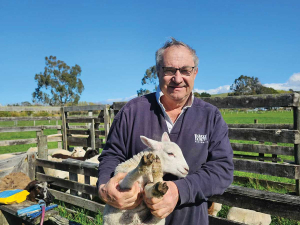
Decades piloting planes has ensured vet and farmer David Hayes is focused on safety. So, after a serious accident while welding on farm, he is sharing his experience so others can learn from it.
Canterbury milk processor, Synlait Milk has confirmed Leon Fung as its chief executive officer.
OPINION: Making it easier to collect rainwater and use it to grow crops and livestock is a no brainer.
As part of its Election 2026 coverage, Rural News asked political parties how they would help pull the arable sector out of the doldrums. Here's what they said:
Farmers are being encouraged to rethink how they manage waste on farm with the launch of ruralwastesorted.co.nz, a new website bringing together practical tips, real farmer experiences and resources.

OPINION: It seems Canterbury processor Synlait is still in the doldrums.
OPINION: Get offside with New Zealand First leader Winston Peters at your own peril.




