China No Longer Just A Commodity Story - Luxon
China remains New Zealand’s biggest market, taking $23 billion of our exports, but it’s no longer a commodity story, says Prime Minister Christopher Luxon.




 increase font size
 China’s dairy goat industry is booming.
New Zealand expertise in designing and manufacturing dairy goat rotary platforms is in demand in China.
Just back from speaking at an international dairy goat conference in China, Waikato Milking Systems’ China sales manager David Morris says the industry is experiencing a growth spiral comparable to that of dairying a few years ago.
“Traditionally, Chinese farmers have milked a small number of goats -- about 20 to 40 – but the demand for infant goat formula has skyrocketed and, with it, demand for a home-grown product.
“Chinese consumers have an almost insatiable demand for goat milk because of its protein levels and digestibility; this demand is of course enhanced by there having been no food safety scares associated with it.”
Morris said the conference, in Shaanxi Province, coincided with the opening of a new goat processing facility, attracting 2000 people -- farmers, processors, veterinarians and support industries.
“There is already a huge processing capacity in China: factories can process milk from 200,000 goats per day, and more factories are being built.”
WMS was one of four keynote presenters at the conference, the other three focusing on managing, feeding and housing dairy goats, and genetics.
“The transition from a few to hundreds of thousands of goats marks a significant change for farmers, whether they are small family operations or large corporates. My presentation was on how, regardless of numbers, WMS’s dairy goat rotary platform provides the optimum environment to easily and efficiently milk large numbers of goats.”
Morris said the company’s goat rotaries are available in a range of sizes from 50 to 100+ bails.
“With support from our China dealer, we provide a complete turnkey service to farmers wanting to make the transition to large scale commercial supply with design of all operational aspects of the farm.
“We have a long, growing list of Chinese farmers who want to utilise this service, the average aiming to milk 2000 to 3000 goats through an 80 bail WMS platform.
“Each rotary is manufactured in New Zealand to ensure consistently high standards, and then shipped to China in kitset form. The milking system is modular and automated, with full herd records and it is fully operational within weeks,” Morris said.
China remains New Zealand’s biggest market, taking $23 billion of our exports, but it’s no longer a commodity story, says Prime Minister Christopher Luxon.
Fonterra is strengthening its foodservice presence in China with the launch of a new cream for professional bakeries at Bakery China 2026 in Shanghai.
OPINION: What does the birth rate in China have to do with stock trading? Just ask a2 Milk Company.
Additional tariffs introduced by the Chinese Government last month on beef imports should favour New Zealand farmers and exporters.
One of the most galling aspects of the tariffs whacked on our farm exports to the US is the fact that, now more than ever, US farmers are being propped up by government welfare – a direct result of Trump’s hardline on its trading partners.

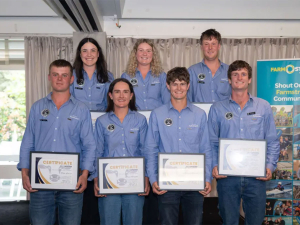
The Grassroots Dairy Management Graduate Programme has just marked five years of developing the next generation of dairy industry leaders at a special event in Ashburton earlier this month.
New Farmlands chair and South Otago dairy and beef farmer, Will Clarke says the co-operative will take the learnings from this week’s annual general meeting to work more closely with shareholders.
Farmlands shareholder and Waitaki Valley sheep and deer farmer, Paige Wills says the co-operative’s board has “a considerable amount of work to do if they want to rebuild shareholder trust and confidence in their governance”.
New analysis from DairyNZ highlights the growing importance of efficiency and cost control in maintaining profitability, with a widening gap between New Zealand’s highest and lowest performing dairy farms.
For eight-year-old Myra Smith, weeks of caring for and preparing her Red Holstein Friesian calf, Bell, have paid off, with the young Te Pahu handler taking home the Champion Dairy Type title at the recent Waikato A&P Show held at Claudelands.
A titan of the meat industry but a humble and generous guy.



OPINION: It seems Canterbury processor Synlait is still in the doldrums.
OPINION: Get offside with New Zealand First leader Winston Peters at your own peril.