
Low orders, strong dollar soften wool market
The strong dollar, restricted off-shore interest and high volumes of one wool category on offer this week saw local prices ease.



 increase font size
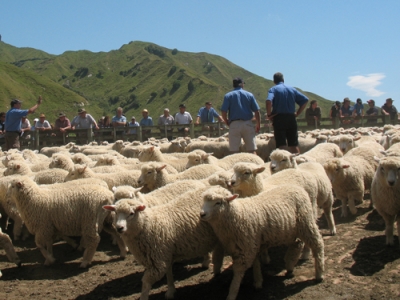
Wool markets remain steady with the latest sale seeing increases of 1 to 2% overall, says NZWSI general manager, John Dawson.
The sale of 6,617 bales was a good result, he says, with an offering of 52% Coarse Crossbred Early Shorn and Second Shear types.
There was good demand for shorter Second Shear types 2 to 3 inch 32 to 35 micron as buyers bid to cover Chinese orders.
The trade-weighted indicator was little changed from the last wool sale on 16th July.
Compared to the South Island sale on 16th July, Fine Crossbred Early Shorn and Second Shear types 3/5 and 3/4 inch were 1% dearer.
A limited offering of Coarse Crossbred Fleece wools were up 1%. Coarse Crossbred Early Shorn and Second Shear 37 to 39 micron 3/5 to 2/4 inch were 1% dearer, while 2/3 inch were firm.
A nominal offering of Crossbred Combing Oddments were in Sellers Favour, while good colour Clothing Oddments increased by 2% with poorer colour remaining firm.
Competition was widespread with China dominating.
Next sale on 30th July comprises approximately 8,000 bales from the South Island.
The strong dollar, restricted off-shore interest and high volumes of one wool category on offer this week saw local prices ease.

Cavalier Wool Holdings (CWH) is 'disappointed but not surprised'.
The Commerce Commission has approved Cavalier Wool Holdings' (Cavalier) application to acquire NZ Wool Services International's (NZWSI) wool scouring business and assets.
The 5100 bales of South Island wools on offer this week through the Wool Services International auction saw strong competition and a 90.5% clearance.
John Dawson, CEO of NZWSI, reports that the South Island sale this week saw a strong market with steady support.


Farmer-owned fertiliser company, Ballance Agri Nutrients is welcoming National’s plan to negotiate security agreements with key supplier countries to protect New Zealand-bound products from export restrictions and greater supply chain certainty.

Carrfields has announced the appointment of Stu Hall to the newly created role of chief operating officer, Carrfields Ltd, reflecting the continued growth of their agribusinesses and the need to ensure the company has the leadership capacity and support in place as it pursues the emerging opportunities ahead.
New Zealand's role is not to compete with Indian growers, according to NZ Apples and Pears.
The potato industry is celebrating the success of two rising stars - James Blair, the 2026 Young Grower of the Year and runner-up and innovation award winner, Amber Davy.
Twenty-eight emerging leaders from across the horticulture sector spent two days last month learning valuable skills and connecting with industry experts.
There are five entrants in this year’s Young Horticulturist of the Year, competing in a series of technical, practical, business and leadership challenges.

OPINION: The same mainstream media muppets that brought you Jacindamania in 2017 have been flat out pimping for the Opportunities…
OPINION: Your old mate reckons the atrocious way farmers in the UK are treated by their lords and masters in…